Tag Archives: advice

Business Rx Entrepreneur Q&A with Elana Fine – Part 4

Elana Fine, Managing Director of the Dingman Center recently participated in a live chat on Wednesday October 17with the Capital Business section of the Washington Post for their Business Rx column. Elana answered questions from regional entrepreneurs on improving and starting a business. This post features some of the questions from the live chat. Follow the Dingman Center’s Facebook Page and Twitter Page for information on the next live chat and other Dingman Center news and events.

 Q.  Elana, I am building out my software business and I want to have an advisory board. Is this a good idea? How do I compensate them?

Elana Fine:  All startups should have an advisory board that can balance out any voids in expertise you might have and to help make additional connections. Some advisory boards are given equity, but some also volunteer their time because they enjoy working with early stage companies.  More importantly, you will need to differentiate between an advisory board and a Board of Directors (BoD).  A BoD has very specific rights and accountability whereas an advisory board does just that – advises the company, but does not have the same kind of decision making power as a BoD.  Typically, board seats refer to a Board of Directors and are related to equity stakes granted via angel or VC financing terms.

Q. I am a graduate student at a local university and I want to start a business with my engineering professor. How do I get started? No lawyers please – I already have lots of loans!

Elana Fine: You don’t need lawyers…yet.  If you and your professor are interested in spinning out a company based on university IP, the first place to go is your Office of Technology Commercialization. They will help you through the process of licensing the technology from the university. I’d also suggest doing lots of market research as well as speaking to a lot of customers in different industry verticals to understand the commercial opportunities of your product. Steve Blank’s Lean Launchpad class is a great model for this. Startups based on university technologies have significantly better chances of success, so good luck!

Q. My business has experienced a lot of growth in the past year and I can no longer run daily operations alone and I’ve recently hired 4 new employees. I have experience running a business, but very little experience being a boss. Can you give me some general advice on how to manage my staff? 

Elana Fine: We see a lot of entrepreneurs start to stumble a bit while they transition from starting a business to growing a business.  At your stage you need to make sure you hire staff members that are also self-starters who will not need to be micro managed.  You need to find people who will be almost as passionate and committed as you are, or your will lose momentum.  You also need to make sure that you keep your team focused.  A lot of startups fail because they lose focus and try to do too many things at once.  I’d make sure that 80% of what your team is working on is part of your plan (which will always be evolving) and the other 20% of their time is available to be opportunistic.  Have a checklist of top three priorities and if something doesn’t fit, don’t do it.  You should also make sure you understand your team’s work style and make sure they understand yours.  For example, if you’d prefer to be in touch via email. If you plan to have daily or weekly meetings, make sure they are on the calendar and don’t get skipped.

Q. Are you aware of any new state funding or tax breaks for entrepreneurs in Maryland? I want to start a kids clothing boutique but the tax breaks and credits seem to be only for biotech companies.

Elana Fine: There are a number of new funding opportunities in Maryland through TEDCO, such as the Propel Baltimore fund and Maryland Innovation Initiative but these are all more focused broadly on technology vs. apparel and retail.  I do not know of any breaks for a retail boutique.

Q. I have a full-time job and sometimes I do some side work by helping friends with their websites. While I charge for my services, I haven’t created a formal business. I know that if I ever formally create a small business, I will have to separate my personal expenses from my business expenses. Should I begin separating personal and business expenses now while my business is still informal?

Elana Fine: I’m certainly not an accountant, but sounds like you are at the point where you should keep a separate account for those expenses. Business expenses are generally tax deductible (so I hear) so you are better off keeping them separate.  If you are charging for services it is kind of like being half pregnant – you either have a business or you don’t.

Q. Does Maryland have any areas where students can run their businesses? It would be great if I could operate at a football game or at a basketball game.

Elana Fine: Our team at the Dingman Center is working very hard to create additional opportunities for student businesses on campus. There are a few regulatory/bureaucratic hurdles we are facing, but we are working with a number of partners across campus to create student marketplaces. Stay tuned!

Q. I am currently interested in starting my own brand of ice cream. How do I get in touch with an ice cream manufacturer who will be willing to produce my ice cream?

Elana Fine: I’d suggest networking with ice cream shops to understand who supplies their product. If you create a flavor they like, they might be more likely to make an introduction! You may also want to look in the dairy cases of high end stores like Fresh Market and Whole Foods who carry a lot of upstart ice cream companies – I know a few are made locally. There could be some partnership opportunities there.

Q. My friend and I started a company. I designed the product and he was going to be the COO/CFO. Now, we are close to getting some VC money and I am afraid I am going to be Eduardo from Facebook, the co-founder who winds up with nothing. What do I do?

Elana Fine: I just gave a few answers above that indicated not needing lawyers, but in the case of protecting your equity stake and rights you do need counsel. When you are negotiating term sheets with VCs, make sure you understand the anti-dilution provisions and what will happen in future funding rounds. Most founders will get diluted along the way, but you need to make sure you understand how, why, and when that will happen. In many cases you will have a smaller stake of a larger pie if the valuation of your company continues to increase. In general, I will repeat three pieces of advice that one of our angel investors gives 1) READ THE DOCS 2) READ THE DOCS and 3) READ THE DOCS.

Q. If the fiscal cliff happens, where do you see angel funding in 2013?

Elana Fine: I think the biggest driver in angel funding in 2013 will be related to increased VC funding or exit opportunities. Angel investing has been incredibly strong these past 2 years, but investors will hold back if they don’t see their companies receiving follow-on capital to grow the business and increase its value. The same goes for exit opportunities, if strategic buyers sit on cash and don’t grow through acquisition, angel investors will be less inclined to take the risk and will allocate investment dollars in safer alternatives. I think crowd funding is only one aspect of the JOBS Act that will have an impact. The increased cap on private shareholders, reduced disclosure requirements and broad classification of “emerging growth” public companies increase the access to capital and reduce the cost of taking companies public.

Q. We are trying to sell a new product in a fast growing market with existing competitors. Any thoughts on how we can introduce our product and gain some attention without cutting our prices too low or being forced to spend a ton on marketing? 

Elana Fine: It’s hard to say without knowing more about the product or the market you are targeting.  However, the key is just that. Understand what part of this growing market you can gain the best traction. Is there a customer segment that will appreciate a feature of your product vs. another? Is it a high end product that differentiates by a high level of customer service? Or will you in fact gain more traction by being a low cost provider? In a fast growing market, a newcomer can often be more nimble in attacking the fastest growing portion of the market, but you have to do your research to find your own niche. We often suggest that companies identify their first target market and then test three different ways to attract that market whether via social media, paid advertising, earned media, promotional events, or word of mouth. See what works and then double down.

Q. Hello, my wife and I have a small non-franchise residential cleaning service in Maryland. So far, our only marketing is through word of mouth and a simple website. Where should we go from here in terms of marketing our business?

Elana Fine: There are actually a couple of new local companies like Seva Call, Urgnt.ly and Trust Pages that are focused on connecting residential service providers to customers. Word of mouth is really the best way when it comes to service providers coming in to your home so you need to think about how you can engage new customers that will make referrals. You could think about going out to real estate agents and offering to clean houses for free before going out on the market.  If you do a good job they may recommend you to whomever buys the house or they may pay you to do the next job. One free cleaning may pay dividends in the future.

Q. I have an idea for a business I’d like to start, but I’d love to have an advisor who could help me think through all the particulars. Is there a resource in the D.C. area for that?

Elana Fine: There are a lot of great resources for startups around the area, such as FoundersCorp, Maryland’s SBDC, Startup MD/DC/VA, Foster.ly, DC Tech Meetups, ProudlyMadeinDC, Rockville Economic Development Inc., etc.  However, before you start thinking about paying for an advisor you need to first find the right advisors that understand the problems your company is tackling as well as the challenges that you are facing.  When you network, specifically say “I’m looking for someone with a skill set in X that can help me with Y.” I know I’m always more likely to make connections when it’s good match.
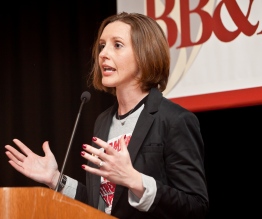
Elana Fine was appointed Managing Director of the Dingman Center in July 2012, after joining the team in 2010 as Director of Venture Investments. As Managing Director, Elana’s primary focus is leading the Dingman Center in support of its mission and strategic plan. Key responsibilities include oversight of our student venture incubator, Dingman Center Angels investor network, business competitions, and technology commercialization efforts.
Tagged , , , , , ,

DCE: Land of Opportunities – A Guest Blog by Julie Mullins

When deciding on a business school, I knew I wanted one with an entrepreneurial spirit; a school that was active in not only teaching entrepreneurship, but living it. I chose the Smith School of Business because of the Dingman Center for Entrepreneurship and sought out a student position there before even accepting my MBA offer. I felt the energy of innovation and execution and knew this Center could be a game changer in my life….and it has been!

My Advice: Get involved as early as possible. Students don’t realize what a valuable resource the Dingman Center can be for connections as well as insightful, fun, and practical experiences. Make time for it; trust me, it’s worth it!

The Dingman Center is filled with opportunities for student involvement, and of its many programs, I’ve been intimately involved with three: Dingman Center Angels, an angel investor network, China Business Plan Competition, and the Israel Global Technology Entrepreneurship Fellowship, an 8 week summer internship.

Dingman Center Angels
I sought out to be a part of the Dingman Center Angels for the interactions I’d have with both entrepreneurs and investors. I submerged myself in the process that the entrepreneurs take to mold their business plan and pitch, as well as the process the investors take to analyze the companies, provide feedback, and develop the terms of their investment. During my first year, I screened companies applying to the group. I attended Review Sessions and Investor Breakfasts where I was able to hear the investors provide questions and feedback to the entrepreneurs on their pitches and their businesses, guiding my thought processes in terms of analyzing entrepreneurial investments. During my second year as a GA, I learned to quickly assess a business, new product, pitch, etc. to identify the gaps in companies’ plans or strategies. This process helped me understand the entire startup Angel investment ecosystem and assess the investment potential of startups. The relationships I’ve made with the investors and entrepreneurs have also been a huge benefit for expanding my network and providing me access to some of the area’s most influential individuals in the entrepreneurship field.

China Business Plan Competition
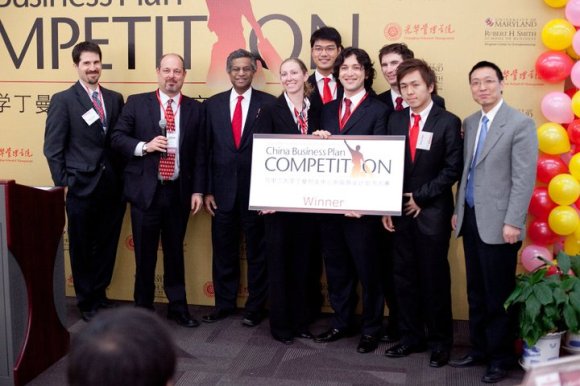
The funny part about my participation in the China Business Plan Competition was that I accidentally joined the class. It was an early Friday morning when I was on my way to another Dingman event when someone pointed me in the direction of a nearby classroom. I realized I was in the wrong room, but was taken with the lecture on formulating business plans by a great professor named Dr. Bob Baum. I decided to immediately enroll in the class and what a GREAT decision it was! The China Business Plan is broken into two components: the class and competition/trip. The class gave me hands-on experience in creating a business plan, working with a cross-cultural team, and pitching a business idea to entrepreneurs and investors  for feedback. The execution of the entire trip by the Dingman Center was impeccable. We did a lot of sightseeing, but more importantly, we learned about the business environment. China is a high-growth market that is attractive to all international companies looking to expand; what everyone does not understand is the uniqueness of that market. This trip provided insights into the cultural norms, common practices, and challenges. I worked with classmates who quickly became some of my closest friends in the program, learned the ins and outs of writing a business plan and starting a business, worked on my public speaking skills by pitching in front of 100+ people, and had the perk of traveling to China while experiencing amazing food and tourist sites with fun people.

I quickly realized that every interaction I had with the Dingman Center was transformed to the words, “amazing experience”.

Israel Global Technology Entrepreneurship Fellowship
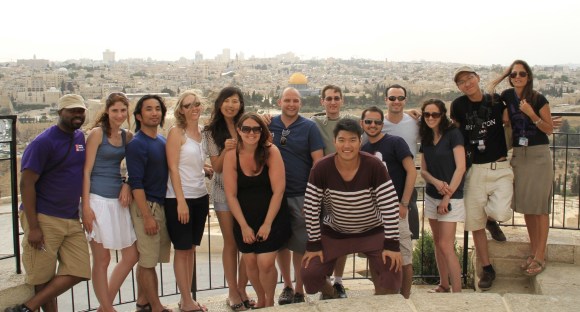
The Israel Fellowship was my next logical step, tying in my focus in entrepreneurship, products, marketing, and international interest. My time spent in Israel was definitely the best experience in my Smith career. Not only did I return to the U.S. with a desire to live in Israel, but I returned with new tools for my toolkit of starting a business and taking a new product to market. We learned the culture of Israel and why they’re #1 for startup creation. In partnership with the Technion (Israel’s MIT), we worked for 8 weeks on commercializing Technion-developed IP.  Our class was split into teams, made up of U.S. and Israeli MBAs, and we pitched our novel medical device technology to VCs and angel investors. We were critiqued on the aspects of the pitch and the business model components in order to continually improve. I learned about the intense market research and customer profiling behind commercializing an innovation and created a go-to-market strategy. As in China, we visited a wide variety of companies during our 8 weeks. The visits advanced our learning and understanding of local business practices while helping us make quality connections. There’s no lack of history in Israel and we got to sightsee in all the top locations including the Old City Jerusalem, the Dead Sea, Masada, the Golan Heights and the Sea of Galilee.


All these experiences have equated to an enhancement in my entrepreneurial knowledge and connections. They are differentiators in my interviews and on my resume. The Israel Fellowship is highly memorable to recruiters and is an instant topic of conversation that sets me apart from the masses of students with more “traditional” internship experiences. The Dingman Center Angels has been a job experience that I flaunt on my resume. It is a GA like no other in the school since it provides a true work-like experience dealing with companies and investors in the community.

My experiences with the Dingman Center helped me learn how to think like an entrepreneur and an investor. They helped me shape my thought processes towards developing a strategy for a business or a product. They helped me learn from others’ mistakes and successes. My only regret is not having video-taped myself prior to being a part of The Dingman Center so that I could show those who hadn’t met me 2 years ago the transformation to what I’ve grown to be today.


Julie Mullins is an entrepreneur-at-heart, searching for the right idea. She spent five years in retail management prior to pursuing her MBA. She hopes to lead a career in marketing for consumer products after Smith. 

Tagged , , , , , , ,

Center Stage with Wayne Kimmel ’92, Founder of Artists & Instigators

You’ve started, and helped start, a number of businesses over the course of your career. What are you working on now?
I’m building a new company, “Artists & Instigators”, which will be a consumer brand. To accomplish this, I’ve partnered with Marc Ecko, who founded the billion-dollar brand “Ecko Unltd.”  He is an expert in selling and marketing products.  More to come next year…

Over the last decade, I’ve personally run a venture capital fund, which has invested in close to 30 companies. Most of those startups have been consumer product and technology companies. We have been fortunate to have had a number of great successes over the last decade with several of the investments we’ve made like with SeamlessWeb that was founded by a Terp alum and was acquired by ARAMARK, Take Care Health Systems that was acquired by Walgreens, and NutriSystem that was the top performing stock in the U.S. for 5 consecutive years.

As the manager of a venture capital fund, you’ve seen dozens of entrepreneur pitches. What advice do you have for someone preparing for a pitch?
Passion is the most important part of any pitch. Anyone doing a pitch must truly believe in what they’re selling and that company they work for. They have to be personally involved. It’s obvious when people are pitching a business and they don’t truly believe in what they’re saying. Whatever you do, you’ve got to believe in it. If you don’t love it, and you’re not excited about it, then you’re doing the wrong thing. That’s the kind of advice I give to people all the time. It’s very, very important for you to believe in what you’re doing. You have to love it.

Given the state of the economy, what would you say to someone considering the launch of a business?
Why not? What’s the alternative? These are the times when some of the best businesses are built. Follow your passions, follow your dreams. This is the time to go and make things happen. Yes, there are a lot of problems out there today. At the same time, it’s not like there’s a safety net in having a job. There is no loyalty from employers. It’s not personal; it’s just the way it is today. The pundits out there have dubbed this generation of kids, “The Lost Generation.” That’s just not true. Students today have skills that other generations are not capable of having because of the technologies they’ve grown up with. The employers that embrace this will be successful. Now is an opportunity for young people to go make their mark.

Why is the Dingman Center a special place?
[Managing Director] Asher Epstein and Dean Anand have really been the driving force behind entrepreneurial opportunities that you typically don’t get at other universities. The entrepreneurial spirit that Asher brings to the table is contagious. He has a real passion for helping students achieve their own goals; whether during the MBA summer trip to Israel, the various programs at Dingman, or as an advisor. Students look at him as a peer because he’s approachable. That kind of a relationship that he’s been able to have with students is a major feather in the cap of the Smith School and the University of Maryland in general. It’s a major selling point for the University.

Wayne Kimmel '92, Founder and Managing Partner, Artists & Instigators

Wayne D. Kimmel is a Founder and Managing Partner of Artists & Instigators with Marc Eckō and Tony Bifano. Wayne is an entrepreneur, venture capitalist, philanthropist and tireless networker. In 1999, Wayne founded a venture capital firm that invests in startup and early-stage companies. Some of his successful investments included, SeamlessWeb (acquired by ARAMARK), Take Care Health Systems (acquired by Walgreens), and NutriSystem (NTRI), (top performing stock in the U.S. for 5 consecutive years). Currently, Wayne serves on the Board of Directors of Ecko |Code, OrganizedWisdom, Ryzing, meetMoi and KGRA Energy.

Follow Wayne on Twitter @waynekimmel

Tagged , , , , ,

Center Stage with Ed Barrientos, CEO of Brazen Careerist

What is your involvement at the Dingman Center and why is it a special place?
I sold my company in 2005 and found myself retired at 40 years old. I wasn’t sure what I wanted to do next, but I knew I wanted to be involved in technology. In 2006, I heard about the Dingman Center and its Dingman Center Angels investor network. There was great interaction between the angels and the companies presenting. It’s such a great resource for me to find investment; to be tapped into the angel network. I was asked to come on board as an Angel-in-Residence, which is a great opportunity for me to be more than just a participant. I became a member of the team that gets to help vet the companies that present. I have really loved the connection with students.

What are you most focused on right now?
What’s taking most of my attention is Brazen Careerist. It’s one of my biggest investments and it’s a company I’m also leading. It had started in Madison, WI and then relocated to Washington DC about a year ago. What started as a part-time CEO-ship has become a full-time, 120-hour-a-week job. So far we have not taken traditional venture capital funding. We’ve pursued an angel-centric strategy, but wouldn’t discount VC funding.

How do you approach angel investing?
Every angel investor has a different philosophy. I typically invest in fewer companies and usually have two to four firms at any given time that I’ll spend a lot of time and energy on. What sets angel investors apart is that our know-how in dealing with startups actually changes the risk equation. In a startup, my background and involvement can affect the outcome.

What’s been your greatest entrepreneurial challenge?
The single biggest frustration has been dealing with investors that don’t understand the very unique world of startups. They may have other great experience, but it’s important to understand the world of startups. Oftentimes people think of startups as small versions of companies, but it’s really not like that. Startups are experiments and things are constantly moving. Metrics of profit, revenue, etc. don’t always make the most sense. It’s important to educate people on the true nature of startups.

What is the single most important piece of advice you could give going into an investor pitch?
You need to strike a fine balance between enthusiasm and arrogance. An pitch session is a scary place, with seasoned entrepreneurs and investors. For some people, the defense mechanism is often arrogance. Nothing will sink you in that kind of setting faster than arrogance. On the other hand, you want someone that’s enthusiastic and confident; someone that’s not afraid to answer questions directly.

Ed Barrientos has been a member of the Dingman Center Angel Investor network since 2007, and an Angel-In-Residence since 2010. Ed is CEO and Chairman of the Board of Brazen Careerist, a career focused social networking site targeting Gen Y. He is also Managing Partner of Zeitgeist Holdings, L.L.C., an angel investment firm focused on investing in early stage technology companies. From 1996 to 2005, he was President and CEO of Arc Second Inc., a high growth market leader in the field of laser based, high-precision GPS. Barrientos led Arc Second to a successful exit (acquired by Metris NV of Belgium) at the end of 2005. He sat on the Board of Directors of Metris NV, and worked as an active Board member through the Company’s IPO (2006) and its acquisition by Nikon (Japan) in 2009.  Connect with Ed on Twitter @snowcrash65.

Tagged , , , , , , ,

How do I know if my idea is good?

By: Asher Epstein, Managing Director, Dingman Center for Entrepreneurship

The entrepreneurial process begins by identifying an unsolved need in the market. At the Dingman Center for Entrepreneurship we focus on answering five key questions to help determine whether an idea is a good one to pursue.

1) What problem are you trying to solve?
Is your problem an aspirin or a vitamin?  An aspirin is an acute problem that needs a real solution (ex: pounding headache).  A vitamin offers a nice to have solution but the pain isn’t as sharp. The pain caused by the problem being unsolved is the first step to identifying how many people and potential customers will value your solution.

2) How big is the problem?
Is the market large and identifiable enough to make a worthwhile solution? You may have only one customer but if the pain is very acute the solution may still be worth pursuing if the customer is large (ex: Department of Defense). The challenge with many smaller customers is to figure out how to reach them all cost effectively.  In either case, you need to make sure you know exactly who is going to open up their checkbook or wallet and buy a product or service from you and make sure that your effort and investment will pay off.

3) Who are your competitors?
Evaluate solutions in the context of “like” and “kind” competition. “Like” competition is Miller Lite vs. Hook and Ladder Golden Ale (a Dingman Center company). “Kind” competition is a cold soda at a ball game on a hot day. The soda might not be as good as a beer but it will solve the problem of thirst. Your solution needs to beat both sets of alternatives to be valuable.  The best way to assess an idea is to figure out how to get someone to pay for a pilot of the solution.  If you are truly solving someone’s problem, people will appreciate that a partial solution is better than no solution. The challenge is to adjust the risks of the “half” solution against the benefits. Figure out how to limit the downside if the product fails to deliver. Entrepreneurship is about managing risk on an ongoing basis.

4) Is the right team in place?
Do you have the right skills and resources to solve the problem that you have identified? Do you need additional team members to help you?  If you can’t convince other talented people to buy-in, it is probably a sign your idea is not strong. It is important to understand the daily role you will play in your business.  For example, as a start-up technology CEO a lot of your time will be spent with customers and investors, not developing software. As a food retailer, you need to be open at the hours when people eat not just 9-5. When you pursue a venture it can become all consuming. If you don’t want to do the work it may be a good idea, but not a good fit for you. Ideas alone won’t make you successful – the hard work is implementation.

5) Is your idea worthwhile?
Worthiness can be defined in a variety of ways.  A lifestyle idea allows you to spend time with your family and provides a stable, but limited income. A high-growth idea is a venture that focuses on providing high returns to investors.  Both ideas are worthwhile as long as investments and expectations are clearly defined.  Social ventures and double triple bottom lines (environment, social benefit, charities, etc.) are worthwhile as long as the proper metrics are utilized — a failed non-profit doesn’t do much for the world.

 Asher Epstein is the Managing Director of the Dingman Center for Entrepreneurship. He is responsible for overseeing the center’s strategy and operations including business incubation, technology commercialization, global programs and startup funding services.

Tagged , , ,