Tag Archives: entrepreneur

Business Rx Entrepreneur Q&A with Elana Fine – Part 4

Elana Fine, Managing Director of the Dingman Center recently participated in a live chat on Wednesday October 17with the Capital Business section of the Washington Post for their Business Rx column. Elana answered questions from regional entrepreneurs on improving and starting a business. This post features some of the questions from the live chat. Follow the Dingman Center’s Facebook Page and Twitter Page for information on the next live chat and other Dingman Center news and events.

 Q.  Elana, I am building out my software business and I want to have an advisory board. Is this a good idea? How do I compensate them?

Elana Fine:  All startups should have an advisory board that can balance out any voids in expertise you might have and to help make additional connections. Some advisory boards are given equity, but some also volunteer their time because they enjoy working with early stage companies.  More importantly, you will need to differentiate between an advisory board and a Board of Directors (BoD).  A BoD has very specific rights and accountability whereas an advisory board does just that – advises the company, but does not have the same kind of decision making power as a BoD.  Typically, board seats refer to a Board of Directors and are related to equity stakes granted via angel or VC financing terms.

Q. I am a graduate student at a local university and I want to start a business with my engineering professor. How do I get started? No lawyers please – I already have lots of loans!

Elana Fine: You don’t need lawyers…yet.  If you and your professor are interested in spinning out a company based on university IP, the first place to go is your Office of Technology Commercialization. They will help you through the process of licensing the technology from the university. I’d also suggest doing lots of market research as well as speaking to a lot of customers in different industry verticals to understand the commercial opportunities of your product. Steve Blank’s Lean Launchpad class is a great model for this. Startups based on university technologies have significantly better chances of success, so good luck!

Q. My business has experienced a lot of growth in the past year and I can no longer run daily operations alone and I’ve recently hired 4 new employees. I have experience running a business, but very little experience being a boss. Can you give me some general advice on how to manage my staff? 

Elana Fine: We see a lot of entrepreneurs start to stumble a bit while they transition from starting a business to growing a business.  At your stage you need to make sure you hire staff members that are also self-starters who will not need to be micro managed.  You need to find people who will be almost as passionate and committed as you are, or your will lose momentum.  You also need to make sure that you keep your team focused.  A lot of startups fail because they lose focus and try to do too many things at once.  I’d make sure that 80% of what your team is working on is part of your plan (which will always be evolving) and the other 20% of their time is available to be opportunistic.  Have a checklist of top three priorities and if something doesn’t fit, don’t do it.  You should also make sure you understand your team’s work style and make sure they understand yours.  For example, if you’d prefer to be in touch via email. If you plan to have daily or weekly meetings, make sure they are on the calendar and don’t get skipped.

Q. Are you aware of any new state funding or tax breaks for entrepreneurs in Maryland? I want to start a kids clothing boutique but the tax breaks and credits seem to be only for biotech companies.

Elana Fine: There are a number of new funding opportunities in Maryland through TEDCO, such as the Propel Baltimore fund and Maryland Innovation Initiative but these are all more focused broadly on technology vs. apparel and retail.  I do not know of any breaks for a retail boutique.

Q. I have a full-time job and sometimes I do some side work by helping friends with their websites. While I charge for my services, I haven’t created a formal business. I know that if I ever formally create a small business, I will have to separate my personal expenses from my business expenses. Should I begin separating personal and business expenses now while my business is still informal?

Elana Fine: I’m certainly not an accountant, but sounds like you are at the point where you should keep a separate account for those expenses. Business expenses are generally tax deductible (so I hear) so you are better off keeping them separate.  If you are charging for services it is kind of like being half pregnant – you either have a business or you don’t.

Q. Does Maryland have any areas where students can run their businesses? It would be great if I could operate at a football game or at a basketball game.

Elana Fine: Our team at the Dingman Center is working very hard to create additional opportunities for student businesses on campus. There are a few regulatory/bureaucratic hurdles we are facing, but we are working with a number of partners across campus to create student marketplaces. Stay tuned!

Q. I am currently interested in starting my own brand of ice cream. How do I get in touch with an ice cream manufacturer who will be willing to produce my ice cream?

Elana Fine: I’d suggest networking with ice cream shops to understand who supplies their product. If you create a flavor they like, they might be more likely to make an introduction! You may also want to look in the dairy cases of high end stores like Fresh Market and Whole Foods who carry a lot of upstart ice cream companies – I know a few are made locally. There could be some partnership opportunities there.

Q. My friend and I started a company. I designed the product and he was going to be the COO/CFO. Now, we are close to getting some VC money and I am afraid I am going to be Eduardo from Facebook, the co-founder who winds up with nothing. What do I do?

Elana Fine: I just gave a few answers above that indicated not needing lawyers, but in the case of protecting your equity stake and rights you do need counsel. When you are negotiating term sheets with VCs, make sure you understand the anti-dilution provisions and what will happen in future funding rounds. Most founders will get diluted along the way, but you need to make sure you understand how, why, and when that will happen. In many cases you will have a smaller stake of a larger pie if the valuation of your company continues to increase. In general, I will repeat three pieces of advice that one of our angel investors gives 1) READ THE DOCS 2) READ THE DOCS and 3) READ THE DOCS.

Q. If the fiscal cliff happens, where do you see angel funding in 2013?

Elana Fine: I think the biggest driver in angel funding in 2013 will be related to increased VC funding or exit opportunities. Angel investing has been incredibly strong these past 2 years, but investors will hold back if they don’t see their companies receiving follow-on capital to grow the business and increase its value. The same goes for exit opportunities, if strategic buyers sit on cash and don’t grow through acquisition, angel investors will be less inclined to take the risk and will allocate investment dollars in safer alternatives. I think crowd funding is only one aspect of the JOBS Act that will have an impact. The increased cap on private shareholders, reduced disclosure requirements and broad classification of “emerging growth” public companies increase the access to capital and reduce the cost of taking companies public.

Q. We are trying to sell a new product in a fast growing market with existing competitors. Any thoughts on how we can introduce our product and gain some attention without cutting our prices too low or being forced to spend a ton on marketing? 

Elana Fine: It’s hard to say without knowing more about the product or the market you are targeting.  However, the key is just that. Understand what part of this growing market you can gain the best traction. Is there a customer segment that will appreciate a feature of your product vs. another? Is it a high end product that differentiates by a high level of customer service? Or will you in fact gain more traction by being a low cost provider? In a fast growing market, a newcomer can often be more nimble in attacking the fastest growing portion of the market, but you have to do your research to find your own niche. We often suggest that companies identify their first target market and then test three different ways to attract that market whether via social media, paid advertising, earned media, promotional events, or word of mouth. See what works and then double down.

Q. Hello, my wife and I have a small non-franchise residential cleaning service in Maryland. So far, our only marketing is through word of mouth and a simple website. Where should we go from here in terms of marketing our business?

Elana Fine: There are actually a couple of new local companies like Seva Call, Urgnt.ly and Trust Pages that are focused on connecting residential service providers to customers. Word of mouth is really the best way when it comes to service providers coming in to your home so you need to think about how you can engage new customers that will make referrals. You could think about going out to real estate agents and offering to clean houses for free before going out on the market.  If you do a good job they may recommend you to whomever buys the house or they may pay you to do the next job. One free cleaning may pay dividends in the future.

Q. I have an idea for a business I’d like to start, but I’d love to have an advisor who could help me think through all the particulars. Is there a resource in the D.C. area for that?

Elana Fine: There are a lot of great resources for startups around the area, such as FoundersCorp, Maryland’s SBDC, Startup MD/DC/VA, Foster.ly, DC Tech Meetups, ProudlyMadeinDC, Rockville Economic Development Inc., etc.  However, before you start thinking about paying for an advisor you need to first find the right advisors that understand the problems your company is tackling as well as the challenges that you are facing.  When you network, specifically say “I’m looking for someone with a skill set in X that can help me with Y.” I know I’m always more likely to make connections when it’s good match.
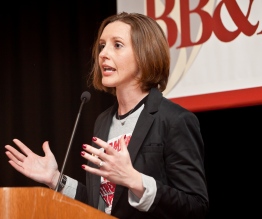
Elana Fine was appointed Managing Director of the Dingman Center in July 2012, after joining the team in 2010 as Director of Venture Investments. As Managing Director, Elana’s primary focus is leading the Dingman Center in support of its mission and strategic plan. Key responsibilities include oversight of our student venture incubator, Dingman Center Angels investor network, business competitions, and technology commercialization efforts.


Tagged , , , , , ,

Worth Reading 9/28/2012

It’s been another exciting week at the Dingman Center, just earlier today we held our first Dingman Center Angels Review Day of the 2012-2013 Academic Year!  Participating entrepreneurs came in to pitch in front of a packed crowd of Dingman Center Angels and eager business students.  Across the hall, Dingman Center EIRs advised a full docket of aspiring entrepreneurs for Pitch Dingman.  Amidst the hustle and bustle at the Dingman Center, we are still excited to continue our new feature started last week!

So here’s what we found worth reading this week!

  • Did you know that the US Chamber of Commerce has ranked the State of Maryland the #1 state for innovation and entrepreneurship? Maryland secretary of business and economic development breaks it down for us.
  • Nobody can build anticipation like Apple.  With the recent release of the iPhone 5, Catherine Kaputa of Fast Company examines the strategies that Apple employs to get its fans pumped for every new release, and what lessons entrepreneurs can learn from these strategies!
  • With political campaigns in full swing, there’s a lot of talk about China and the potential threat it imposes, as well as jobs lost to India.  Michael Silverstein, the founder of BCG’s global consumer practice joined the HBR Ideacast this week to argue why China (and India) should be seen as an opportunity for businesses, not a threat. (More of a worth listening.)
  • The District of Columbia continues its quest to find ways to become a more attractive location for entrepreneurs.  However, the mayor’s plans hit a speed bump this week as the DC Council refused to pass a major capital gains tax break for tech investors and entrepreneurs.
  • Finally, Google launched its new microsite “Google for Entrepreneurs” this week.  Check out the different ways that Google supports the startup community and stay up to date about upcoming community events around the world.
Tagged , , ,

Business Rx Entrepreneur Q&A with Elana Fine – Part 3

Elana Fine, Managing Director of the Dingman Center recently participated in a live chat on Wednesday September 19, 2012 with the Washington Post’s Capital Business magazine for their Business Rx column. Elana answered questions from regional entrepreneurs on improving or starting a business. This post features some of the questions from the live chat. Follow the Dingman Center’s Facebook Page and Twitter Page for information on the next live chat and other Dingman Center news and events.

Q. How important is it to write a business plan? If I am not looking for a loan or investment money, do I really need one?

Elana Fine: We’ve been encouraging entrepreneurs to use planning resources such as the Business Model Canvas or other simple tools before writing an entire business plan. This type of tool really helps you identify your value proposition, target customers, key partners, etc. before spending the time to write a full plan. This is where you can best determine the feasibility of an idea and how you will start.

Q. Do you have any recommendations for software or any other tools, apps or gadgets that could help entrepreneurs brainstorm or think through business models, financials etc.?

Elana Fine: I’m a big fan of the book “The Business Model Generation” which includes an interactive business planning canvas (actually a great iPad app). There are other tools and methodologies such as Lean Launchpad that help guide through the venture creation process. Best thing to do is also bounce your ideas off as many people andpotential customers you can to get feedback on whether they’d buy your product.

Q. Any specific advice for women looking to start a business? I have three young kids and am afraid I cannot do both.

Elana Fine: I know a lot of women who have initially started their businesses in their home so they can still be close to their kids. Identify a few successful local entrepreneurs and pick their brain about how they started and balanced their various obligations. I’d also say build a great support system of friends and family who can help pitch in while you get things started.

Q. I am noticing two trends lately: some businesses are closing their brick and mortar operations and moving online, and some online only businesses are opening brick and mortar stores (e.g. Buy Buy Baby). What would you recommend for a boutique stationery/paper goods store? Online only, brick and mortar, or both?

Elana Fine: If your business requires a lot of customer service and will rely on walk in traffic, you still might need a physical location. For a stationery or paper goods store I think it really depends how you will differentiate from your competition — if it is on price and variety — you may be able to build a business online, but if you are providing guidance/advice on invitations or other customized goods, you might be able to better serve your customers either from a home office or a brick and mortar store.

Q. How do you suggest cutting through the clutter of the digital ad world to promote my business? My sales are down and looking for ways to improve.

Elana Fine: Social media and digital advertising can often be inexpensive ways to attracts users and customers — but you need to think it through strategically versus just spraying and praying. You need to really identify your target demographic and where you can find them online. Building a social presence can take time. Experiment with social media and advertise on sites using small tests and see what is most effective.

Q. For the past two years since I was laid off, I have been doing freelance writing. With the rise of content mills and the “all information should be free” expectation, I’m pessimistic about my long-term ability to support myself. How do I go about trying to figure out what else I can do to make money? Should I try to reboot myself as a corporate good-grammar coach, or try something else entirely?

Elana Fine: Writing has become commoditized — however the use of the Web now requires organizations to create a lot of content and put a lot more information online. There may be opportunities to help organizations with their Web sites or taking internal information and repackaging in a more digestible online format.

Elana Fine was appointed Managing Director of the Dingman Center in July 2012, after joining the team in 2010 as Director of Venture Investments. As Managing Director, Elana’s primary focus is leading the Dingman Center in support of its mission and strategic plan. Key responsibilities include oversight of our student venture incubator, Dingman Center Angels investor network, business competitions, and technology commercialization efforts.

Tagged , , ,

Business Rx Entrepreneur Q&A with Elana Fine – Part 2

Elana Fine, Managing Director of the Dingman Center recently participated in a live chat with the Washington Post’s Capital Business magazine for their Business Rx column answering questions from regional entrepreneurs on improving or starting a business. This post features some of the questions from the live chat. Follow the Dingman Center’s Facebook Page and Twitter Page for information on the next live chat and other Dingman Center news and events.

Q: A lot of buzz has been going around on the lean start-up methodology being applied in technology and other industries. How can first-time young entrepreneurs get their hands on training and implementing such methodology to their business ideas?
A: The best way to learn about the process is to talk with start-ups to understand how they determined their minimum viable product and how they determined when & how to iterate. As you start your business “leanly,” you have to also think about the decision points to iterate less and grow more.

Q: How can entrepreneurs get more involved in the local community? I would like to interact with our start-ups on an informal basis, but don’t know where to turn.
A: The D.C. tech community is thriving, with plenty of options for entrepreneurs looking to get connected. Organizations such as D.C. Tech Meetup and Foster.ly are providing great forums for entrepreneurs to meet. There are also new incubators such as The Fort and Acceleprise that bring in mentors to help with their companies.

Q: I have an idea for a specific niche service market to build an online/mobile business and I need to develop potential revenue projections. While I am realistic I still want to be optimistic for a 3-5 year time frame. Could you provide some advice for a framework?
A: The best frameworks is a bottoms-up approach — identify your revenue streams and growth assumptions for each stream, then show how they grow over time. For example, if you are going to win two customers in month one, six customers in month eight and 20 customers in year two — the projections should reflect that growth and revenue expectations per customer (or user, etc.) over time. Top down, taking a large market and making assumptions about a percentage of that market you can capture usually leads to significantly inflated projections and doesn’t show advisers or investors that you have given thought to how you will methodically grow your business. It is also important to think about the bottom line — what are expenses associated with generating that revenue? To quote one of my favorite lines from our investors this year, “Is the juice worth the squeeze?”

Q: I am launching a new mobile app and I will need additional capital (maybe $250,000) to help complete the next stage of development. I think angel investors might be the right fit, but what is the best way to approach them and get their attention?
A: In the current environment, the best way to get funded for a mobile app is to show that you have traction with users. Get a minimally viable product out there and show that you can reach your users and understand their needs. There are so many apps in the marketplace that it is hard to convince investors that you can break through the noise.

Q: What is the line between a hobby and a business? Is there a financial threshold that one must cross before having to deal with becoming a formal business? For example, if a friend knows I have my own personal Web site and offers to pay me to set one up for him, have I started a business?
A: I’m certainly not an accountant or tax specialist, but if someone pays you for a good or service you have provided, that is technically a business. A hobby would be if you liked to set up Web sites for friends for free.

Q: I’d like to start an interior design business. I believe in my talent, but I don’t exactly have a portfolio full of projects that I can show to potential clients since I am fairly new at this. What is the best way to get my foot in the door and start establishing myself?
A: Would you like to start at my house? All kidding aside, figure out what kind of projects you can do in your spare time for family and friends for free, and use that to start your portfolio. Even if it is a small room here and there, you can create the “before” and “after” shots to convince others of your talents.

Q: I’ve been working as a solo consultant to nonprofits. I’ve been courted by a consulting firm, which is attractive because they would handle billing, provide a training system for me to use with clients instead, and will help market me. On another level, I have some concerns: I would still have to get my own clients, they want exclusivity (so I can’t serve other clients on my own, without giving them a cut), and a non-compete clause (I’m prohibited from pursuing their clients if I leave, but they get a portion of my earnings for a year after I leave — because they have trained me). What advice do you have on weighing whether to remain solo or join a firm?
A: This is a really tough question and really depends on how important it is for you to have control over your company. You may be able to generate more business by being able to leverage other infrastructure, but you do lose independence and flexibility when you join with others. It sounds like you could probably continue with being a sole contractor and find other outsourced service providers to handle billing and training, without signing on with another firm.

Elana Fine was appointed Managing Director of the Dingman Center in July 2012, after joining the team in 2010 as Director of Venture Investments. As Managing Director, Elana’s primary focus is leading the Dingman Center in support of its mission and strategic plan. Key responsibilities include oversight of our student venture incubator, Dingman Center Angels investor network, business competitions, and technology commercialization efforts.

Tagged , , ,

Business Rx Entrepreneur Q&A with Elana Fine – Part 2

Elana Fine, Managing Director of the Dingman Center recently participated in a live chat with the Washington Post’s Capital Business magazine for their Business Rx column answering questions from regional entrepreneurs on improving or starting a business. This post features some of the questions from the live chat. Follow the Dingman Center’s Facebook Page and Twitter Page for information on the next live chat and other Dingman Center news and events.

Q: A lot of buzz has been going around on the lean start-up methodology being applied in technology and other industries. How can first-time young entrepreneurs get their hands on training and implementing such methodology to their business ideas?
A: The best way to learn about the process is to talk with start-ups to understand how they determined their minimum viable product and how they determined when & how to iterate. As you start your business “leanly,” you have to also think about the decision points to iterate less and grow more.

Q: How can entrepreneurs get more involved in the local community? I would like to interact with our start-ups on an informal basis, but don’t know where to turn.
A: The D.C. tech community is thriving, with plenty of options for entrepreneurs looking to get connected. Organizations such as D.C. Tech Meetup and Foster.ly are providing great forums for entrepreneurs to meet. There are also new incubators such as The Fort and Acceleprise that bring in mentors to help with their companies.

Q: I have an idea for a specific niche service market to build an online/mobile business and I need to develop potential revenue projections. While I am realistic I still want to be optimistic for a 3-5 year time frame. Could you provide some advice for a framework?
A: The best frameworks is a bottoms-up approach — identify your revenue streams and growth assumptions for each stream, then show how they grow over time. For example, if you are going to win two customers in month one, six customers in month eight and 20 customers in year two — the projections should reflect that growth and revenue expectations per customer (or user, etc.) over time. Top down, taking a large market and making assumptions about a percentage of that market you can capture usually leads to significantly inflated projections and doesn’t show advisers or investors that you have given thought to how you will methodically grow your business. It is also important to think about the bottom line — what are expenses associated with generating that revenue? To quote one of my favorite lines from our investors this year, “Is the juice worth the squeeze?”

Q: I am launching a new mobile app and I will need additional capital (maybe $250,000) to help complete the next stage of development. I think angel investors might be the right fit, but what is the best way to approach them and get their attention?
A: In the current environment, the best way to get funded for a mobile app is to show that you have traction with users. Get a minimally viable product out there and show that you can reach your users and understand their needs. There are so many apps in the marketplace that it is hard to convince investors that you can break through the noise.

Q: What is the line between a hobby and a business? Is there a financial threshold that one must cross before having to deal with becoming a formal business? For example, if a friend knows I have my own personal Web site and offers to pay me to set one up for him, have I started a business?
A: I’m certainly not an accountant or tax specialist, but if someone pays you for a good or service you have provided, that is technically a business. A hobby would be if you liked to set up Web sites for friends for free.

Q: I’d like to start an interior design business. I believe in my talent, but I don’t exactly have a portfolio full of projects that I can show to potential clients since I am fairly new at this. What is the best way to get my foot in the door and start establishing myself?
A: Would you like to start at my house? All kidding aside, figure out what kind of projects you can do in your spare time for family and friends for free, and use that to start your portfolio. Even if it is a small room here and there, you can create the “before” and “after” shots to convince others of your talents.

Q: I’ve been working as a solo consultant to nonprofits. I’ve been courted by a consulting firm, which is attractive because they would handle billing, provide a training system for me to use with clients instead, and will help market me. On another level, I have some concerns: I would still have to get my own clients, they want exclusivity (so I can’t serve other clients on my own, without giving them a cut), and a non-compete clause (I’m prohibited from pursuing their clients if I leave, but they get a portion of my earnings for a year after I leave — because they have trained me). What advice do you have on weighing whether to remain solo or join a firm?
A: This is a really tough question and really depends on how important it is for you to have control over your company. You may be able to generate more business by being able to leverage other infrastructure, but you do lose independence and flexibility when you join with others. It sounds like you could probably continue with being a sole contractor and find other outsourced service providers to handle billing and training, without signing on with another firm.

Elana Fine was appointed Managing Director of the Dingman Center in July 2012, after joining the team in 2010 as Director of Venture Investments. As Managing Director, Elana’s primary focus is leading the Dingman Center in support of its mission and strategic plan. Key responsibilities include oversight of our student venture incubator, Dingman Center Angels investor network, business competitions, and technology commercialization efforts.

Tagged , , ,

The Scrupulous Entrepreneur: When do I leave my job to pursue my startup?

Written by Jason Shrensky, Dingman Center Angel in Residence

Often the question is posed: When do I leave my job to pursue my startup?  If you read the technology press, the answer seems to be “right away!” “Follow your dream!” is the advice of some successful entrepreneurs. To paraphrase others: “I couldn’t sleep at night just thinking about the opportunity. I quit my job the next day. You should do the same.” Of course, this flippant advice is offered in hindsight, often in the afterglow of a financial windfall. The scrupulous entrepreneur will answer this question for him or herself only after taking into account two big considerations.

The first consideration in deciding whether to leave your job to pursue your startup is family impact. How would you characterize the entrepreneurs quoted above if you knew that when they quit their day jobs to pursue their startups they had no plan to make sure that their kids had health insurance? Stupid? Reckless? Irresponsible? Would you want to invest in an entrepreneur that made such a choice?

One of the great unheralded traits of good entrepreneurs is the ability to get a business up and running without bankrupting themselves and hurting their families. To state the obvious, creating a self-sustaining business is hard. An absolute given is that the cost in terms of the entrepreneur’s time commitment is high and taxing not only to the entrepreneur but to the entrepreneur’s family.

Assuming that the entrepreneur and his or her family agree to assume the ramifications of the great time commitment involved, a second conversation that has to occur concerns the financial commitment. Leaving one’s job to pursue a startup will require financial belt-tightening by the entrepreneur and his or her family. Nonetheless, if there is buy-in from the entrepreneur’s family, a drop in discretionary spending and luxuries is easy to endure with the long-term goal of a successful venture in focus.

Thus, the lesson of the scrupulous entrepreneur who is considering family impact before pursuing a startup full time is that a) discomfort is okay, b) recklessness is not okay, and c) buy-in is required. (If you are 22 years old, single, and living with your parents, you’re good to go.)

But even after overcoming the first consideration, scrupulous entrepreneurs won’t rush to resign. The great first act of scrupulous entrepreneurs is staying employed as long as they can in order to “fund their hobby.” If they can manage getting their startups off the ground while fulfilling the duties of their day jobs, they will do it. (If working on their startups while employed would somehow be considered more unethical than conducting a search for a new job while employed, they will resign.)

It may seem like your day job is weighing you down and preventing you from moving as fast as you want on your startup. But, often the alternative is to quit your job and raise angel money. You are likely to find that raising angel money is just as time consuming yet less rewarding than your day job. If you have the right perspective, you should see your current employer as your first angel investor with the bonus that you don’t give up equity in your startup. Your paycheck is a sure thing; angel money is not.

Obviously, a separate email address and mobile phone are key tools for maintaining your double life. But don’t discount your vacation days. Use them judiciously. No trips to the beach. Vacation days are important for attending meetings and industry conferences relevant to your startup or cashing out when you eventually leave your employer.

In conclusion, leading a double life is hard, but many times it’s either necessary or simply the prudent choice. Scrupulous entrepreneurs value their families and fight on all fronts for advantages for their startups. They also don’t get any sleep. If you are a scrupulous entrepreneur, you won’t either.

Jason Shrensky is a local entrepreneur and angel investor who joined the Dingman Center team as an Angel in Residence in 2011. In addition to actively investing in early-stage companies, he splits his time between two startups that he recently co-founded: ÜberOffices and ComplexInterests. ÜberOffices provides co-working office space in the DC Metro area predominantly for early-stage technology and media companies. At ComplexInterests, Jason is working on developing a unique enterprise software package targeted at accounting, law, and financial services firms.

Connect with Jason on LinkedIn, Twitter, and Google+

Tagged , , ,

Center Stage with Glen Hellman ’78, Principal at Driven Forward

Glen Hellman is an active member of the Dingman Center Angels investor network and an expert on startups. Mr. Hellman is frequently quoted on corporate governance and entrepreneurship issues in print and broadcast media. In print he’s been quoted in the Wall Street Journal, Financial Week, The Washington Post and USA Today. He has been featured on radio programs including NPR Marketplace and Voice of America. Television appearances include NBC and FOX news.

Keep reading for Center Stage with Glen Hellman.

What are you working on right now?
Right now I work with experienced CEOs to improve their businesses. Essentially, I’m a coach and I help them learn from their experiences. We work together in groups, we hold each other accountable, and we try to avoid big mistakes. In addition, I’m an Angel Investor and an advocate for DC regional entrepreneurship, primarily focused on working with startups and small businesses that have a desire for growth.

As someone who provides guidance to entrepreneurs, what are the biggest mistakes they make?
The primary thing that causes a company to go bad is a lack of focus or casual, frequent changes in focus. One of the most common ways entrepreneurs do this is by chasing nonstrategic cash. Being too opportunistic by chasing a deal out of one’s chosen niche distracts from the mission and for a small company to be effective, they need to make a lot of noise in a very small time. You do that by sticking to your chosen niche.
Once you start chasing cash that doesn’t help your core business, then there’s an opportunity cost. And if you have to chase cash outside of your strategic goals, then you need to change your strategic goals because you either don’t have the wherewithal to execute or your strategy is flawed.

What do you think of the DC startup scene right now?
It’s as hot as it’s ever been in terms of numbers. There’s a hot, very healthy startup scene particularly in technology and software. It’s because there is strong momentum in companies that already exist, such as Living Social. There’s also the government scene which brings tech expertise. We’ve got a well-educated workforce and a tech-savvy population. The whole downtown scene for young entrepreneurs is a nice environment for people who want to start a business. DC has the quirky, hipster, SoHo feel. It’s happening in NYC and it’s happening here.

You maintain a blog, http://blog.drivenforward.com/wordpress/. How important are social media outlets for today’s entrepreneurs?
Social media has shifted the power from the marketers and providers of product and service to the consumer. Advertising and marketing are less effective than they were 10 years ago.  Reputation is no longer managed by press releases, its managed by being a good corporate actor, delivering good product.

Companies must engage in social media. They must monitor social media to understand what’s happening in their field. Social media is the new source for market research on the market, competitors and the market perception of a company’s products. Companies must monitor conversations, engage in the conversations honestly and transparently and fix product flaws based on feedback.  You must build a better product, you can no longer PR your way out of having a crappy solution.

How did you get involved with the Dingman Center and why is it a special place?
For me, the Dingman Center is one of the few places that’s not set up around making somebody rich and famous. It’s about doing good work for the entrepreneurial community. It’s truly the unselfish pursuit of promoting entrepreneurship.
When I decided I wanted to get out of corporate turnarounds, I decided I wanted to create employment and because of that I was naturally attracted to the Dingman Center. I got very active in the Dingman Angels and we have developed a healthy community that funds startups in DC. I think we’re the most active angel group in the city and we do as many deals in DC as the most active venture capital firms.

Glen is a Principal at Driven Forward LLC, a firm that supports entrepreneurs and venture investors by providing strategic guidance, interim executive leadership services, and executive coaching.  In addition he is a Chair for Vistage International where he serves as a professional facilitator for CEO advisory boards. He is currently Chairman of the Board of Driven Forward and on the Board of Advisors for the Dingman Center for Entrepreneurship. He is an active member of the Dingman Center Angels investor network where he is responsible for deal flow, deal selection and coaching corporate executives seeking capital and in his spare time he writes for Tech Cocktail. Mr. Hellman has experience running operations in the United States, Canada, the United Kingdom, Japan, South Korea and Australia.

Connect with Glen:   @glehel   http://blog.drivenforward.com/wordpress/

Tagged , , , , ,