Tag Archives: startup

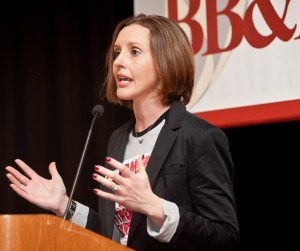
Center Stage with Andrea Keating ’83, Founder & CEO, Crews Control

Recently, we caught up with entrepreneur Andrea Keating ’83, one of the newest members of the Dingman Center Board of Advisors. Ms. Keating shares her insights on building multiple businesses from scratch, her advice to young entrepreneurs, as well as what excites her the most about the Dingman Center’s programs and the DC startup scene.

What are you most focused on right now?

Growth. Every company needs to focus on growth at all times, whether its growth in brand reach, sales pipeline, contract numbers, or company size, you always need to continue growing.

The way that I have been able to grow my companies has been to develop companies that sell to the same pipeline. My first company was Crews Control, a video crew outsourcing service that provides over 2000 crews worldwide to in-house media departments of Fortune 500 companies. Those companies then approached me to handle their staffing needs for freelance production. So I co-founded Team People, a company that targeted the same pipeline, but with a slightly different product that my clients were looking for.

Fast forward to last year when I came across a tech company called Scenios that provides cloud-based production tools. I immediately saw that this product was applicable to my corporate clients, and now I sit on their board. This opportunity came about because the founders of Scenios knew that I was knowledgeable about the corporate media and that was the market that they wanted to target.

What is your involvement at Dingman and why is it a special place?

I’m a serial entrepreneur. I’ve founded or co-founded 4 companies and had the ideas for at least dozen more. When I was asked to judge my first Pitch Dingman Competition I was blown away by the knowledge, the creativity and the passion of the students and their business models. It’s so exciting to feel the startup energy of what could be the next great business. I have been so lucky to be successful in business and I am honored to be able to share some of the insights and lessons learned I have a gained over the past 25 years with other entrepreneurs.

What do you think of the DC area as a place to start a business?

I think the DC area is a great place to start a business. It is ripe with intellectual and financial capital and people who live and work in the area are driven to succeed. I also believe that there’s a different kind of energy here because it’s an international city with close proximity to the federal government while also being a growing tech hub. All of this combines into a perfect storm with opportunities in both the public and private sector. It’s one of the best kept entrepreneurial secrets, and by putting together programs such as the Dingman Center with what the tech community is also doing to establish its presence, it’s only a matter of time before the world recognizes DC as a top tier entrepreneurial region.

What Inspires you?

My fellow entrepreneurs are my biggest motivators. When you start a business, especially if you start it alone and without a partner, it can get very lonely. I made it a point to get involved with organizations such as YEO (Young Entrepreneurs Organization) and joined a forum, which gave me the opportunity to build a peer group to share ideas, challenges, frustrations, and successes. This led to me joining other groups such as YPO (Young Presidents Organization) and C200, an invitational only organization of women business owners worldwide. Surrounding yourself with other entrepreneurs is the best way to grow.

What originally made you decide to start a business?

I saw a need and knew I could provide a better, more cost effective solution. I never set out to make money or to build a global company, but rather to fill a need in the industry. If you are providing potential clients with a great product or solution at a good price the rest will follow.

What has been your greatest entrepreneurial challenge?

Seeing the big picture. Often times I would get bogged down by a challenge or process and had to remind myself to step back and to look at the big picture objectively. By taking a look at the market, my client base and my vendors from a bird’s eye view, solutions suddenly become clearer.

What is the single most important piece of advice you would give to a young entrepreneur?

Follow your instincts. If it feels right it probably is. I’ve never made a business decision that I felt good about that ended badly… but I’ve ignored a few red flags or over – analyzed a few opportunities and later regretted my decision. Follow your gut.

Andrea has more than two decades of production management experience and is considered to be the founder of the crewing agency industry. In 1988 she founded Crews Control, the world’s first and leading crewing agency representing location talent worldwide. Today she guides the screening, management, scheduling and payment of more than 2,000 creative specialists worldwide. In addition, Andrea co-founded TeamPeople, a premier creative staffing company that provides on-site management of corporate, association and broadcast media departments as well as recruitment, paymaster and payroll services. Andrea graduated from the University of Maryland and is a member of the Dingman Center’s Board of Advisors. Connect with Andrea on LinkedIn.

Tagged , , ,

Worth Reading 9/28/2012

It’s been another exciting week at the Dingman Center, just earlier today we held our first Dingman Center Angels Review Day of the 2012-2013 Academic Year!  Participating entrepreneurs came in to pitch in front of a packed crowd of Dingman Center Angels and eager business students.  Across the hall, Dingman Center EIRs advised a full docket of aspiring entrepreneurs for Pitch Dingman.  Amidst the hustle and bustle at the Dingman Center, we are still excited to continue our new feature started last week!

So here’s what we found worth reading this week!

  • Did you know that the US Chamber of Commerce has ranked the State of Maryland the #1 state for innovation and entrepreneurship? Maryland secretary of business and economic development breaks it down for us.
  • Nobody can build anticipation like Apple.  With the recent release of the iPhone 5, Catherine Kaputa of Fast Company examines the strategies that Apple employs to get its fans pumped for every new release, and what lessons entrepreneurs can learn from these strategies!
  • With political campaigns in full swing, there’s a lot of talk about China and the potential threat it imposes, as well as jobs lost to India.  Michael Silverstein, the founder of BCG’s global consumer practice joined the HBR Ideacast this week to argue why China (and India) should be seen as an opportunity for businesses, not a threat. (More of a worth listening.)
  • The District of Columbia continues its quest to find ways to become a more attractive location for entrepreneurs.  However, the mayor’s plans hit a speed bump this week as the DC Council refused to pass a major capital gains tax break for tech investors and entrepreneurs.
  • Finally, Google launched its new microsite “Google for Entrepreneurs” this week.  Check out the different ways that Google supports the startup community and stay up to date about upcoming community events around the world.
Tagged , , ,

Startup Success: SpydrSafe

The Startup Success series features interviews with regional entrepreneurs who received funding from the Dingman Center Angels investor network. Click HERE to see a full list of companies that presented and received funding from the Dingman Center Angels during the 2011-2012 year.

SpydrSafe’s mobile security platform, SpydrSafe Mobile DLP™, prevents corporate data breaches from employee-owned devices (BYOD) by providing enterprise IT departments with the tools necessary to safeguard corporate data. SpydrSafe Mobile DLP™  delivers app-level protection for all data on Android smartphones or tablets. Keep reading for an interview with SpydrSafe CEO Michael Pratt.

How did you get the idea for your business?
Myself and my co-founder, Kevin Sapp, both worked in the mobile security/mobility space for 6 years or so before founding SpydrSafe. We kept abreast of how the market was developing and the needs that were unmet and SpydrSafe’s genesis came out of that process.

Why a startup?
Why not?  We’re addressing a “new market” with unmet needs – startups are a natural way to do this.

What phase is the company in?
We’re still early and pre-revenue, albeit we plan to “cure” that by releasing our first product in the market on October 1, 2012.

As a startup, what are some of the greatest challenges you face?
If you’ve been in the startup world as long as Kevin and I have been, the over-riding challenge is always funding. It’s a long, continuous process for a startup. The other challenge is “biting your tongue” when an energetic, but not-so-knowledgeable VC who doesn’t understand the space, or have portfolio companies in the space, and in many cases doesn’t do early stage deals (why are we having this meeting again?) spends most of their time telling me all the reasons why what I’m doing won’t work.

What was the Dingman Center Angels review process like?
To be brutally honest it was a bit tedious – and I still don’t understand why startup companies have to pay to present at these various venues. But at the end of the day, it’s just part of how the game is played. As someone once told me, you have to kiss a lot of frogs to find the prince.

What do you think about the current state of the entrepreneurial community in Washington DC and Baltimore?
As someone who has visited both coasts and spoken to VC’s in both locations, I’d say that DC/Baltimore is trying very hard to become known as “Silicon Valley East” but they have a very long way to go to get there. It’s more than just one or two “homeruns” that make a region (e.g., AOL – too many years ago now; and Living Social). It’s an attitude and an understanding that what’s important in an entrepreneurial endeavor is the idea (it has to be large enough to be interesting to them) and the team (seasoned, enthusiastic, focused).  What is NOT important is ARPU (average revenue per user), but it’s almost always the first question we hear. So, the “entrepreneurial community” in this region is really a “later stage” environment. I guess it’s less risky than startups/early stage companies but as long as the collective mindset in this region is “we like to see traction before we invest”, it will never be Silicon Valley East.

What advice would you give student entrepreneurs who want to start their own business?
Focus, focus, focus.

Michael Pratt has sixteen years of startup experience with six years in the mobility field. He has held C-level positions with companies including CardStar (acquired by Constant Contact in 2012), Trust Digital (acquired by McAfee in 2010) and Galt Associates (acquired by Cerner Corporation in 2006)

Connect with SpydrSafe on Facebook, Twitter, and LinkedIn

Tagged , , ,

Starting Up Your Startup

By Glen Hellman, Dingman Center board member and angel investor from his blog Forward Thinking

Creating a startup is often compared to building an airplane in real-time while in flight. It isn’t easy. There are so many things that can go wrong; so many different ways to make it work or sink that ship.

In my experience, there are 3 critical attributes common in great companies that will not only improve the odds of making a safe landing, but make it more enjoyable and profitable. The first two involve developing a strong foundation and the third involves setting a destination.

1. Value Axis
Pick your value axis. According to Michael Treacy and Fred Wiesema in their book The Discipline of Market Leaders, companies compete on 3 axes.  Think about the following three companies that basically sell the same product yet they all compete and deliver that product on a different axis. The axes are:

  • Operational Excellence – You can buy sneakers at Wal-Mart, and they compete for your business based on a well-oiled logistical system that insures they have the right product at the right price in the right place at the right time. Customers know they will find the products they want at a good price and expect few surprises during the shopping experience.
  • Product Leadership – Hanging your hat on innovation. You can buy those same sneakers at Amazon.com, not leave your home, and have them delivered. Amazon, started as a book seller, branched out to virtually competing against almost all brick-and-mortar operations and has evolved into a premiere technology innovator where retail is only a small part of their overall product offering.
  • Customer Intimacy – Knowing and taking care of your customer like no one else. When you buy your sneakers at Nordstrom, you know that the sales person will take good care of you and even if you bring the product back a year later without a receipt they will accept the return.

Companies need to compete adequately in all three axes yet you can’t be best in all three. You’ve got to pick the axis in which you will hang your hat.

2. Core Values
What are the 3 or 5? Hire people who personify them. Review and reward people who adhere to them. It’s easier to create a culture from the start so think about those core values and be intentional about creating a culture around them (See: 5 Signs Your Core Values Are Rotten to the Core).

Some Core Values to Think About:

  • Teamwork
  • Respect
  • Persistence
  • Customer Centric
  • Integrity
  • Results
  • Fun
  • Innovative
  • Work Hard/Play Hard
  • What Ever It Takes
  • Creative
  • Loyalty
  • Decisive
  • Independent
  • Community

3. Pick a Destination
Now that you know who you are and what you stand for, it’s time to pick what you want to be when you grow up? Are you building for a quick flip? Do you want to sell, go IPO, create something that is disruptive, change the world, have an impact?  What’s your time frame? What’s your number? What’s your target?

It’s important to have a target to judge your progress, create goals, and drive the organization (more on this in Three If’s From a Maybe: Just-In-Time Strategic Planning).

Summary
Your destination, the understanding of the target combined with your value axis and core values creates an environment for your team to work independently, be creative, for your company to be nimble and excel.

Spending more time on foundation and target will free up your time from developing rules, procedures, and micro management.

Do you have a clear vision of these 3 operating imperatives? What are you waiting for? Go do it. Get them done.

Glen Hellman helps exceptional entrepreneurs figure out what to do and gets them to do it. He’s an angel investor, serial entrepreneur, and has worked for venture capitalists as a turn-around specialist. He’s a principal at Driven Forward, board member at The University of Maryland’s Dingman Center for Entrepreneurship, a Vistage coach and a mentor at the Founder Institute which is a good excuse but not the reason he is such a horrible hockey player.

Connect with Glen on Twitter on LinkedIn

Tagged , ,

Startup Success: Lemur Technologies

The Startup Success series features interviews with regional entrepreneurs who received funding from the Dingman Center Angels investor network. Click HERE to see a full list of companies that presented and received funding from the Dingman Center Angels during the 2011-2012 year.

Lemur Technologies collects market, retail, customer and community data to optimize the results per location. Using various methods of real-time communication, Lemur creates a sense of urgency and a call to action that leads to more sales. Lemur clients are provided with the best data analysis and individual algorithm results that maximize each store’s opportunities to move inventory. Keep reading for an interview with Lemur Technologies CEO, Will Fuentes.

How did you get the idea for your business?
I worked in the retail industry for about 9 years and identified a unique approach to solving the problem that slow moving inventory is a huge drain on resources.

Why a startup?
I really felt that I had a unique approach to solving a big problem. After spending some time with mentors they told me that I should go pursue building a company. I thought I had the right idea and the right market. Also, I like the freedom of being my own boss.

What phase is the company in?
We are currently in the “ramp up” phase. We are launching with a national client and looking to finish negotiations with another client.

As a startup, what are some of the greatest challenges you face?
Our greatest challenges are maintaining culture and finding the right employees!

What piece of advice/information have you received that has added the most value to your business?
If you have to ask if it’s a good idea, then you shouldn’t start your own business. You have to know it is good idea and go after it.

What was the Dingman Center Angels review process like?
The staff and Elana have been very generous with their time and advice. I have gained a lot from being able to present; not just money but other things as well.  

What can be difficult working with Angel Investors?
The process can be complicated. Angels are usually less invested in a company than VC’s because they prefer simple deals and invest in smaller amounts. To secure a second meeting they need to be convinced of your company from the start.

What advice would you give student entrepreneurs who want to start their own business?
Go for it! And most importantly, pay it forward. When you meet someone that could possibly help your business make sure you see what you can do for them before asking for anything.

What piece of advice/information have you received that has added the most value to your business?
The biggest piece of advice has been to believe in my ability and my product but not so much that you lose focus or the ability to take feedback and criticism.

Will Fuentes founded Lemur Technologies, Inc in 2011. In his role as CEO, he is in charge of all aspects of vision, strategy and execution for Lemur IMS. Will brings 7 years of field and corporate experience to Lemur. This experience has allowed him, and the Lemur team, to create software that is easy to implement and impactful to the bottom line. After graduating from The George Washington University Law School in 2001, Will worked for two years in the legal field before pursuing a career in retail management. 

Connect with Will Fuentes on Twitter, LinkedIn, and Facebook.

Tagged , , , ,

Startup Success: Social Tables

The Startup Success series features interviews with regional entrepreneurs who received funding from the Dingman Center Angels investor network. Click HERE to see all of the companies that presented and received funding from the Dingman Center Angels this past year.


Social Tables created a web-based event planning platform for large, seated events. About a month after closing their seed round, which was oversubscribed by $250K, Social Tables launched a new version of the platform that is a total rewrite of the previous one. Founder and CEO of one of the most elegant event management software platforms on the market, Dan Berger sat down with the Dingman Center to discuss his entrepreneurial experience with Social Tables. Keep reading for Q&A with Dan Berger.

How did you get the idea for your business? 
I was going to a destination wedding and thought to myself “wouldn’t it be amazing if I could see the seating chart before I got there?”  Since then, the idea has evolved to include a suite of event planning products, but the root of the idea is still always on my mind.

Why a startup?
I can’t imagine myself doing anything else. I love building teams, beautiful products, and winning.

As a startup, what are some of the greatest challenges you face? 
Letting someone go is probably the hardest thing I have to do but it’s part of building great teams.

What piece of advice/information have you received that has added the most value to your business?
“What you don’t know, you don’t know.” In other words, don’t be all-knowing because there are some things you haven’t experience.

What was the Dingman Center Angels review process like? 
It was exhilirating and seamless. The Dingman Center staff, especially Elana Fine, played a critical role in moving us through the process. She gave me pointed and actionable feedback that helped us tremendously.

Have you had to pivot with your current business plan?
We’re constantly pivoting to build features people want (not just what we think they want). Our biggest pivot, however, was moving away from a guest platform to a planning platform.

What do you think about the current state of the entrepreneurial community in Washington DC and Baltimore? 
I think it’s really exciting to be a part of. I see it as a second coming of sorts for the tech scene in the DC metro area. It’s so invigorating. I hope more startups continue to emerge and that new angels emerge as a result.

What advice would you give student entrepreneurs who want to start their own business? 
Just do it! Quit your job, energize people, and do it. That said, never lose sight of good customer development. Don’t just build something because you want it. Talk to as many potential customers as possible!

Dan Berger has planned and staffed hundreds of events. Prior to Social Tables, he worked for a Member of Congress. He has been building websites over 10 years and has an MBA from Georgetown and a BA from Hunter College. He loves languages and traveling (35 countries!). 
Connect with Social Tables on Facebook and Twitter
Tagged , , , , ,

Nothing Lifestyle about a Lifestyle Business

By Elana Fine, Associate Director, Dingman Center for Entrepreneurship

This past week’s signing of the JOBS (Jumpstart Our Business Startups) Act has brought a lot of attention to technology startups who hope to have better access to capital through crowdfunding. By expanding the pool of investors beyond traditional angel and venture capital investors, the JOBS Act provides fresh access to capital for early stage companies. Although most of the press on this act has related to technology start ups, it remains to be seen whether it will increase financings for small businesses often categorized as “lifestyle” businesses.

Those of us who spend a lot of time with early stage companies that are looking for capital often find ourselves categorizing companies into two buckets – high tech companies suitable for angel/VC funding and lifestyle businesses. The traditional thinking behind this often unfair labeling is that high tech companies in social media, gaming, cloud computing and other related sectors offer investors the hope of a high multiple IPO or M&A exit that will justify the upfront risk and uncertainly. Companies that don’t fit this profile are lumped into this other less sexy category of “lifestyle” businesses, based on the assumption that these companies may not have an exit but will generate enough cash for their owners to take home a cushy salary and live a balanced, stress free life.

The truth is, there is nothing lifestyle about a lifestyle business. If asked, most entrepreneurs opening a restaurant, building a services company or launching a consumer product are constantly worried about making payroll, losing customers and  planning for the unexpected. They barely see their family while they work around the clock to avoid additional labor costs. They max out credit cards, put second  mortgages on their houses and hit up every uncle, rich or not, for capital. Lifestyle business gives the image of a satisfied shopkeeper closing down on a sunny afternoon to hit the golf course. The reality is these companies have a harder time finding funding than their tech start up counterparts due to tight credit from banks, lack of assets for collateral, and generally lack the possibility for angel or venture investments.  I haven’t heard of incubator for up and coming fashion designers, restaurateurs or local contractors. Yet, these are the businesses that are the “glue” of our communities – -not flashy or the next Facebook – but businesses that provide the goods and services we rely on every day and create jobs. As someone who has used the “lifestyle businesses” term on many occasions, I can’t help thinking that there needs to be a better term for this category of companies and a better way to get them financed.

These lifestyle businesses have a branding and  capital problem. Why not just call these companies small businesses? We rarely call a technology startup a small business – don’t know why- but we don’t.  By following the lead of their tech startup counterparts, these companies need a fresh name and a fresh voice to call attention to their lack of access to capital, similar to the strong voices that lobbied for the JOBS Act.   Most of the typical descriptions carry negative connotations – low growth, low tech or capital intensive are some that come to mind. What if we call these companies Upstarts? Could there be an Upstart America Partnership that creates opportunities for these businesses to receive relevant discounts and connects with relevant suppliers, manufacturers and funders? The JOBS Act’s crowdfunding exemption could provide some additional access to capital to these future Upstart entrepreneurs, but due to lack of financing alternatives and unified voice there are still a lot of ideas that will remain un-started.

Elana Fine

Elana Fine is the Associate Director of the Dingman Center for Entrepreneurship. In this role, Elana manages the Dingman Center Angels, a network of active, accredited angel investors providing open and efficient access to early-stage capital for entrepreneurs in the Mid-Atlantic region, and is also the primary center contact within the Smith School and on campus.  Prior to joining the Dingman team, Elana was an Associate and a Vice-President at the Boston office of Revolution Partners, a national middle market investment bank specializing in mergers and acquisitions and private capital advisory for the technology industry. Elana earned an MBA from the University of Chicago’s Booth School of Business and a BS in Finance from the University of Maryland.

Tagged , , ,

Center Stage with Glen Hellman ’78, Principal at Driven Forward

Glen Hellman is an active member of the Dingman Center Angels investor network and an expert on startups. Mr. Hellman is frequently quoted on corporate governance and entrepreneurship issues in print and broadcast media. In print he’s been quoted in the Wall Street Journal, Financial Week, The Washington Post and USA Today. He has been featured on radio programs including NPR Marketplace and Voice of America. Television appearances include NBC and FOX news.

Keep reading for Center Stage with Glen Hellman.

What are you working on right now?
Right now I work with experienced CEOs to improve their businesses. Essentially, I’m a coach and I help them learn from their experiences. We work together in groups, we hold each other accountable, and we try to avoid big mistakes. In addition, I’m an Angel Investor and an advocate for DC regional entrepreneurship, primarily focused on working with startups and small businesses that have a desire for growth.

As someone who provides guidance to entrepreneurs, what are the biggest mistakes they make?
The primary thing that causes a company to go bad is a lack of focus or casual, frequent changes in focus. One of the most common ways entrepreneurs do this is by chasing nonstrategic cash. Being too opportunistic by chasing a deal out of one’s chosen niche distracts from the mission and for a small company to be effective, they need to make a lot of noise in a very small time. You do that by sticking to your chosen niche.
Once you start chasing cash that doesn’t help your core business, then there’s an opportunity cost. And if you have to chase cash outside of your strategic goals, then you need to change your strategic goals because you either don’t have the wherewithal to execute or your strategy is flawed.

What do you think of the DC startup scene right now?
It’s as hot as it’s ever been in terms of numbers. There’s a hot, very healthy startup scene particularly in technology and software. It’s because there is strong momentum in companies that already exist, such as Living Social. There’s also the government scene which brings tech expertise. We’ve got a well-educated workforce and a tech-savvy population. The whole downtown scene for young entrepreneurs is a nice environment for people who want to start a business. DC has the quirky, hipster, SoHo feel. It’s happening in NYC and it’s happening here.

You maintain a blog, http://blog.drivenforward.com/wordpress/. How important are social media outlets for today’s entrepreneurs?
Social media has shifted the power from the marketers and providers of product and service to the consumer. Advertising and marketing are less effective than they were 10 years ago.  Reputation is no longer managed by press releases, its managed by being a good corporate actor, delivering good product.

Companies must engage in social media. They must monitor social media to understand what’s happening in their field. Social media is the new source for market research on the market, competitors and the market perception of a company’s products. Companies must monitor conversations, engage in the conversations honestly and transparently and fix product flaws based on feedback.  You must build a better product, you can no longer PR your way out of having a crappy solution.

How did you get involved with the Dingman Center and why is it a special place?
For me, the Dingman Center is one of the few places that’s not set up around making somebody rich and famous. It’s about doing good work for the entrepreneurial community. It’s truly the unselfish pursuit of promoting entrepreneurship.
When I decided I wanted to get out of corporate turnarounds, I decided I wanted to create employment and because of that I was naturally attracted to the Dingman Center. I got very active in the Dingman Angels and we have developed a healthy community that funds startups in DC. I think we’re the most active angel group in the city and we do as many deals in DC as the most active venture capital firms.

Glen is a Principal at Driven Forward LLC, a firm that supports entrepreneurs and venture investors by providing strategic guidance, interim executive leadership services, and executive coaching.  In addition he is a Chair for Vistage International where he serves as a professional facilitator for CEO advisory boards. He is currently Chairman of the Board of Driven Forward and on the Board of Advisors for the Dingman Center for Entrepreneurship. He is an active member of the Dingman Center Angels investor network where he is responsible for deal flow, deal selection and coaching corporate executives seeking capital and in his spare time he writes for Tech Cocktail. Mr. Hellman has experience running operations in the United States, Canada, the United Kingdom, Japan, South Korea and Australia.

Connect with Glen:   @glehel   http://blog.drivenforward.com/wordpress/

Tagged , , , , ,

Startup Success: Seva Call

Startup Success, a new feature of the Dingman Center Blog, will feature interviews with regional entrepreneurs who received funding from the Dingman Center Angels investor network.  In 2011, members invested in eight regional companies, making it the network’s most active year since its founding in 2004. Investments included Brazen Careerist, CirrusWorks, Nexercise, SevaCall, Spinnakr, Spotflux, Veenome, and YouEye. Click HERE to see the rest of the Dingman Center Angels portfolio companies.

Seva Call is the next-generation request aggregator and filtering search engine. It goes beyond traditional search engines by eliminating the inefficiency caused by the “guess and check” method of matching consumers to service providers.

Seva Call received funding through the Dingman Center Angels in 2011.  This interview in our “Startup Success” series features Seva Call President & COO and UMD alum Manpreet Singh.

As a startup, what are some of the greatest challenges you face?
The sheer volume and breadth of tasks can feel very overwhelming. You have to be a jack of all trades.

How did you get the idea for your business?
Seva Call comes from my brother Gurpreet’s experiences advertising his IT consulting  firm, Geeks On-Site. He spent almost $1 million in advertising over the last 7 years but was bogged down by upfront fees, many contracts, and the inability to track the return on investment each on advertising form. We want to build an efficient marketplace for businesses and consumers that gives flexible pricing options to businesses so that they can choose how much to spend and the ability to measure ROI. For the consumer we wanted to allow them to find a local service professional quickly without spending countless hours researching and playing phone tag with companies.

What is your best networking tool?
I use Facebook and Linkedin extensively.

What advice would you give student entrepreneurs who want to start their own business?
Just do it!

What piece of advice/information have you received that has added the most value to your business?
As a consumer to business local search service, we took to heart the advice that stressed quality. Consumers care about the quality of the professionals that we find, and we had to develop a system of finding the best quality professionals.

What was the Dingman Center Angels review process like?
The review process had simple and well-defined steps. We received great advice from the mentors that we were able to use to do a successful pitch.

Have you had to pivot with your current business plan?
Yes. One challenge we encountered was signing up companies for our service. Our solution was to use a lazy login system to decrease friction and make it easier for companies to interact with our consumers.

Manpreet spent many years as technology investor, at a Washington DC based investment management firm with over $2 billion in assets.  Manpreet is one of the youngest CFA charterholders in the world. Manpreet has been quoted numerous times by Bloomberg, TheStreet.com and other media for various technology pieces. He is a director of the LK Foundation, a philanthropic organization, and is active in the Sikh Council on Religion and Education and the Sikh Caucus. He is also a charter member of TiE DC, Washington DC area’s top network of Entrepreneurs. Manpreet has an MBA from the Wharton School of Business and holds a B.S. Cum Laude in Finance with a citation in Entrepreneurship from the University of Maryland at College Park.

Connect with Seva Call: 

Tagged , , ,

Need money for your startup? Here are five sources.

Written by Elana Fine, originally published by the Washington Post‘s Capital Business column on September 11, 2011

Companies all experience growing pains, but for startups much of the early pain has to do with finding funding. After you’ve maxed out your personal credit cards to kickstart your great idea, now what? There are sources for funding out there — you just have to know who to turn to next.

1. Friends and family

This option is a critical first step for startups raising capital. If you can’t persuade your closest friends, family and colleagues to invest in your idea, it may be difficult to raise funding from strangers. But you don’t need a wealthy uncle ready to write blank checks. Funding from friends and family can come in small increments, even $1,000 or less, to fund your most immediate startup needs. Take Silver Spring-based Hook & Ladder Brewing Co., for example. When the business first started out (full disclosure: founder Matt Fleishman was a University of Maryland MBA student at the time), it initially needed just enough money to brew that first batch of beer.

When trying to raise money from friends and family:

·Formalize the process: Seek the advice of a lawyer to make sure you’re structuring the financing correctly.

·Don’t give away the pie: Make sure you don’t give away too much equity, especially at such an early stage. Maintain strong ownership. This will be important down the road — and could make you more attractive to venture capitalists.

·Think beyond your immediate circle: Tap into your professional network and those who know your business.

·Make it formal: Create a pitch presentation and prospectus for potential investors to show you are serious and your business is legitimate.

2. Grants

Find an organization that fits with the goals and mission of your venture and research available funding opportunities and grants.

·Plan your growth strategy: Tackle business applications that align with grant opportunities. For example, if your technology has applications that could be used by the military or in health care, pursue those verticals first. There are lots of grants available from the Defense Department, National Institutes of Health, National Science Foundation, etc. to help develop new technologies with those types of applications.

·Find a mentor: Consult with a company that has similar qualities to yours and a founder that can shepherd you through the grant process.

·Don’t forget local organizations: Beyond national and federal grant opportunities, local and regional business and tech organizations may have money available. For example, Maryland’s Maryland Industrial Partnerships program accelerates tech commercialization by matching funding with research from University of Maryland System faculty.

3. Customers

Often overlooked as a funding source, your customers can be a great source of funding if they are willing to pay you to develop a custom solution or product that you can then use to fuel additional growth and sales. An added benefit: You won’t dilute your stake in the company.

4. Angel investors

When you are close to having a finished product ready for market and have some early customer traction, you may be ripe for an angel investment — usually seed funding between $150,000 to $1 million.

·Find an angel investor group and get involved: Start attending meetings to network with investors, even if you’re not ready to pitch.

·Be creative and entrepreneurial about how you raise money: Research the investors involved in various groups, know the types of companies they invest in, and figure how to best pitch them.

·Start early: You should always be raising money before you need it. Think at least six months ahead and plan.

·Don’t undervalue “smart capital”: Beyond dollars, investors have a lot of advice they can provide to your startup. Many are seasoned entrepreneurs and have been down your road before.

5. Venture capitalists

Venture capitalists and venture banks invest in companies that have a high potential for significant growth. VC investments are usually no less than $3 million. If you’re up to this point in the funding process, make sure the VC has a compatible approach to building a business and has a good network that will help you grow and realize your full potential.

Not all of these sources will be right for every company. As you grow, continue to refine your business plan. And don’t get discouraged: There is still funding out there — you just have to know where to turn.

Elana Fine

Elana Fine joined the Dingman Center for Entrepreneurship in 2010 as the Director of Venture Investments. In this role, Elana manages the Dingman Center Angels, a network of active, accredited angel investors providing open and efficient access to early-stage capital for entrepreneurs in the Mid-Atlantic region. Her responsibilities include identifying quality start-ups, screening deal flow, conducting due diligence and providing coaching for companies presenting at monthly review days and investor meetings. In addition, Elana is responsible for program expansion including new investors, sponsors and forging regional partnerships with incubators and technology organizations. She has recently become the Associate Director of the Dingman Center for Entrepreneurship.

Tagged , , ,