The Robert G. Hisaoka Speaker Series continues with a Young Founders Panel on Tuesday, February 13 from 5:00-6:45 p.m. Panelists Ali von Paris ’12, Evan Lutz ’14 and Brandon and Bradley Deyo are all successful entrepreneurs who started their businesses as students. In a panel moderated by Robert Hisaoka, students, staff, faculty and alumni will hear about the experiences and challenges each founder faced while turning their dorm room startups into lucrative businesses. Register now to attend, and stay tuned to our blog to learn more about each of the panelists.
Evan wanted to be a social entrepreneur ever since he was little. Particularly, he wanted to do something about the inefficient food system of this country. Every year, 40% of food produced goes to waste due to superficial abnormalities; at the same time, 20% of the U.S. lacks access to a nutritious diet. Wanting to do something about this, Evan Lutz started Hungry Harvest in the basement of his dorm room during his senior year at the University of Maryland with the goal of reducing food waste and eliminating hunger. Hungry Harvest purchases surplus ‘ugly produce’ that would have gone to waste from farmers and wholesalers and then distributes them to weekly subscribers. For every box they deliver to a customer, they donate a healthy meal to someone in need.
The Robert G. Hisaoka Speaker Series continues with a Young Founders Panel on Tuesday, February 13 from 5:00-6:45 p.m. Panelists Ali von Paris ’12, Evan Lutz ’14 and Brandon and Bradley Deyo are all successful entrepreneurs who started their businesses as students. In a panel moderated by Robert Hisaoka, students, staff, faculty and alumni will hear about the experiences and challenges each founder faced while turning their dorm room startups into lucrative businesses. Register now to attend, and stay tuned to our blog to learn more about each of the panelists.
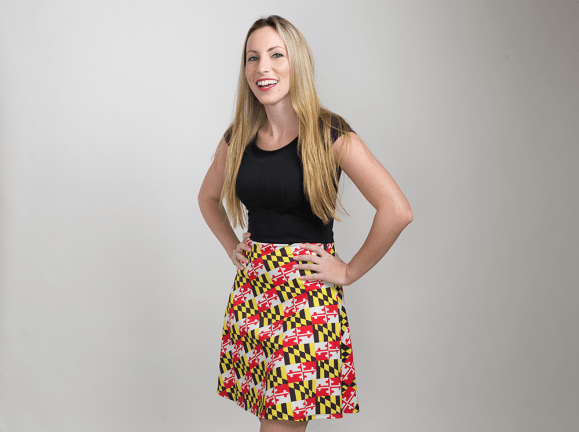
Route One Apparel– Ali von Paris ’12
In November 2010, Ali von Paris was faced with no work after the bar she worked at, the Thirsty Turtle, closed down. Wanting to honor the fallen bar along with her co-workers, Ali designed her first product, the “Turtle Survivor” jersey. Even though the jersey was initially targeted toward the employees, other fans of the bar quickly became interested. Ali saw this as an opportunity to leverage her passion for design and creativity into a business. Utilizing her social media channels, Ali advertised the jersey to her friends and family and secured 600 pre-orders for the product within just a few weeks, marking the start of Route One Apparel.
I fell in love with entrepreneurship soon after arriving at college, and made it my goal to run a business full-time upon graduating. I went 2 years without any paying customers, but during my junior year I started CardBuddy, a stick-on phone wallet company that now does over $100K annual revenue (and have been running it full-time since graduating last May).
I have some unique customer service strategies which have brought me great results, and I thought I’d share them here!
UPDATE – Recently, we caught up with Brice to get a few updates on iUnit. Within the next few weeks, iUnit will deliver to tenants the first project and MVP. This video gives the viewer a glimpse into the construction process and community amenities. In additional news, iUnit is expanding its partnership with the National Renewable Energy Laboratory (NREL), one of the world’s largest research centers focused on energy efficiency. The iUnit prototype will be housed in NREL’s Energy Systems Integration Facility where it will be used in testing everything from materials used to build the iUnit to energy efficient mechanical systems like iUnits battery and software systems.
It’s an exciting time for Brice and his team. To put a finer point on the company’s progress, Brice commented “iUnit is essentially the electric car of housing.”
February 4, 2015 – Envision the Prius of apartment buildings: wired with the latest “smart” technology, environmentally friendly, affordable, cool. That’s exactly what lifelong entrepreneur Brice Leconte delivers in his latest venture, iUnit.
Brice is one of the Dingman Center’s EIRs (Entrepreneurs-In-Residence), who help UMD students realize their entrepreneurial ideas during the Dingman Center’s weekly Dingman Fridays sessions. A long-time entrepreneur, Brice has a passion for disrupting industries and building socially active companies. He has started and invested in a wide range of businesses, from real estate development, to bricks and mortar, to e-commerce and tech startups. Today, he is focused on disrupting the real estate industry with his latest brand, iUnit.
The positive energy at last night’s Do Good Challenge was palpable. From the showcase to the finalist pitches to the panel of past Do Good competitors, it was clear that every person there was united by a passion for driving social change. Do Good delivered not only excellent pitches but also an informative platform for discussing the unique challenges and rewards of social entrepreneurship. Here are some takeaways:
On Thursday, April 7th, Kevin Plank ’96, Founder and CEO of Under Armour, returned to the University of Maryland to host the 11th annual Cupid’s Cup Entrepreneurship Competition. This was my second time attending the event and Mr. Plank continues to outdo himself by bringing in celebrity judges like Dan Gilbert, Wes Moore, and Arianna Huffington to evaluate the exceptional pitches of six finalists. The finalists emerged from a pool of over 500 applicants representing over 100 schools and made it through several rounds of screening to the main event where they competed for $100,000 in cash prizes.
The event started at 2:00 p.m. in the Clarice Smith Performing Arts Center with a Startup Showcase of UMD’s top student entrepreneurs and their businesses. Among the startups in the showcase were many of the finalists from the Pitch Dingman Competition such as uBoard and WeCook as well as many other friends of the Dingman Center like Spot This and Meta Cartel.
This slideshow requires JavaScript.
After touring all the booths, I ended up throwing on a Spot This t-shirt and joining my classmates to help collect email addresses to invite users to join their beta. The crowd was very curious about their product and happy to get involved in the testing. The energy and excitement in the atmosphere was palpable, but this was just an appetizer leading up to the main event that would start at 4:00 p.m.
The show kicked off with the professional MC Christian Crosby, Live Events Manager of the Philadelphia 76ers who introduced Plank to the crowd of over a thousand. Mr. Plank recounted his days at the University of Maryland as a student athlete and his rose delivery business that helped him raise the seed money to start Under Armour after graduating. After introducing the judges, the competition began.
Kevin Plank ’96 introducing judges
The competition was comprised of six finalists, all with incredibly unique businesses that were all generating substantial revenue. Headbands of Hope kicked things off by pitching their stylish headband company with a social angle to help children with cancer. Then the University of Maryland’s own Javazen got the hometown crowd fired up in their presentation. The unique box membership company MyBestBox did an impressive job explaining how their customized boxes can help customers live more healthy lives. The youngest entrepreneur in the finals was the founder of Plova Chewing Gum, who introduced us to the world’s first beneficial oral care product in the form of gum. The founder of Six Foods had an infectious energy that got Kevin Plank to eat her Chirp Chips, tortilla chips made with crickets. The last pitch was by Wolf & Shepherd the sleek dress shoe company with the technology of running shoes.
The judges certainly had their work cut out for them. Ultimately there could only be one winner of the Cup. After much deliberation the judges emerged from backstage and handed out some impressive $5,000 consolation prizes to Plova and MyBestBox. SixFoods was awarded $25,000 for second-place. The first-place prize of $75,000, their name on the Cup, and access to Kevin Plank’s network was awarded to our very own Javazen! We are all very proud of Ryan, Eric, and Aaron at the Dingman Center and hope that their success continues and also that it inspires other student entrepreneurs at University of Maryland.
Imagine a technology that could protect first responders and law enforcement agents from dangerous chemicals.
Not only would the technology protect agents from such chemicals, it would actually block the chemicals from clothing, turn them into water and cause the toxic chemicals to evaporate before even having a chance to touch agents’ skin. That is what the technology behind DC-area startup, Grey Matter, claims to deliver.
The venture, co-founded by part-time Smith MBA student Tommy Luginbill, recently secured $75,000 in federal grant funding to bring this potentially lifesaving, self-decontaminating clothing technology to agents in the field.
How did Grey Matter get its start?
Tommy Luginbill, Grey Matter
Tommy Luginbill is no stranger to entrepreneurship. A part-time MBA student, Tommy comes from a line of entrepreneurs and even helped to start a family-run solar contracting business before business school. Given his strong interest in startups, Tommy started hanging out at the Dingman Center (one of the resources that drew him to UMD) and even pitched an idea to an EIR for an energy software venture.
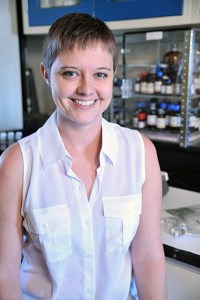
Dr. Brandy Johnson, Ph.D.
As Terps are known to do, Tommy worked tirelessly and fearlessly dove into the courses available around the Smith School, including the Fearless Founders program. He learned of a new pilot program at the time on campus called iCorps, which matched business students with lab innovations to identify viable commercialization paths. It was here that Tommy met inventor Dr. Brandy Johnson, a Ph.D. working in the Naval Research Lab.
Dr. Johnson was developing smart anti-decontaminating materials made from chitosan, a biopolymer made by treating recycled crab shells. Tommy knew about the lean startup methodology, how to create a business plan, and how to conduct customer discover and identify markets.
This year Cupid’s Cup is celebrating its 10th anniversary. Kevin Plank is looking for the next entrepreneur who has what it takes to win the cup and more than $100,000 in cash prizes.
As we gear up for this year’s competition, we caught up with founders Adam and Eric VanWagner to see how things are going with MyFridgeRental.com, the 2011 Cupid’s Cup champion.
We’ve all heard stories of entrepreneurs whose businesses began on the backs of napkins. But how about the back of a job application?
For one Dingman enTERPreneur, what began as a sketch for an at-home, all-in-one fitness device on the back of a gym job application, has turned into a fully operational business. Today, Gym Supreme’s founder and Dingman enTERPreneur Academy graduate, Obidi Orakwusi, has a patented at-home gym device, Mega Bar, and is launching the company’s first kickstarter campaign.
In 2013, the Dingman Center blog caught up with Obidi. To learn about the genesis of his idea, check out that post here.
Since we’ve been uber-focused on the lean launchpad methodology and customer discovery around the Dingman Center lately, we asked Obidi to share some of those insights from his startup journey.
When Obidi initially gained the idea for Mega Bar, he was confident that it would sell. Mega Bar was not the first at-home gym on the market, but Obidi noticed that what was available at an affordable price point was not the best quality. This validated his hypothesis and he saw an opportunity.
What was your path like toward customer discovery?
I did things a bit backwards. I did much of my customer discovery after the prototype had been developed. I walked around campus and stood outside of Eppley Recreation Center with a clipboard to take notes from discussions with potential customers, who were undergrad students ages 18-22. Through those interviews I found that although my product was an improvement from a quality and design standpoint — think the Nokia compared to an iPhone — it was too expensive for the demographic on campus. The needs matched but the price didn’t. From there, I segmented the target market and shifted focus to a more of a working class, young professional crowd that had money but limited time. Within this space I found my target customer and learned what I was really solving for them: saving people time. This customer spends a majority of his/her time at work, leaving minimal time — sometimes just a few hours at home or outside of the office. With that limited time, people may not always feel like working out, but Mega Bar can help.
What was the biggest challenge in developing and commercializing a new product?
From my experience, the biggest challenges in creating a new product and commercializing it, are marketing and pricing. Pricing will narrow your target market and really affects revenues. For example, if you try to force the price to fit a cheaper audience, you might be faced with a situation where your margins are just too low to keep the company growing. Once you have a set price, the hardest thing is figuring out how to reach the market with the highest willingness to pay when you have no budget for marketing, because marketing has to be continuous for it to be effective.
How did you navigate the patent approval process?
Getting a patent so early on was a great boost of confidence, and the fact that it arrived at the door on my birthday last year was unbelievable. I knew how important it was to have a patent in the pipeline, but I didn’t have the resources to pay excessive legal fees, so I had to learn it all. I read all the rules very carefully, read articles, and called the USPTO anytime I had a question. With all the knowledge I gained, I was able to submit the patent application and receive the approval to grant the patent within nine months of applying, which is extremely rare. I applied for my second patent last summer.
Have you tried any unique marketing campaigns?
I’ve tested three different marketing strategies. The first two were great strategies, but they wouldn’t work with the minimal resources the company had to work with.
The first was a social media campaign. The second involved attempts to have influencers in the fitness industry promote the company, and then the 3rd strategy was to get a booth at a fitness convention. The social media strategy was put on hold because it felt like the posts were getting nowhere without paying for ads; it was taking too long. The fitness influencers marketing strategy didn’t work because we couldn’t afford to send in free gear so early on or pay them to promote to their fan base. I also tried to get the Mega Bar featured in major fitness publications, but the cold emails felt like putting a message in a bottle and throwing it into the ocean of emails that those publications received everyday.
The entire time, I was trying to figure out a way to reach an audience that would also see the value in the product, but I realized that I had been searching for the marketing middleman that would help us reach the potential consumer, when I should have actually been the one reaching directly to the early adopters because middlemen are always more costly. I had to find a way to reach directly to consumers that would understand the value of the product just by seeing a 30 second video of what the product can do without further explanation, so I decided to get the company’s first booth at a personal training convention to gain exposure for the Mega Bar. That turned out to be the most effective strategy based on time and the little resources the company had.
What resources have you found to be most valuable to you as an entrepreneur?
The most valuable resources found throughout my journey, thanks to the Dingman Center, are the entrepreneurship classes. It started with the Entrepreneur Academy that eventually evolved to Fearless Founders. From that class, I learned so much about how to understand your target customer. Everything about the Dingman Center has been a great resource for me along the journey. From winning the first funding ever for the company, which went toward the issue fee for the first patent, to being able to talk to other successful entrepreneurs to get feedback. It’s all been a source of encouragement to keep progressing.
At the Dingman Center, I attended Pitch Dingman on Fridays where I could talk about creative ideas and strategies freely without being looked at like a crazy person because I was so young. You run into a lot of doubters when you first start your idea because no one believes you, but at Dingman, they believe you and are always there to help you succeed even if you are trying to turn water into wine. I had the chance to go on a trip to New York this past spring to show off the cool ideas that are coming out of UMD to Terps who now live in Manhattan. That would have never happened if the Dingman Center didn’t hook us up with a booth at Cupid’s Cup earlier this year where I connected with the UMD Alumni Association.
University of Maryland President Wallace Loh with the Mega Bar
What advice do you have for student entrepreneurs?
The biggest advice I would have for student entrepreneurs is to be confident, but don’t think you already know everything about your idea on day one. Be confident about your idea, but don’t be arrogant because it is just an idea until you can start selling it or acquiring users. You will need help to keep your idea progressing, but watch out for anyone who starts wasting your time because you can not replace time. Learn from the good things that happen along the journey, and also learn from the bad. Every experience will help you understand what to do the next time.
What’s one of the biggest lessons learned in starting Gym Supreme?
I’ve learned so much through building a product and launching a brand to push the product, but the biggest lesson that I’ve learned is that you should always test out your theories, never rush into decisions. Starting a company with no money after product development will force you to find new solutions to overcome marketing barriers.
You recently launched a Kickstarter campaign. What do you hope to achieve through Kickstarter?
My main goal with the Kickstarter campaign is to launch the first sales of the Mega Bar and to introduce Gym Supreme’s story to the world. The goal is to raise $12,000 through sales so that the company can finally generate revenue.
Do you have any bootstrapping tips for our readers?
Start saving your money now! Before senior year, I had a work-study job on campus and saved every paycheck. By the time graduation rolled around, I had enough money to develop a prototype.
Never jump into decisions without thinking twice about it. When you receive that first offer, don’t just take it. Be cautious of investors who are just opportunistic and don’t genuinely believe in your product.
Also, be resourceful. For example, I taught myself to code, which saved a lot of expense and was something I could figure out through studying.
What’s your long-term vision for Gym Supreme?
The long term goal for Gym Supreme is to become a fitness lifestyle brand that creates excellent products, which help us all stay consistent with our health goals. I want this company to help anyone that has a desire to Lift Good, Live good, and Look Good®.
To learn more about Gym Supreme and to place your order for the Mega Bar, visit their Kickstarter Page to support the $12,000 goal.
And, be sure to connect with Gym Supreme on social media:
Since 1986, the Dingman Center for Entrepreneurship has helped foster countless students and entrepreneurs. We are always excited to speak with alumni about their successes. Today, we caught up with Margaret Croushore (Maggie), a 2013 UMD graduate who launched her business, KidFit Academy, in Oakland, California.
Grant Lee (GL): Hi Maggie! Tell me about yourself? Maggie Croushore (MC): I graduated from the University of Maryland School of Public Policy in May 2013, with a focus in education policy and nonprofit management and leadership. Prior to UMD, I taught middle school literacy in Washington, DC for four years. I became involved with the Dingman Center at the end of my first year at UMD, when I pitched an idea that would get students more active throughout the school day. The idea has evolved over time into what is now KidFit Academy. Continue reading →

 The Robert G. Hisaoka Speaker Series continues with a Young Founders Panel on Tuesday, February 13 from 5:00-6:45 p.m. Panelists Ali von Paris ’12, Evan Lutz ’14 and Brandon and Bradley Deyo are all successful entrepreneurs who started their businesses as students. In a panel moderated by Robert Hisaoka, students, staff, faculty and alumni will hear about the experiences and challenges each founder faced while turning their dorm room startups into lucrative businesses. Register now to attend, and stay tuned to our blog to learn more about each of the panelists.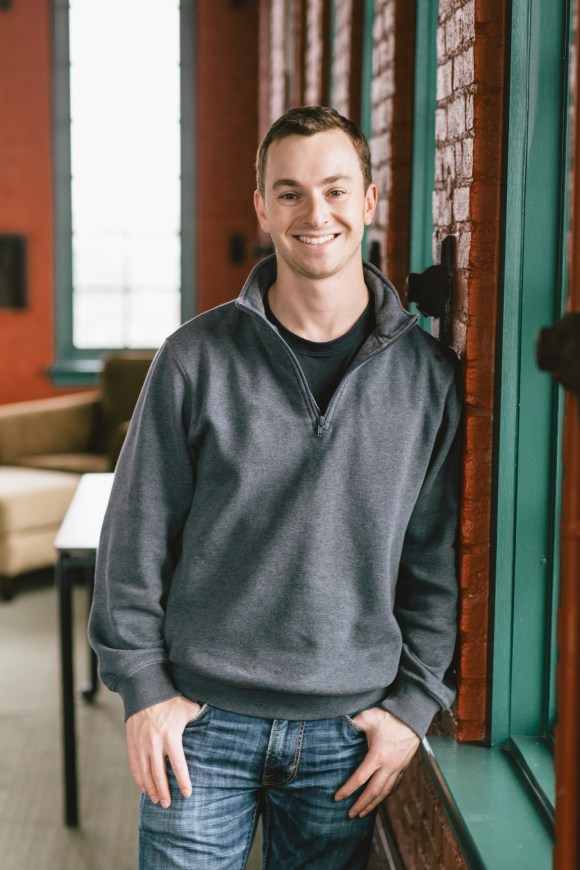



 Imagine a technology that could protect first responders and law enforcement agents from dangerous chemicals.





 Dingman Center for Entrepreneurship