Category Archives: Terps

6 things we learned at Do Good Challenge Finals

By: Megan McPherson

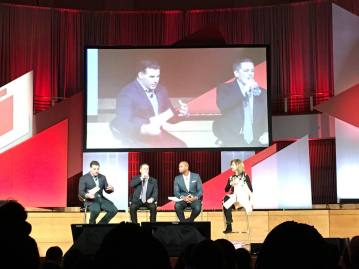
The positive energy at last night’s Do Good Challenge was palpable. From the showcase to the finalist pitches to the panel of past Do Good competitors, it was clear that every person  there was united by a passion for driving social change. Do Good delivered not only excellent pitches but also an informative platform for discussing the unique challenges and rewards of social entrepreneurship. Here are some takeaways:

Continue reading

6 finalists remain after the Do Good Challenge Semifinals

This slideshow requires JavaScript.

By: Megan McPherson

The small classroom setting of the Do Good Challenge Semifinals felt intimate and understated, but the passion of each student shined just as brightly in that classroom as it may have on some grand stage. As each team pitched their eight weeks of social impact to the judges panel, I tried in vain to capture the morning’s energy with numerous photographs and tweets.

Continue reading

Tagged , , ,

A Look Back at the 2016 Cupid’s Cup

By: Justin Taubman ’16 MBA Candidate

On Thursday, April 7th, Kevin Plank ’96, Founder and CEO of Under Armour, returned to the University of Maryland to host the 11th annual Cupid’s Cup Entrepreneurship Competition. This was my second time attending the event and Mr. Plank continues to outdo himself by bringing in celebrity judges like Dan Gilbert, Wes Moore, and Arianna Huffington to evaluate the exceptional pitches of six finalists. The finalists emerged from a pool of over 500 applicants representing over 100 schools and made it through several rounds of screening to the main event where they competed for $100,000 in cash prizes.

The event started at 2:00 p.m. in the Clarice Smith Performing Arts Center with a Startup Showcase of UMD’s top student entrepreneurs and their businesses. Among the startups in the showcase were many of the finalists from the Pitch Dingman Competition such as uBoard and WeCook as well as many other friends of the Dingman Center like Spot This and Meta Cartel

This slideshow requires JavaScript.

After touring all the booths, I ended up throwing on a Spot This t-shirt and joining my classmates to help collect email addresses to invite users to join their beta. The crowd was very curious about their product and happy to get involved in the testing. The energy and excitement in the atmosphere was palpable, but this was just an appetizer leading up to the main event that would start at 4:00 p.m.

The show kicked off with the professional MC Christian Crosby, Live Events Manager of the Philadelphia 76ers who introduced Plank to the crowd of over a thousand. Mr. Plank recounted his days at the University of Maryland as a student athlete and his rose delivery business that helped him raise the seed money to start Under Armour after graduating. After introducing the judges, the competition began.

CC16

Kevin Plank ’96 introducing judges

The competition was comprised of six finalists, all with incredibly unique businesses that were all generating substantial revenue. Headbands of Hope kicked things off by pitching their stylish headband company with a social angle to help children with cancer. Then the University of Maryland’s own Javazen got the hometown crowd fired up in their presentation. The unique box membership company MyBestBox did an impressive job explaining how their customized boxes can help customers live more healthy lives. The youngest entrepreneur in the finals was the founder of Plova Chewing Gum, who introduced us to the world’s first beneficial oral care product in the form of gum. The founder of Six Foods had an infectious energy that got Kevin Plank to eat her Chirp Chips, tortilla chips made with crickets. The last pitch was by Wolf & Shepherd the sleek dress shoe company with the technology of running shoes.

The judges certainly had their work cut out for them. Ultimately there could only be one winner of the Cup. After much deliberation the judges emerged from backstage and handed out some impressive $5,000 consolation prizes to Plova and MyBestBox. SixFoods was awarded $25,000 for second-place. The first-place prize of $75,000, their name on the Cup, and access to Kevin Plank’s network was awarded to our very own Javazen! We are all very proud of Ryan, Eric, and Aaron at the Dingman Center and hope that their success continues and also that it inspires other student entrepreneurs at University of Maryland.

Tagged , ,

Female Fearless Founders Featurette

In honor of Smith Women’s Week, we would like to highlight some recent past and present female participants of our Fearless Founders student accelerator program. We are immensely proud to have worked with these young women and to have been given the opportunity to help them grow their startups.


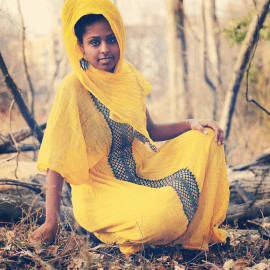
East Habesha – Saron Asfaw
habesha

Saron Asfaw ’18 started East Habesha in our Idea Shell stage, where she won a $500 MVP grant from Capital One to build her startup. She is currently working on further improving her business as a member of the Spring 2016 Hatch cohort. East Habesha is a website that sells custom Ethiopian dresses and food spices to customers in the DC metropolitan area. There is a large population of Ethiopians in the DC metropolitan area and there are many vendors that supply these necessities. What differentiates East Habesha from its competitors is that the prices are low but the quality is high. We look forward to seeing East Habesha grow as it continues to gain traction in the community.

Continue reading

Tagged , , , , , , , , , ,

Great startups that are solving the world’s most pressing social issues

This slideshow requires JavaScript.

By Adriana Kao, MBA 2016, CellShare team

After the nerves have settled, the Hult Prize, the world’s largest student competition to solve the world’s toughest challenges, has its finalist teams. These finalists came out of the five regional finals held in Boston, San Francisco, Dubai, Shanghai and London on March 12, 2016.  The UMD team, comprised of two grad students, an undergraduate student and an alum, competed in and experienced the regional competition held in Boston.  Although the UMD team did not go through to the next stage of the competition, it was a terrific experience, in terms of exposure, professional and personal learning experience.

The Hult Prize held in Boston, hosted at the Hult International Business School, was fast-paced and dynamic.  There were 58 teams that descended on Boston, from Colombia to France, from India to Nigeria. All sorts of schools were represented and the make-up of teams were as diverse as can be; there were engineers, architects, entrepreneurs, food scientists, bankers, social workers and of course, plenty of business students. It was humbling to be part of such an amazing congregation of people, with such diverse talent and experiences, and all united with the vision to help alleviate poverty in the world’s urban crowded areas.

Continue reading

Tagged , ,

Would you choose a cushy Wall Street job or $1M to help solve a global social problem?

The Dingman Center co-sponsored several students that are attending the 2016 Hult Prize regional finals competition in Boston this week. Look forward to more blog posts from attendees.

By Adriana Kao, MBA 2016, CellShare team

The title question was the road in the fork that many Hult Prize participants had to face at some point in their journey. The Hult Prize, created in 2009, is a global case competition that challenges students around the world to develop innovative social enterprise solutions for the most pressing global problems, including provision of clean water, addressing the food crisis, and improving childhood education. The winning team receives $1M in seed funding and continued mentorship to launch their social enterprise idea. Sounds pretty neat, doesn’t it?  All there is standing in the way between your brilliant idea and $1M are 5000 teams from all around the world with equally brilliant ideas.

Continue reading

Tagged , , ,

ANNOUNCING THE SPRING 2016 HATCH COHORT

By: Justin Taubman ’16 MBA Candidate

Each semester, students from across campus participate in the Dingman Center’s Fearless Founders program. The program consists of three stages: Idea Shell, Hatch and Terp Startup. True to the name of each stage, the Fearless Founders program guides student ventures from idea to launch.

This spring, 19 students were selected to participate in Hatch program, where they will build and test their business ideas using the Lean Launchpad methodology. Once the course has been completed, students will be eligible for up to $1,500 in seed funding provided by Capital One. 

What kinds of ventures can we expect from this year’s cohort? Here are “elevator pitches” from two student entrepreneurs:

Vendoo

Venture: Vendoo

Founder: Thomas Rivas-Siles

Vendoo is an app that is focused solely on the seller side of an e-commerce transaction. It will save the seller time by posting on different marketplaces and being able to control all the listings from our app. Apart from saving time, we increase the probability of a sale by recommending marketplaces relevant to the item being posted based on its information. It is the one-stop app for sellers.

Venture: Kanvasroom

Founder: Aaron Pludwinski

Kanvasroom’s mission is to connect creative professionals around the world and give them the tools to create projects anywhere remotely. Members create multimedia portfolios that showcase their work to the creative industry. Top creative companies, recruiters, organizations, and more — come to Kanvasroom to see the incredible work and find talent to hire. Once hired, creatives can collaborate on projects using real-time video conferencing, sketching, brainstorming, payment tool and so much more all in one online workspaKRce. By creating an environment that allows creative teams to discover, hire, and collaborate, Kanvasroom has provided the most convenient and cost-effective method to outsource creative work, get hired, and create amazing projects.

Below is a complete list of the spring Hatch cohort and their ventures. For more information on the Fearless Founders program and how to apply, please click here.

Abb Kappoor & David Potter: Curu

Matthew Ernst: Homeless No More

Sumanth Jinagouda: Spot This

Victoria Tataw: Nails By Tataw

Thomas Rivas-Siles: Vendoo

Oru Wonodi: NOVA Prints & Apparel

Bret Caples: Campfire Marketing

Jamie Thompson: The Pregame Ritual

Shyon Parsadoust: Roll-A-Wire

Jacob Orbach: Trek

Aaron Pludwinski: Kanvasroom

Carlouie Nievera: Carlouie & Company

Dustin Ecton: Taptime TV

Saran Asfaw: East Habesha

Pablo Jodar: Paella Chef

Philemon Mastewal: Q

Louis-Philippe Jacobe de Naurois & Davit Sargsyan: Alma Sangría

Do Good Challenge and the Millennial Social Entrepreneur

By: Megan McPherson

For those of you who don’t know me, I am the Dingman Center’s new Events and Marketing Coordinator. While I’m confident in my events and marketing cred, the complex and challenging world of entrepreneurship is something I am only just dipping my toes into. When I started I was aware of two major and very different events on the horizon: the Pitch Dingman Competition Finals and the Do Good Challenge. Pitch Dingman Competition seemed fairly straightforward to me: five student finalists go head-to-head to win funding for their startups. The Do Good Challenge, on the other hand, is a grand collaboration: founded by the School of Public Policy Center for Philanthropy and Nonprofit Leadership, the Challenge is now run in partnership with the Robert H. Smith School of Business’s Center for Social Value Creation and the Dingman Center, and sponsored by Morgan Stanley Private Wealth Management. Students are given an eight-week period to “do good”, meaning, in the words of the Do Good Challenge website, “Volunteering, raising money and in-kind donations, starting or advancing a social enterprise, or generating buzz for their cause through social media.” Judges measure the resulting social impact generated by a team’s Do Good campaign and the best teams are rewarded with monetary prizes toward their cause. So what is the Dingman Center’s role in all this?

I sat down with Sara Herald, Associate Director for Social Entrepreneurship at the Dingman Center and former Center for Social Value Creation member, and asked her to unpack the history behind the Dingman Center’s involvement with the Do Good Challenge. “After the Do Good Challenge began in 2012, it became clear that there were two tracks forming: one for students who started a project as part of a larger organization or movement that ended with the challenge, and one for students who founded their own social enterprises to use those ventures for social impact beyond the scope of the Do Good Challenge,” explained Herald. In response to this growing trend, in 2014 the Do Good Projects and Do Good Ventures tracks were created to distinguish these types of entries, and the Do Good Challenge became a partnership between the School of Public Policy and the Robert H. Smith School of Business. Within the Smith School, both the Center for Social Value Creation and the Dingman Center for Entrepreneurship support the Do Good Challenge.

A big part of the the Dingman Center’s role is to provide seed funds as well as support and advising services for the many social ventures that sprout in the wake of the Do Good Challenge, including two recent successes Hungry Harvest and Press Uncuffed. But when did social entrepreneurship, or using the tools of business to solve a social problem, become such an attractive concept, particularly to millennials? As to the rise of social impact business models in general, Herald proposed, “There is a macro factor in that we as a society cannot continue to do business in the way that we have.” Resources like water are not infinite, as we had previously thought, but finite. Even traditional corporations such as Coca-Cola are incorporating social impact into their business model as a way to make sure that they are replenishing their resources and ensuring their future availability. She clarified that this trend is not just about the environment, but about “promoting a long-term viable business.” And as to why are millennials are focusing on social ventures, Herald provided this insight:

“The millennial generation cares a great deal about social impact. They reflect on their place in the world and want to become part of a business that shares their values and strives to do more than just make a profit. Not only do they want to work for these types of businesses, they want to buy from them, and they also want to create them.”

As an established millennial myself, my heart swelled to hear such an unusually positive description of my generation. Reflecting on my own experiences and those of my peers, I considered how millennials grew up at the start of a greater trend toward global awareness via the internet and social media. Millennial newsfeeds are filled with articles about global climate change, world hunger, poverty, and the plight of marginalized groups whose voices are only just beginning to be heard. In the midst of this, we see friends posting statuses about issues they are passionate about, sharing articles and contributing to a discussion, or uploading photos of themselves volunteering or at charity events. While popular sentiment is that prolonged exposure to the internet and social media has made millennials too image-conscious, there is a flip-side to this coin: when you see so many of your peers doing good and becoming part of movements toward bettering the world, it’s hard not to want to fit in.
mcphersondingmanheadshotMegan McPherson joined the Dingman Center for Entrepreneurship in 2016 as its Events and Marketing Coordinator, supporting Associate Director Holly DeArmond. She assists in developing marketing strategies for the center, promoting events, and managing the Dingman Center’s growing social media presence. She has a B.A. in Japanese and Film from Vassar College and is currently working on a Masters in Cats as mother to two domestic shorthairs at her home in Gaithersburg, MD.

For those of you who want to learn more about the role of millennials in social entrepreneurship, here are two events you should check out this week:

What You Didn’t See on Shark Tank: Evan Lutz’s Journey to Investment
Thursday, March 3 – 12-1 p.m. in 2333 Van Munching Hall
A lunch talk with Evan Lutz, founder of Hungry Harvest and a Do Good Challenge contender in 2014. Sign up now.

Social Entrepreneur Millennial Mash-up Panel at Social Enterprise Symposium
Friday, March 4 – 1-5 p.m. in Stamp Student Union
This interactive panel features a Millennial mash-up of real-world social entrepreneurs taking action to address the problems they’re most passionate about, while disrupting the industries where they work. This session will explore how social entrepreneurship helps to drive positive change, and how the growing influence of social enterprises is redefining business as usual.



Pitch Dingman Competition Finals Recap

This slideshow requires JavaScript.

The Pitch Dingman Competition Finals were on Tuesday, Feb. 16 and as promised the Dingman Center and our partners gave away more than $30,000 in startup funding! Here’s the breakdown:

Grand Prize – $15,000
WeCook, Ryan Pillai

Second Place Prize – $5,000
ICOW, Jonathan Kau

Judges Choice Prizes – $6,000 ($2,000 to each team)
Embitterment, uBoard, VentureStorm

Audience Choice – $500
uBoard, Natalie Urban

Kimberly Marie Scholastic Achievement Award – $1,000
WeCook, Ryan Pillai

SECU Finalist Award – $500 to each team

We are grateful to our sponsors, David and Robyn Quattrone, and SECU for their generous contributions. Thank you as well to our excellent team of judges:

Paul Capriolo
CEO, Social Growth Technologies, INC

Malcolm Gillian
Managing Partner, Syndicate Group NYC

Jennifer Meyer
Betamore

Carmen Mirabile
Assistant Vice President, Marketing, SECU

David Quattrone
Co-Founder and CTO, Cvent

Greg Vetter
CEO, Tessemae’s All Natural

The Pitch Dingman Competition is an annual business competition for UMD students. To get involved in the competition and other Dingman Center programs, come pitch your business ideas at Dingman Fridays, weekly walk-in sessions where students can pitch ideas to seasoned entrepreneurs. For those students already pursuing a business idea, sign up to attend the first stage of our accelerator program, Fearless Founders.

An Insider Look at MSEC with Rachel George

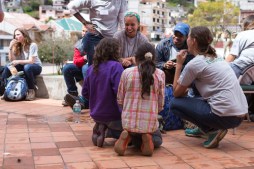
At its core, Maryland Social Entrepreneur Corps or “MSEC” is a nine-credit, eight-week summer study abroad program for students interested in a social entrepreneurship internship in Ecuador, Nicaragua or the Dominican Republic. During their stay, students visit remote rural towns with limited resources to conduct health and well-being campaigns, as well as consult with local cooperatives, entrepreneurs and community groups. Knowing Spanish is not required, but with classes and immersion many students come out of the program able to hold conversations with a native speaker.

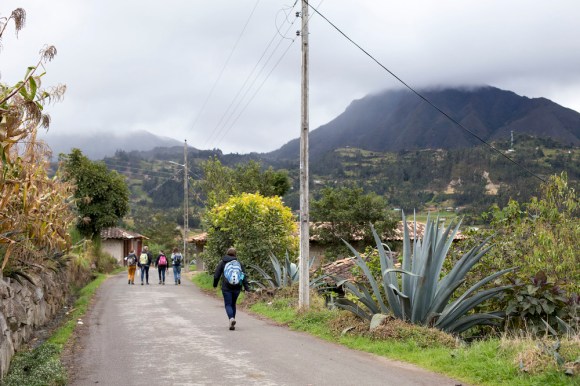
We wanted to hear what the MSEC experience is really like, so we turned to Rachel George, ’16, a Marketing and English double major student who took the program last summer. The photos below are all from her incredible photo blog of her stay in Ecuador.

DC: Why did you sign up for MSEC?

RG: It was a combination of things. A lot of it was that I hadn’t had a chance to do a semester abroad, so this was a chance for a longer study abroad experience that I didn’t have to take a semester off for. I wanted to explore the social justice sector because that was something I was interested in but didn’t have much experience with. It also gave me a chance to practice my Spanish. Another appeal of it was that it was interdisciplinary consulting projects. I’m in the QUEST program so that’s something I’m already familiar with—working with other majors is something I really love.

DC: At MSEC you stay with a host family. What was that experience like for you?

RG: I went to Ecuador and I stayed with four different host families, so the longest I was with them was for 4 weeks. The family I bonded the most with was when I was in the northern region of the country. It was in a very rural village where there wasn’t very much to do in the evenings besiddownloades stay in with our host families. I stayed with them for two weeks.  I was living with a single mom and her 15 year-old daughter. At nighttime we’d talk, play cards, my host sister would show me music that she liked and I got to hear more about them—stories that the mom would tell me about being a single mother supporting her daughter with multiple different jobs: she ran a store, she had livestock, she sold clothing that she knit. It was a great learning experience. I’m still friends with my host sister on Facebook.

DC: What was your favorite thing you did through MSEC? Both academically and for fun.

RG: Academically…my favorite point was actually a health campaign we did that was in a town called Simiatug. We did eye exams for a TON of people—a couple hundred people. At that point we were at the end of the trip, so my Spanish was definitely a lot better than it was at the beginning, and it was really satisfying because I spent several hours straight giving eye exams and I rarely needed to call a supervisor over to translate. It was great.  For fun…exploring the city. We had a home base in the city of Cuenca and for a couple weeks at a time we would go out to rural areas. While we were in Cuenca, which is a beautiful city, I went out almost every night and explored the town. There was a church up on a hill that overlooked the entire city. The city is cupped in the middle of these mountains, so you can climb up to the church and see the entire city at night and it’s beautiful.

IMG_6263

DC: What did you take away from the experience?

RG: Personally, the biggdownload (2)est thing that I got out of the trip was that after coming back I’m definitely more conscious and more grateful for my own circumstances. I remember one of the things that our supervisors said to us: “If you take nothing else from this trip, nothing from the work or even the program, take the experiences you had, the people you met, the things they taught you.” And he told us that “this trip is about learning that you have a comfort zone, and there’s a reality outside of it. There are people struggling to live and support their families every day, and you can do something to help them.” It’s important to remember that there are people outside your reality, people who have different experiences from you. But also that you can help.

DC: Would you recommend MSEC to other students?

RG: Yes I would. I would not give up the experiences that I had for anything.

IMG_6605