Business Rx Entrepreneur Q&A with Elana Fine

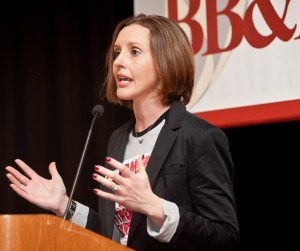
Elana Fine, Associate Director of the Dingman Center recently participated in a live chat with the Washington Post’s Capital Business magazine for their Business Rx column answering questions from regional entrepreneurs. This post features some of the questions from the live chat. Follow the Dingman Center’s Facebook Page and Twitter Page for information on the next live chat and other Dingman Center news and events.

Q: What resources would you recommend for entrepreneurs interested in starting a business but in need of guidance?
A: The DC area has a number of great organizations including Foster.ly, ProudlyMadeinDC.org (for resources), the VA and MD economic development organizations, StartupMD/DC/VA, DC Tech Meetups, DC Tech Facebook group and university resources at UMD, Georgetown, George Washington and George Mason.  I’d also suggest reading Business Model Generation to get started.

Q:I have always wanted to start my own business but have no idea what kind or where to start. Are there any resources that could help nudge me in the right direction or help me find what my strengths/weaknesses are?
A: There are a couple of ways to go about it — think about the things that you are most passionate about — and the things that drive you crazy.  What are your “I always wish there was a place to do this..or a way to do that?” Where do you see people waiting in lines…and why? Talk to your friends and colleague about the businesses they’ve always wanted to start.  My mom is a great example; she retired and started getting into writing because she always kept a journal. Now she is thinking about starting a business that gets groups of people together to write about shared experiences.

Q: What industries, other than tech, are successful startups? 
A: Cupcakes! All kidding aside, I think we are seeing a lot of activity in the food space.  Look at trends around specialty restaurants – burgers, cupcakes, frozen yogurt. Also a lot around organic, locally grown foods.

Startups around improving education and healthcare have no shortage of problems to solve. Also, there is also a blurred line in many cases between tech and non tech. A lot of product companies now sell online.  Is that a product of a tech company because they have a website?

Q: I have been working on a great idea that will revolutionize the way people shop online. The problem is, most investors or prospective customers refuse to sign a non-disclosure agreement and I don’t feel comfortable talking to anyone about my idea without a certain level of protection. How do I protect my idea from being stolen?
A: This issue comes up very often, so you are not alone in this dilemma.  Investors at all stages rarely sign NDAs because they often speak to so many companies and can’t be precluded from an investment opportunity.  If you aren’t already in prototype or beta testing stage, you are probably too early to even talk to investors.  Select advisors that you know and trust for early feedback — and then conduct market research to determine if you are solving a problem or creating a product that potential users will find valuable.  I think there are very few examples of investors stealing an entrepreneur’s idea — they have reputations on the line as well.

Q: My company is currently looking for angel funding. I am the brains behind the business, but I am horrible at pitching. Will investors be turned-off if I bring in someone else to pitch my business for me?
A: I always suggest the CEO should pitch because at the end of the day you are also the chief selling executive. Investors want to feel comfortable that you will be able to sell to customers or other partner who you need to sell on your vision.

Pitching takes A LOT of practice. At the Dingman Center we spend a lot of time coaching students and local entrepreneurs on their pitches because it is for more than just raising money. Find advisors and coaches who will help you — you’d be surprised how much progress you can make. Also, find the venues where you feel comfortable. Pitching investors doesn’t have to be in a crowd, one on one meetings are also very successfully in building rapport.

Q: My partner and I are working on developing a beta version of our app. He says since it’s functional we should release it to our beta testers. I say we need to improve it so people are wowed and don’t get a bad first impression. What’s your take on this?
A:  I recommend releasing it as that is the purpose of a beta test.  Beta users know it is in its early stages but can provide you very valuable feedback.  Many local startups have been extremely successful in launching companies following Lean Startup principles — get your minimally viable product out there and then get feedback early and iterate.

Q: How ambitious should a start-up be when it comes to capturing one or two markets versus getting really big quickly? We’ve seen examples of local firms that have taken both approaches. Obviously money can be a limiting factor, but are there other considerations?
A: Startups always need to think big — but execute smart.  Think about splitting your time so that it is focused on your top 1-2 markets, but that you allow some time to be opportunistic.  Focus on creating a replicable sales/customer acquisition model — that is often easier to do by focusing on one market.  You can learn what works/what doesn’t and then move on to other or larger markets.  Money is not the only limiting factor — you don’t want to dilute your expertise either. One step off your path is okay, but sometimes it takes you 2 steps off focus which can be hard to find your way back.

Q: How early should founders start a conversation about equity, both among themselves and with early employees? What are some good guidelines when approaching the subject?
A: Founders should have these conversations VERY EARLY. I’d decide what size of an option pool you want to set aside (I recommend 10-15%) and then determine what percent you will give to certain hires (senior management, developers, sales, etc). This will give you a set amount of equity to play with and help guide your hiring/grant decisions.

Q: It can often seem like investors have the upper hand when it comes to equity conversations — after all, they’ve got the money. How should entrepreneurs approach conversations with financiers about how much of the company they turn over in exchange for an investment?
A: Before you start talking about valuation, startups need to find early investors that share their vision and can also add value to the company.  Finding angel and VC investors is a two way street — you are selling them on the investment opportunity and they should also be selling you on what they bring to the table.  Most angel deals are done at $1-4M pre-money valuation, so you need to think about how much you are willing to give up in equity and how much you really need to raise to get company to next milestone.

 Elana Fine joined the Dingman Center for Entrepreneurship in 2010 as the Director of Venture Investments and was named Associate Director in January 2012. In this role, Elana continues with her primarily responsibility of managing the Dingman Center Angels, a network of active, accredited angel investors providing open and efficient access to early-stage capital for entrepreneurs in the Mid-Atlantic region, and is also the primary center contact within the Smith School and on campus.

An MBA’s Summer in the Startup Nation

 Allen Lu, MBA Candidate 2013, is spending his summer in Israel, participating in a technology commercialization course at the Technion-Israeli Institute of Technology in Haifa and interning at Medtronic in Herzliya. 

The 2012 Israel Global Technology Entrepreneurship Fellowship kicked off with the ILSI-Biomed conference, which showcased innovations in the fast-growing biomedical, healthcare, and life science industries.

There is a strong relationship between academia and industry in Israel.  I was impressed to see both sides coming together to discuss university research and to explore opportunities for new business ventures.  Technology transfer centers such as Technion’s T3 and BioRap presented their latest inventions to investors and industry partners; while, executives from BioLineRx and Roche shared their success stories from partnering with academia to bring life-saving medicines from the bench to bedside.  The university business model began with teaching and then incorporated academic research; however, I feel the future success of the university will hinge on its ability to form strategic partnerships with industry through joint research and technology commercialization.


Even though this conference focused on Israel, the ideas shared where not bound by borders.  Multinational companies such as Life Technologies, Medtronic, TEVA, Johnson & Johnson, and Abbott all spoke regarding Israel’s spirit of entrepreneurship and the global impact of its innovations.  I was most impressed by Dr. Stephen Oesterle, Sr. VP of Medicine and Technology at Medtronic, who shared his insights on the urgent need to think differently about how we develop medical devices for the developing world.  The largest healthcare market is China – but in order to penetrate that market, Oesterle stressed the need for infrastructure development, physician and patient education, and most importantly, the need for affordable technologies.  Applying the principles of reverse innovation, Israel can partner with China to develop affordable medical devices first for the developing world and then bring these technologies back to developed countries such as the United States.

After Oesterle’s keynote, I developed the chutzpah to approach him and affirmed Medtronic’s mission of delivering affordable world-class healthcare not only the US and Europe, but also the developing world.  Supportive of my endeavor, he referred me to Medtronic’s office in Herzliya where I am now working with Judith Gal, General Manager for Medtronic Israel, on a business development project in making Medtronic technologies affordable to developing nations.

If you’re interested in bio-entrepreneurship, I highly recommend you attend ILSI-BioMed 2013.  I know I will be there!

Allen Lu received his B.S. in Chemical Engineering and M.S. in Biomedical Engineering from the University of California, Los Angeles.  He completed his academic research training at the National Institutes of Health and Harvard Medical School and worked as an assay development scientist with Meso Scale Diagnostics.  At Smith, Allen is completing his MBA with a focus in Finance and Business Development.  He is currently in Israel as a Global Technology Entrepreneurship Fellow at the Technion and a business development intern at Medtronic WTC.

Tagged , , , ,

Entrepreneurship Do’s and Don’ts

Are you an aspiring entrepreneur? Take a look at these Do’s and Don’ts from some of the entrepreneurial experts featured in the “Center Stage” series.

DO’s

“Listen to anybody and everybody, but don’t let them make your final decision.” – Steve Begleiter, CEO, KBL Group International

Start from the end. Who are you going to sell to? Build a vision of what this will all look like when it’s successful.” – Glen Hellman, Principal, Driven Forward

“Find outside advisers that provide experience in the areas you don’t have strength in.” – Liz Sara, Managing Director, Best Marketing LLC

“Keep it simple and tell a story during an investor pitch session.” – Ed Barrientos, CEO, Brazen Careerist

“Go out and make contacts, leverage your network of individuals that have a background or some knowledge base or expertise that they’re willing to share with you.”  -Michael Schwab, Co-President, D&H Distributing Company

“Make sure you put everything in writing.” – Dr.Gloria Jacobovitz, Tech Transfer Committee Member

“Do things that you love and are passionate about. Be authentic in everything you do.” – Wayne Kimmel, Founder, Artists & Instigators

“Stand your ground and show confidence.” – Doug Humphrey, CEO, Joss Heavy Industries

“Fall in love with the idea that your product solves a business or consumer need and can do so at the appropriate price point.” – Michael Schwab

“ Find like-minded people to vet your plans and to hold you accountable. Find a group of trusted people to share your plans.” – Glen Hellman

“Take every failure as an opportunity to start from a clean slate based on what you’ve learned.” – Gloria Jacobovitz

DON’TS

“Don’t surround yourself with people who have all the same skills and ideas. You want someone that will challenge you. Having people with different experiences ensures that the right decisions will get made sooner rather than later.” – Liz Sara

“Don’t let other people run your business. If you’re in charge, you have to understand what your business is about at all levels.” – Steve Begleiter

“Don’t bore me to death: Keep your pitch fresh and interesting.” – Ed Barrientos

“Don’t pivot on a whim.” – Glen Hellman

“Don’t give up if the first opportunity doesn’t create a sale or a success story.” – Michael Schwab

“Don’t be a phony. Don’t get involved in things you don’t care about.” – Wayne Kimmel

“Don’t overplay the valuation card. In other words, be realistic about what your business is worth and come to terms with it emotionally.” – Ed Barrientos

“Don’t chase funding too early.” – Glen Hellman

“Don’t be obnoxious” – Doug Humphrey

Startup Success: 6th Street Commerce

The Startup Success series features interviews with regional entrepreneurs who received funding from the Dingman Center Angels investor network. To date in 2012, members have invested in 5 companies.  In 2011, member  invested in eight regional companies, making it the network’s most active year since its founding in 2004.. Click HERE to see the rest of the Dingman Center Angels portfolio companies.

6th Street Commerce focuses on simplifying and streamlining the critical business processes associated with managing a successful E-commerce business. Using their E-commerce software platform – SalesWarp™, 6th Street Commerce has been able to save their clients from $600K to over $3.5M by automating all the critical business and marketing processes needed to run an E-commerce business, including order processing, shipping, customer management, product publishing and SEO.

6th Street Commerce received funding through the Dingman Center Angels in 2012. This interview in our “Startup Success” series features CEO & Founder, Dave Potts and VP of Marketing David Anderson.

How did you get the idea for your business?
David Potts: 6th Street Commerce came out of a retail experience that I had with my family. I was living through the pains that retailers had with taking their businesses online while helping family and friends with their own online businesses. That became the foundation of the company and the source of our technology platform which we have branded SalesWarp.

What phase is the company in?
David Potts: We developed the product for two years and then brought it to market last year, generating a small profit our first year. We’re now in rapid expansion. The first year was the initial product line and roll-out. Now in year two, we’re going into a broader market.

Phase 1 involved direct sales to retailers; Phase 2 is targeted at resellers (Web Design Firms, Creative Agencies, E-commerce service providers) where we let our clients sell and customize the product. These first two phases have been aimed at larger retailers and resellers, while Phase 3 will bring SalesWarp to smaller mom-and-pop style retailers through a cloud-based product.

As a startup, what are some of the greatest challenges you face?
David Anderson: We’ve run into problems with resources, which is why we turned to the Dingman Center Angels. We had an overflow of client engagements. Another challenge has been awareness marketing. We’ve been focusing on getting market awareness through trade shows and conferences, and teaming up with partners in order to get the word out to retailers.

What is your best networking tool?
David Anderson: We use Twitter and LinkedIn quite a bit, and have been getting into Facebook more as well. Overall, Twitter has been the most effective so far and LinkedIn has always given us a good advantage in helping us target specific clients. But beyond those social media tools, our partner network has been the most important.

What piece of advice/information have you received that has added the most value to your business?
David Anderson: The best piece of advice I can offer is this: connect yourself to people who are smarter than you. Don’t rely on yourself for everything. You need a good team and good advisors.

David Potts: Bringing in seasoned advisors has been immensely helpful in terms of overcoming fundraising and other startup challenges. If you can find those folks out there in your industry, then tap into that brain trust as much as you can.

What was the Dingman Center Angels review process like?
David Potts:  It’s been one of the more aggressive and productive groups that we’ve met with locally. I’ve spent most of my career in Texas and California in the smartphone industry and I am used to working with a mature investor group. We didn’t run into a similar group locally until we met the Dingman Center Angels. It’s refreshing and the review process was very constructive. We had our funding two weeks after we presented, so it went well overall and they continue to provide assistance.

Have you had to pivot with your current business plan?
David Potts: One of the things with any new business is that you’re constantly testing what resonates with clients. We pivot frequently in the early stages to meet our clients’ needs. We’ll roll out a pitch in front of our target customers, listen to what they have to say, and then switch things up. As a startup, you can’t have qualms about changing product strategy.

David Anderson: The product itself is built off of a real world need. For the past couple of years, we’ve had the benefit of working on this before bringing it out to the rest of the market. It was proven when it started, and not all entrepreneurs have that luxury. Our pivots aren’t as much on the product functions, but more on marketing based on our customer needs and response to our messaging.

What do you think about the current state of the entrepreneurial community in Washington DC and Baltimore?
David Potts: Obviously, the DC market is the most mature in this area. But I’ve seen Baltimore start to evolve as well. We see an emerging entrepreneurial community, with folks that are more credible. That gives us hope that new companies will have an easier path forward.

6th Street Commerce is founded on the same software (SalesWarp™) that David Potts used to grow his own family’s online business. He originally developed the system in 2006 as they found no available solution that could handle the needs of their business growth at a reasonable cost. Being an entrepreneur at heart, David has always enjoyed working in new and emerging markets.


Avid triathlete and Vice President of Marketing, David Anderson brings a unique background in creative, branding and marketing that encompasses over 20 years. David founded and managed a small 5-person design boutique in Connecticut for almost 10 years before moving to Maryland in 2006 to offer Brand Consulting services to the agency and business community.

Connect with 6th Street Commerce on the Web, on Twitter, and on LinkedIn.

Tagged , , , , ,

Checking in with our Cupid’s Cup 2012 Winner

An interview with Ryan Hogan of Reed Street Productions, operators of
Run For Your Lives zombie-themed races

Why did you apply to compete in Cupid’s Cup?
I heard about the competition last year in Managerial Accounting when a representative came in to distribute flyers. At that time, I had the up-and-coming athletic training apparel brand Warwear and immediately wanted to get exposure via the competition; and the added bonus of a little competitive flare with Kevin Plank. We were in the early stages of Run For Your Lives but knew that Reed Street Productions may become the better choice because of its tremendous growth and attention.

What was the most valuable part of participating in Cupid’s Cup?
One word: Experience. From the public speaking to the presentation preparation, these experiences are invaluable. Foundation can be built with books, but personal and professional development mainly relies on experiences and application.

What was the most challenging part of being in the competition?
Time management. Between my family, the military, managing two companies, and my studies as an undergrad, time management was essential to pursuing success at the Cupid’s Cup.

How did you prepare for the live presentation?
In the initial stages, preparation was limited. We already had an active business plan on file which I simply sent in the day the Dingman Center began accepting applications. We found out about the semi-finalist decision the week of our second event in Atlanta, GA. Our graphic designer created branded PowerPoint slides, and I filled in the blanks for the first presentation. Needless to say, I arrived back from the Georgia event on Monday morning at 3AM, went to class the next day, built the presentation that evening, then pitched first thing Tuesday morning to the semi-finalist panel.

The finalists were fortunate enough to have a couple weeks to build bigger presentations with the help of business consultants from the Dingman Center. A lot of great advice was given during these coaching sessions. Once my presentation was finalized, I developed and recorded my script. During my daily two hour commute to College Park, I would listen to it 20 times. Once home in the evening, I would edit and re-record to enhance, then start the process all over during the morning commute. It was 72-hours prior to the competition that I began utilizing peers, paper cut outs of the judges, and a vacant classroom to run through the pitch. Thursday evening before the event, I retired early and returned home for rest as I had ran through the presentation – at the minimum – 100 times.

What piece of advice can you give to other companies who want to apply to compete in Cupid’s Cup next year?
Apply! What’s the worst that could happen? As a business owner, you’ll need to learn to deal with rejection so even if the panel declines your application – don’t stop. Continue to pursue your dreams – and ultimately, personal happiness.

Advice once making the cut: I heard a lot of “if you know your business, you’ll be fine.” Quite frankly, that’s not the truth. It takes an enormous amount of time in preparation to develop your presentation. It’s never perfect, therefore tweaks can always be made. If you make it look easy, you did a great job preparing. Remember, its not about you anymore, you represent something much bigger – your organization.

If you could ask Kevin Plank one question about your business, what would it be?
Reed Street Productions: Looking to sponsor?
Warwear: Ready to buy yet?

How are you going to use the $17,500 you won?
The money covered about a week’s worth of payroll for Reed Street Productions.

What is in the works for Reed Street Productions?
Things that will make heads turn. We are pretty secretive by nature, but I can promise no disappointments from the events that are forthcoming. In addition to five new events by 4th quarter 2013, we have begun diversifying and building on the relationships which we have established. Expect Reed Street Productions to become a top marketing firm within five years.

Ryan Hogan is a Managing Member of Reed Street Productions and a current student at the University of Maryland’s Robert H. Smith School of Business. Ryan is also a Officer Candidate in the United States Army, in which he has been serving since 2002.
Learn more about Reed Street Productions at on the WebFacebook, and LinkedIn

Tagged , , ,

Center Stage with Doug Humphrey, CEO of Joss Heavy Industries

What are you most focused on right now?
Helping other people with their businesses — that’s not just being nice; it exposes me to a wide range of other entrepreneurial thinking. Some things can be invented by focusing on narrow subject matter but it’s not how I work. I’m more of a synergist. I like to understand broad areas and look for overlap. At a certain point in the discovery process, you hurt yourself a lot if you limit your areas of interest.

What is your involvement at Dingman and why is it a special place?
I don’t know if the Dingman Center is unique, but it’s very rare. This is a well-established organization, which has a good focus on true entrepreneurship.

What is “true entrepreneurship”?
An organization that is about true entrepreneurship cannot be too focused. The beauty of focus is that it allows you to get a lot done, but that can limit what else you see. A true entrepreneur is always heads-up, always looking for what he or she doesn’t know.

What do you think of the DC area as a place to start a business?
DC is a good place to start a company. It has a very, very different culture and mindset than Silicon Valley. It’s very different from Boston as well. DC right now is trying hard to move from the “good place to start up” to the “great place to start up”.  There’s a huge effort by cashed-out entrepreneurs and by company founders to coalesce around this region and to get it to the next tier.

What is the single most important piece of advice you could give going into an investor pitch?
Understand who your customer is. It’s usually the guy writing the check. Also, understand your cost inputs. Many, many people who are new at this show up and say, “I’m giving my labor for free”. You need to be sure to include those costs.

Also, it’s not just your business, it’s you. Many venture capitalists who I’ve met with say, “we bet on the jockey, not on the horse”. What I mean by that is that they’d rather have a great entrepreneur taking a shot at a decent opportunity than a decent entrepreneur taking a shot at a great opportunity. A startup company is the creature of the people who start it.

Mr. Humphrey is an Internet pioneer and “Father of Managed Hosting” who resides in Laurel, Maryland. He has been the CEO of Joss Heavy Industries since 2004 where he also directs the Joss Research Institute, a 501(C)3 non-profit doing scientific research in a wide array of subject areas. He also mentors startup companies at the Dingman Center for Entrepreneurship. Perhaps best known for co-founding Digex in 1992, Humphrey took the Internet Service Provider public and sold it in 1997 to Intermedia Communications Inc. WorldCom then bought Intermedia in 2001 and it is now a part of Verizon.

Connect with Doug on LinkedIn

Tagged , , , ,

DCE: Land of Opportunities – A Guest Blog by Julie Mullins

When deciding on a business school, I knew I wanted one with an entrepreneurial spirit; a school that was active in not only teaching entrepreneurship, but living it. I chose the Smith School of Business because of the Dingman Center for Entrepreneurship and sought out a student position there before even accepting my MBA offer. I felt the energy of innovation and execution and knew this Center could be a game changer in my life….and it has been!

My Advice: Get involved as early as possible. Students don’t realize what a valuable resource the Dingman Center can be for connections as well as insightful, fun, and practical experiences. Make time for it; trust me, it’s worth it!

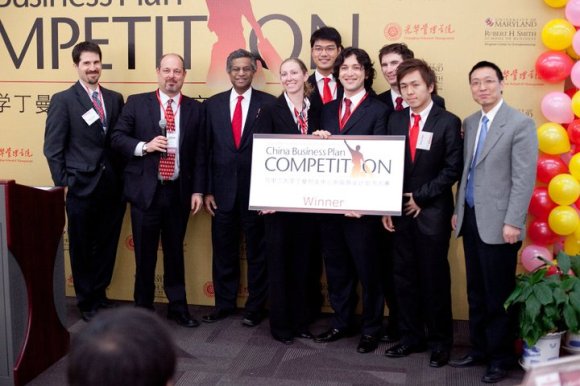
The Dingman Center is filled with opportunities for student involvement, and of its many programs, I’ve been intimately involved with three: Dingman Center Angels, an angel investor network, China Business Plan Competition, and the Israel Global Technology Entrepreneurship Fellowship, an 8 week summer internship.

Dingman Center Angels
I sought out to be a part of the Dingman Center Angels for the interactions I’d have with both entrepreneurs and investors. I submerged myself in the process that the entrepreneurs take to mold their business plan and pitch, as well as the process the investors take to analyze the companies, provide feedback, and develop the terms of their investment. During my first year, I screened companies applying to the group. I attended Review Sessions and Investor Breakfasts where I was able to hear the investors provide questions and feedback to the entrepreneurs on their pitches and their businesses, guiding my thought processes in terms of analyzing entrepreneurial investments. During my second year as a GA, I learned to quickly assess a business, new product, pitch, etc. to identify the gaps in companies’ plans or strategies. This process helped me understand the entire startup Angel investment ecosystem and assess the investment potential of startups. The relationships I’ve made with the investors and entrepreneurs have also been a huge benefit for expanding my network and providing me access to some of the area’s most influential individuals in the entrepreneurship field.

China Business Plan Competition
The funny part about my participation in the China Business Plan Competition was that I accidentally joined the class. It was an early Friday morning when I was on my way to another Dingman event when someone pointed me in the direction of a nearby classroom. I realized I was in the wrong room, but was taken with the lecture on formulating business plans by a great professor named Dr. Bob Baum. I decided to immediately enroll in the class and what a GREAT decision it was! The China Business Plan is broken into two components: the class and competition/trip. The class gave me hands-on experience in creating a business plan, working with a cross-cultural team, and pitching a business idea to entrepreneurs and investors  for feedback. The execution of the entire trip by the Dingman Center was impeccable. We did a lot of sightseeing, but more importantly, we learned about the business environment. China is a high-growth market that is attractive to all international companies looking to expand; what everyone does not understand is the uniqueness of that market. This trip provided insights into the cultural norms, common practices, and challenges. I worked with classmates who quickly became some of my closest friends in the program, learned the ins and outs of writing a business plan and starting a business, worked on my public speaking skills by pitching in front of 100+ people, and had the perk of traveling to China while experiencing amazing food and tourist sites with fun people.

I quickly realized that every interaction I had with the Dingman Center was transformed to the words, “amazing experience”.

Israel Global Technology Entrepreneurship Fellowship
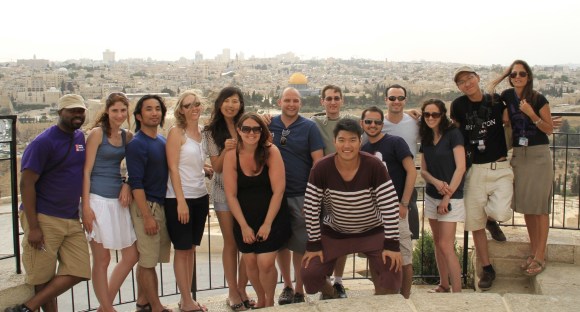
The Israel Fellowship was my next logical step, tying in my focus in entrepreneurship, products, marketing, and international interest. My time spent in Israel was definitely the best experience in my Smith career. Not only did I return to the U.S. with a desire to live in Israel, but I returned with new tools for my toolkit of starting a business and taking a new product to market. We learned the culture of Israel and why they’re #1 for startup creation. In partnership with the Technion (Israel’s MIT), we worked for 8 weeks on commercializing Technion-developed IP.  Our class was split into teams, made up of U.S. and Israeli MBAs, and we pitched our novel medical device technology to VCs and angel investors. We were critiqued on the aspects of the pitch and the business model components in order to continually improve. I learned about the intense market research and customer profiling behind commercializing an innovation and created a go-to-market strategy. As in China, we visited a wide variety of companies during our 8 weeks. The visits advanced our learning and understanding of local business practices while helping us make quality connections. There’s no lack of history in Israel and we got to sightsee in all the top locations including the Old City Jerusalem, the Dead Sea, Masada, the Golan Heights and the Sea of Galilee.


All these experiences have equated to an enhancement in my entrepreneurial knowledge and connections. They are differentiators in my interviews and on my resume. The Israel Fellowship is highly memorable to recruiters and is an instant topic of conversation that sets me apart from the masses of students with more “traditional” internship experiences. The Dingman Center Angels has been a job experience that I flaunt on my resume. It is a GA like no other in the school since it provides a true work-like experience dealing with companies and investors in the community.

My experiences with the Dingman Center helped me learn how to think like an entrepreneur and an investor. They helped me shape my thought processes towards developing a strategy for a business or a product. They helped me learn from others’ mistakes and successes. My only regret is not having video-taped myself prior to being a part of The Dingman Center so that I could show those who hadn’t met me 2 years ago the transformation to what I’ve grown to be today.


Julie Mullins is an entrepreneur-at-heart, searching for the right idea. She spent five years in retail management prior to pursuing her MBA. She hopes to lead a career in marketing for consumer products after Smith. 

Tagged , , , , , , ,

2012 UMD Entrepreneurship Invitational Recap

The 7th Annual UMD Entrepreneurship Invitational, Powered by the Dingman Center for Entrepreneurship was overwhelmingly successful with the launch of Startup MD, the BB&T Business Invitational, keynote speakers Governor O’Malley and Under Armour CEO Kevin Plank at Cupid’s Cup, and over 600 attendees at the day’s events. Cupid’s Cup Grand Prize and People’s Choice winner was Reed Street Productions, taking home $17,500 in prizes.
BB&T Business Invitational winners were Veenome (regional company) and My Fridge Rental (UMD community company), each receiving $2,000. With praise from President Wallace Loh and Dean Anand on the quality of the companies and execution of the day, this has been the most successful UMD Entrepreneurship Invitational to date. Keep reading for highlights and photos of the day.

This slideshow requires JavaScript.

Startup Maryland is a regional initiative launched out of the Startup America Partnership. Driven from within the community and led by entrepreneurs Startup Maryland is locally-operated and inclusive. Startup Maryland strives to connect innovation communities and recognize the importance of startups, ramp-ups and speedups to the state and regional economies. The official launch of Startup MD was the first event of the day at the UMD Entrepreneurship Invitational. The video below, features highlights from the event.

BB&T Business Invitational is a showcase of University of Maryland companies, regional startups, and campus and regional resources for entrepreneurs. Attendees had the opportunity to network with UMD students and alumni, local entrepreneurs and investors, and business leaders from the Baltimore-Washington metropolitan area. Sponsored by BB&T, prize money was awarded to top exhibitors as voted on by event attendees.

Dan Waetjen, BB&T group president for the Greater Washington region, presented prizes from BB&T for exhibitors at the BB&T Business Invitational:

  • $2,000 best UMD Community company – My Fridge Rental (winners of the 2011 Cupid’s Cup)
  • $2,000 best Regional company – Veenome

Cupid’s Cup, a business competition for student and alumni entrepreneurs, began in 2006, due to the vision and generous support of Kevin Plank ’96, founder and CEO of Under Armour. The competition is designed to identify and support students and young alumni who have already started their own businesses. Five finalists pitched their businesses to Kevin Plank and a panel of veteran entrepreneurs for $25,000 in prizes.

  • $15,000, 1st place – Reed Street Productions, operators of Run for Your Lives, a zombie themed adventure race attracting thousands of participants
  • $7,500, 2nd place – Food Safety Administration, provider of online courses for food service professionals required to earn food and alcohol safety certifications
  • $2,500, People’s Choice Award, decided by audience vote – Reed Street Productions (sponsored by Sam Medile ’80, a successful entrepreneur and former Terp student athlete)

Other finalists:

  • 10G Systems, supplier of web-based transportation software to small to mid-size shippers
  • Route One Apparel, an e-commerce platform for creative apparel designed by students
  • Visisonics, a UMD spinout that enables realistic 3D audio for music, movies and gaming in standard headphones

To see a full photo album from the day, go to  http:/ter.ps/mar30photos 

Tagged , , , , , , , , , , ,

Nothing Lifestyle about a Lifestyle Business

By Elana Fine, Associate Director, Dingman Center for Entrepreneurship

This past week’s signing of the JOBS (Jumpstart Our Business Startups) Act has brought a lot of attention to technology startups who hope to have better access to capital through crowdfunding. By expanding the pool of investors beyond traditional angel and venture capital investors, the JOBS Act provides fresh access to capital for early stage companies. Although most of the press on this act has related to technology start ups, it remains to be seen whether it will increase financings for small businesses often categorized as “lifestyle” businesses.

Those of us who spend a lot of time with early stage companies that are looking for capital often find ourselves categorizing companies into two buckets – high tech companies suitable for angel/VC funding and lifestyle businesses. The traditional thinking behind this often unfair labeling is that high tech companies in social media, gaming, cloud computing and other related sectors offer investors the hope of a high multiple IPO or M&A exit that will justify the upfront risk and uncertainly. Companies that don’t fit this profile are lumped into this other less sexy category of “lifestyle” businesses, based on the assumption that these companies may not have an exit but will generate enough cash for their owners to take home a cushy salary and live a balanced, stress free life.

The truth is, there is nothing lifestyle about a lifestyle business. If asked, most entrepreneurs opening a restaurant, building a services company or launching a consumer product are constantly worried about making payroll, losing customers and  planning for the unexpected. They barely see their family while they work around the clock to avoid additional labor costs. They max out credit cards, put second  mortgages on their houses and hit up every uncle, rich or not, for capital. Lifestyle business gives the image of a satisfied shopkeeper closing down on a sunny afternoon to hit the golf course. The reality is these companies have a harder time finding funding than their tech start up counterparts due to tight credit from banks, lack of assets for collateral, and generally lack the possibility for angel or venture investments.  I haven’t heard of incubator for up and coming fashion designers, restaurateurs or local contractors. Yet, these are the businesses that are the “glue” of our communities – -not flashy or the next Facebook – but businesses that provide the goods and services we rely on every day and create jobs. As someone who has used the “lifestyle businesses” term on many occasions, I can’t help thinking that there needs to be a better term for this category of companies and a better way to get them financed.

These lifestyle businesses have a branding and  capital problem. Why not just call these companies small businesses? We rarely call a technology startup a small business – don’t know why- but we don’t.  By following the lead of their tech startup counterparts, these companies need a fresh name and a fresh voice to call attention to their lack of access to capital, similar to the strong voices that lobbied for the JOBS Act.   Most of the typical descriptions carry negative connotations – low growth, low tech or capital intensive are some that come to mind. What if we call these companies Upstarts? Could there be an Upstart America Partnership that creates opportunities for these businesses to receive relevant discounts and connects with relevant suppliers, manufacturers and funders? The JOBS Act’s crowdfunding exemption could provide some additional access to capital to these future Upstart entrepreneurs, but due to lack of financing alternatives and unified voice there are still a lot of ideas that will remain un-started.

Elana Fine

Elana Fine is the Associate Director of the Dingman Center for Entrepreneurship. In this role, Elana manages the Dingman Center Angels, a network of active, accredited angel investors providing open and efficient access to early-stage capital for entrepreneurs in the Mid-Atlantic region, and is also the primary center contact within the Smith School and on campus.  Prior to joining the Dingman team, Elana was an Associate and a Vice-President at the Boston office of Revolution Partners, a national middle market investment bank specializing in mergers and acquisitions and private capital advisory for the technology industry. Elana earned an MBA from the University of Chicago’s Booth School of Business and a BS in Finance from the University of Maryland.

Tagged , , ,

Center Stage with Glen Hellman ’78, Principal at Driven Forward

Glen Hellman is an active member of the Dingman Center Angels investor network and an expert on startups. Mr. Hellman is frequently quoted on corporate governance and entrepreneurship issues in print and broadcast media. In print he’s been quoted in the Wall Street Journal, Financial Week, The Washington Post and USA Today. He has been featured on radio programs including NPR Marketplace and Voice of America. Television appearances include NBC and FOX news.

Keep reading for Center Stage with Glen Hellman.

What are you working on right now?
Right now I work with experienced CEOs to improve their businesses. Essentially, I’m a coach and I help them learn from their experiences. We work together in groups, we hold each other accountable, and we try to avoid big mistakes. In addition, I’m an Angel Investor and an advocate for DC regional entrepreneurship, primarily focused on working with startups and small businesses that have a desire for growth.

As someone who provides guidance to entrepreneurs, what are the biggest mistakes they make?
The primary thing that causes a company to go bad is a lack of focus or casual, frequent changes in focus. One of the most common ways entrepreneurs do this is by chasing nonstrategic cash. Being too opportunistic by chasing a deal out of one’s chosen niche distracts from the mission and for a small company to be effective, they need to make a lot of noise in a very small time. You do that by sticking to your chosen niche.
Once you start chasing cash that doesn’t help your core business, then there’s an opportunity cost. And if you have to chase cash outside of your strategic goals, then you need to change your strategic goals because you either don’t have the wherewithal to execute or your strategy is flawed.

What do you think of the DC startup scene right now?
It’s as hot as it’s ever been in terms of numbers. There’s a hot, very healthy startup scene particularly in technology and software. It’s because there is strong momentum in companies that already exist, such as Living Social. There’s also the government scene which brings tech expertise. We’ve got a well-educated workforce and a tech-savvy population. The whole downtown scene for young entrepreneurs is a nice environment for people who want to start a business. DC has the quirky, hipster, SoHo feel. It’s happening in NYC and it’s happening here.

You maintain a blog, http://blog.drivenforward.com/wordpress/. How important are social media outlets for today’s entrepreneurs?
Social media has shifted the power from the marketers and providers of product and service to the consumer. Advertising and marketing are less effective than they were 10 years ago.  Reputation is no longer managed by press releases, its managed by being a good corporate actor, delivering good product.

Companies must engage in social media. They must monitor social media to understand what’s happening in their field. Social media is the new source for market research on the market, competitors and the market perception of a company’s products. Companies must monitor conversations, engage in the conversations honestly and transparently and fix product flaws based on feedback.  You must build a better product, you can no longer PR your way out of having a crappy solution.

How did you get involved with the Dingman Center and why is it a special place?
For me, the Dingman Center is one of the few places that’s not set up around making somebody rich and famous. It’s about doing good work for the entrepreneurial community. It’s truly the unselfish pursuit of promoting entrepreneurship.
When I decided I wanted to get out of corporate turnarounds, I decided I wanted to create employment and because of that I was naturally attracted to the Dingman Center. I got very active in the Dingman Angels and we have developed a healthy community that funds startups in DC. I think we’re the most active angel group in the city and we do as many deals in DC as the most active venture capital firms.

Glen is a Principal at Driven Forward LLC, a firm that supports entrepreneurs and venture investors by providing strategic guidance, interim executive leadership services, and executive coaching.  In addition he is a Chair for Vistage International where he serves as a professional facilitator for CEO advisory boards. He is currently Chairman of the Board of Driven Forward and on the Board of Advisors for the Dingman Center for Entrepreneurship. He is an active member of the Dingman Center Angels investor network where he is responsible for deal flow, deal selection and coaching corporate executives seeking capital and in his spare time he writes for Tech Cocktail. Mr. Hellman has experience running operations in the United States, Canada, the United Kingdom, Japan, South Korea and Australia.

Connect with Glen:   @glehel   http://blog.drivenforward.com/wordpress/

Tagged , , , , ,