Tag Archives: elana fine

Dingman Jumpstart Recap: 50+ Students Participate in Entrepreneurship Bootcamp

Over 50 aspiring entrepreneurs, including students from the University of Maryland, The Guanghua School of Management at Peking University, and local professionals, took part in this year’s Dingman Jumpstart, which ran from August 20 – 24, 2012. Dingman Jumpstart participants underwent an intense series of workshops and seminars covering a variety of topics including, how to craft a perfect pitch, build a solid business model, understand startup revenue and cost structures, and navigate the legal landscape of the startup world. Participants also had the opportunity to form teams and work on new or existing business ideas culminating in a live investor pitch to a panel of expert judges from The Dingman Center’s community network. The weeklong event was a huge success with several teams being identified as potential seed funding opportunities for the Dingman Center’s E-Fund.

For those who missed this amazing opportunity, here are just some of the key takeaways from the 2012 Dingman Jumpstart sessions:

  • “When the time comes to pivot, it’s important understand where your company’s strength is really in and what you do right.”
    – John LaPides, Dingman Center EIR, on Business Model Patterns
  • “Identify the pain point, and then identify the person who can and will pay to relieve that pain point.”
    – Elana Fine, Dingman Center Managing Director, on Marketing Channels
  • “Technology is only a small component of the solution.  Solutions take an ecosystem in order to add sustainable value.”
    – Elana Fine on Marketing Channels
  • “Investors don’t bet on the horse (the company), they bet on the jockey (the entrepreneur).”
     – Sam Medile, Dingman Center Board Member, on Entrepreneurial Selling
  • “The sources of a company’s competitive advantage is how close their product is to being ‘perfect, free, and now’ or how it can ‘work harder longer.’”
    – Dr. Bob Baum, Professor Emeritus, on Organizing to Compete
  • “It is crucial to present a ‘fully baked’ idea to investors (Practice! Formulate! Iterate!).”
     – Swaroop Kolli & Pradeep Suthram, 2012 MBA Graduates, on How to Pitch
  • “The ultimate tragedy is to see a business succeed, then fail through their success.”
    – Mark Walsh, Dingman Center Board of Advisor Chairman, on The Art of Storytelling

This slideshow requires JavaScript.

The Dingman Center would like to thank all of the speakers, advisors, and judges who helped make Dingman Jumpstart a success. The Dingman Center encourage this year’s participants to stay connected and apply for the EnTERPreneur Academy to grow your venture from idea to launch.

Interested in participating in next year’s Dingman Jumpstart?  Keep your eyes open for information next spring.  Learn more at: http://ter.ps/jumpstart

Tagged , , , , , , , ,

Business Rx Entrepreneur Q&A with Elana Fine – Part 2

Elana Fine, Managing Director of the Dingman Center recently participated in a live chat with the Washington Post’s Capital Business magazine for their Business Rx column answering questions from regional entrepreneurs on improving or starting a business. This post features some of the questions from the live chat. Follow the Dingman Center’s Facebook Page and Twitter Page for information on the next live chat and other Dingman Center news and events.

Q: A lot of buzz has been going around on the lean start-up methodology being applied in technology and other industries. How can first-time young entrepreneurs get their hands on training and implementing such methodology to their business ideas?
A: The best way to learn about the process is to talk with start-ups to understand how they determined their minimum viable product and how they determined when & how to iterate. As you start your business “leanly,” you have to also think about the decision points to iterate less and grow more.

Q: How can entrepreneurs get more involved in the local community? I would like to interact with our start-ups on an informal basis, but don’t know where to turn.
A: The D.C. tech community is thriving, with plenty of options for entrepreneurs looking to get connected. Organizations such as D.C. Tech Meetup and Foster.ly are providing great forums for entrepreneurs to meet. There are also new incubators such as The Fort and Acceleprise that bring in mentors to help with their companies.

Q: I have an idea for a specific niche service market to build an online/mobile business and I need to develop potential revenue projections. While I am realistic I still want to be optimistic for a 3-5 year time frame. Could you provide some advice for a framework?
A: The best frameworks is a bottoms-up approach — identify your revenue streams and growth assumptions for each stream, then show how they grow over time. For example, if you are going to win two customers in month one, six customers in month eight and 20 customers in year two — the projections should reflect that growth and revenue expectations per customer (or user, etc.) over time. Top down, taking a large market and making assumptions about a percentage of that market you can capture usually leads to significantly inflated projections and doesn’t show advisers or investors that you have given thought to how you will methodically grow your business. It is also important to think about the bottom line — what are expenses associated with generating that revenue? To quote one of my favorite lines from our investors this year, “Is the juice worth the squeeze?”

Q: I am launching a new mobile app and I will need additional capital (maybe $250,000) to help complete the next stage of development. I think angel investors might be the right fit, but what is the best way to approach them and get their attention?
A: In the current environment, the best way to get funded for a mobile app is to show that you have traction with users. Get a minimally viable product out there and show that you can reach your users and understand their needs. There are so many apps in the marketplace that it is hard to convince investors that you can break through the noise.

Q: What is the line between a hobby and a business? Is there a financial threshold that one must cross before having to deal with becoming a formal business? For example, if a friend knows I have my own personal Web site and offers to pay me to set one up for him, have I started a business?
A: I’m certainly not an accountant or tax specialist, but if someone pays you for a good or service you have provided, that is technically a business. A hobby would be if you liked to set up Web sites for friends for free.

Q: I’d like to start an interior design business. I believe in my talent, but I don’t exactly have a portfolio full of projects that I can show to potential clients since I am fairly new at this. What is the best way to get my foot in the door and start establishing myself?
A: Would you like to start at my house? All kidding aside, figure out what kind of projects you can do in your spare time for family and friends for free, and use that to start your portfolio. Even if it is a small room here and there, you can create the “before” and “after” shots to convince others of your talents.

Q: I’ve been working as a solo consultant to nonprofits. I’ve been courted by a consulting firm, which is attractive because they would handle billing, provide a training system for me to use with clients instead, and will help market me. On another level, I have some concerns: I would still have to get my own clients, they want exclusivity (so I can’t serve other clients on my own, without giving them a cut), and a non-compete clause (I’m prohibited from pursuing their clients if I leave, but they get a portion of my earnings for a year after I leave — because they have trained me). What advice do you have on weighing whether to remain solo or join a firm?
A: This is a really tough question and really depends on how important it is for you to have control over your company. You may be able to generate more business by being able to leverage other infrastructure, but you do lose independence and flexibility when you join with others. It sounds like you could probably continue with being a sole contractor and find other outsourced service providers to handle billing and training, without signing on with another firm.

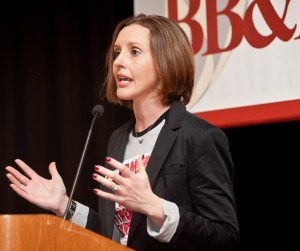
Elana Fine was appointed Managing Director of the Dingman Center in July 2012, after joining the team in 2010 as Director of Venture Investments. As Managing Director, Elana’s primary focus is leading the Dingman Center in support of its mission and strategic plan. Key responsibilities include oversight of our student venture incubator, Dingman Center Angels investor network, business competitions, and technology commercialization efforts.
Tagged , , ,

Business Rx Entrepreneur Q&A with Elana Fine – Part 2

Elana Fine, Managing Director of the Dingman Center recently participated in a live chat with the Washington Post’s Capital Business magazine for their Business Rx column answering questions from regional entrepreneurs on improving or starting a business. This post features some of the questions from the live chat. Follow the Dingman Center’s Facebook Page and Twitter Page for information on the next live chat and other Dingman Center news and events.

Q: A lot of buzz has been going around on the lean start-up methodology being applied in technology and other industries. How can first-time young entrepreneurs get their hands on training and implementing such methodology to their business ideas?
A: The best way to learn about the process is to talk with start-ups to understand how they determined their minimum viable product and how they determined when & how to iterate. As you start your business “leanly,” you have to also think about the decision points to iterate less and grow more.

Q: How can entrepreneurs get more involved in the local community? I would like to interact with our start-ups on an informal basis, but don’t know where to turn.
A: The D.C. tech community is thriving, with plenty of options for entrepreneurs looking to get connected. Organizations such as D.C. Tech Meetup and Foster.ly are providing great forums for entrepreneurs to meet. There are also new incubators such as The Fort and Acceleprise that bring in mentors to help with their companies.

Q: I have an idea for a specific niche service market to build an online/mobile business and I need to develop potential revenue projections. While I am realistic I still want to be optimistic for a 3-5 year time frame. Could you provide some advice for a framework?
A: The best frameworks is a bottoms-up approach — identify your revenue streams and growth assumptions for each stream, then show how they grow over time. For example, if you are going to win two customers in month one, six customers in month eight and 20 customers in year two — the projections should reflect that growth and revenue expectations per customer (or user, etc.) over time. Top down, taking a large market and making assumptions about a percentage of that market you can capture usually leads to significantly inflated projections and doesn’t show advisers or investors that you have given thought to how you will methodically grow your business. It is also important to think about the bottom line — what are expenses associated with generating that revenue? To quote one of my favorite lines from our investors this year, “Is the juice worth the squeeze?”

Q: I am launching a new mobile app and I will need additional capital (maybe $250,000) to help complete the next stage of development. I think angel investors might be the right fit, but what is the best way to approach them and get their attention?
A: In the current environment, the best way to get funded for a mobile app is to show that you have traction with users. Get a minimally viable product out there and show that you can reach your users and understand their needs. There are so many apps in the marketplace that it is hard to convince investors that you can break through the noise.

Q: What is the line between a hobby and a business? Is there a financial threshold that one must cross before having to deal with becoming a formal business? For example, if a friend knows I have my own personal Web site and offers to pay me to set one up for him, have I started a business?
A: I’m certainly not an accountant or tax specialist, but if someone pays you for a good or service you have provided, that is technically a business. A hobby would be if you liked to set up Web sites for friends for free.

Q: I’d like to start an interior design business. I believe in my talent, but I don’t exactly have a portfolio full of projects that I can show to potential clients since I am fairly new at this. What is the best way to get my foot in the door and start establishing myself?
A: Would you like to start at my house? All kidding aside, figure out what kind of projects you can do in your spare time for family and friends for free, and use that to start your portfolio. Even if it is a small room here and there, you can create the “before” and “after” shots to convince others of your talents.

Q: I’ve been working as a solo consultant to nonprofits. I’ve been courted by a consulting firm, which is attractive because they would handle billing, provide a training system for me to use with clients instead, and will help market me. On another level, I have some concerns: I would still have to get my own clients, they want exclusivity (so I can’t serve other clients on my own, without giving them a cut), and a non-compete clause (I’m prohibited from pursuing their clients if I leave, but they get a portion of my earnings for a year after I leave — because they have trained me). What advice do you have on weighing whether to remain solo or join a firm?
A: This is a really tough question and really depends on how important it is for you to have control over your company. You may be able to generate more business by being able to leverage other infrastructure, but you do lose independence and flexibility when you join with others. It sounds like you could probably continue with being a sole contractor and find other outsourced service providers to handle billing and training, without signing on with another firm.

Elana Fine was appointed Managing Director of the Dingman Center in July 2012, after joining the team in 2010 as Director of Venture Investments. As Managing Director, Elana’s primary focus is leading the Dingman Center in support of its mission and strategic plan. Key responsibilities include oversight of our student venture incubator, Dingman Center Angels investor network, business competitions, and technology commercialization efforts.

Tagged , , ,

Dingman Center Angels: Year in Review

The Dingman Center Angels connects regional start-up companies seeking seed and early-stage funding with angel investors. During the year (September 2011 – June 2012), our team received 116 applications, screened 60 companies and invited 40 to present at monthly breakfasts. 13 companies received angel investments totaling over $4M.

Funded Companies:

  • 6th Street Commerce is an automated E-commerce platform that helps retailers simplify their critical business processes.
  • CirrusWorks develops a networking platform, which makes it easier and cheaper to manage infrastructure technology applications in non-corporate commercial buildings.
  • eco-armour™ manufactures and markets natural, healing skin care products based on its patented botanical shaving solutions for men & women.   
  • LearnZillion is a learning platform that combines video lessons, assessments, and progress reporting.
  • Lemur Technologies is a software company that brings together experts in retail, programming, and social media marketing to develop innovative solutions for common retail problems by leveraging smart phone technology and social networking.
  • Seva Call is the next-generation request aggregator and filtering search engine.
  • Social Tables has created the world’s first social seating chart through its event planning and community-building platform.
  • Social Toaster is a social marketing platform that engages supporters to promote content directly to social networks while driving website traffic and providing comprehensive reporting on the effectiveness of efforts.
  • Spinnakr increases click-throughs and conversions by automatically displaying the right message to the right visitor.
  • Spotflux has developed several unique technologies that bypass censoring technologies, protect privacy, and allow users all over the world to browse an open and free internet.
  • SpydrSafe’s mobile security platform provides IT departments with the necessary tools to safeguard corporate data
  • Target Entertainment Properties (TEP) is a Maryland based company dedicated to developing a suite of celebrity branded games across multiple platforms.
  • Veenome is a video enabling platform, translating video content into data for superior publishing, searching and monetization.
If you are interested in joining as an investor or an entrepreneur looking to present read more about the Dingman Center Angels online.

Additional Presenting Companies:

  • 24K National is the first licensing company to empower entrepreneurs to build unique gold brokering enterprises.
  • Airside Mobile is a mobile transaction platform enabling airport service and passengers to conduct mobile transactions for goods and services, cutting down lines, saving times for passengers and creating additional revenue opportunities.
  • ARCSys provides a web based on-line SaaS module that addresses the new regulatory requirements and disclosures mandated by GAAP and FASB.
  • Apeliotus is commercializing a novel diagnostic for early detection of macular degeneration, an age-related eye disease causing blindness in 1 in 6 people over the age of 65 worldwide.
  • Bookstore Genie is a platform that offers college students the lowest textbook rental prices in the nation.
  • Brain Sentry has created a helmet-mounted sensor that detects impacts that could cause a concussion- helping prevent further injury.
  • Contactually acts as a personal assistant for your inbox by collecting rich data on your email relationships, allowing you to effortlessly take immediate action.
  • Euveda Biosciences’ cell miniaturization technology enables efficient drug screening on the most relevant primary cells, resulting in less expensive and more reliable clinical trials.
  • flexReceipts aggregate consumer’s cash and credit card purchases into a centralized cloud based platform and provides retailers holistic analytics on spending habits.
  • Gryphn simplifies mobile privacy by providing enterprises with one-touch security and encryption for their mobile messages while not requiring any hardware.
  • Kidspotter is a wristwatch that provides a location tracking device for kids in theme parks.
  • Local Food Systems connects aggregated suppliers (Foodhubs) to high-volume wholesale buyers (like Sysco).
  • LocalUp Solutions powers hyper-locally branded restaurant discovery and online ordering guides for hyper-local cities/communities across North America.
  • Mashed Pixel has developed a protective case for smart phones that enables it to function as a universal learning remote, pushing real time ads based on user’s viewing habits.
  • mxHero brings file sharing to email by transparently enabling users of any email system to send and receive files of any size.
  • Parking Panda is a community marketplace that enables parking space owners to capitalize on their underutilized parking spaces by renting them out to a community of drivers.
  • Ringio helps businesses become more customer-centric by providing cloud-based solutions for small and medium-sized enterprises.
  • Seguro Surgical aims to improve patient outcomes of abdominal surgery while increasing efficiency and reducing costs.
  • Seventy Degrees provides a revolutionary full-size QWERTY keyboard with full-size keys, yet small enough to be built into mobile devices.
  • Smart Composite is focused on developing technologies including a driveway snow-melting paint, paint on strain gauges for structural health monitoring, electromagnetic shielding paints, and a novel method of silent propulsion for marine vessels requiring no moving parts.
  • ti•ki is focused on family events offering end-to-end work-flow, planning, and purchasing assistance.
  • Tista Games is the HBO of games providing a platform for regularly scheduled episodic games that keeps players engaged with monetization for years, as opposed to weeks.
  • True Influence is a self-service ad platform for B2B marketers such as Symantec, IBM, and Xerox that are looking for targeted marketing leads.
  • Uppidy is a mobile app that lets users securely archive and organize text messages.
  • Urgnt.ly connects people who have urgent or time-sensitive needs with the nearest party to meet it.
  • Villagize is a social network and social discovery tool where all U.S. consumers can meet and socialize with their real-world neighbors
  • Votifi is a mobile oriented polling & analytics company built on a political network that uses polls & content to connect & empower voters.
  • Well Care Strategies developed a key product called TPS™ EMR, a specialty electronic medical record targeted to the wound care clinical segment that serves 7M+ US patients/year.
Tagged , , , ,

2012 UMD Entrepreneurship Invitational Recap

The 7th Annual UMD Entrepreneurship Invitational, Powered by the Dingman Center for Entrepreneurship was overwhelmingly successful with the launch of Startup MD, the BB&T Business Invitational, keynote speakers Governor O’Malley and Under Armour CEO Kevin Plank at Cupid’s Cup, and over 600 attendees at the day’s events. Cupid’s Cup Grand Prize and People’s Choice winner was Reed Street Productions, taking home $17,500 in prizes.
BB&T Business Invitational winners were Veenome (regional company) and My Fridge Rental (UMD community company), each receiving $2,000. With praise from President Wallace Loh and Dean Anand on the quality of the companies and execution of the day, this has been the most successful UMD Entrepreneurship Invitational to date. Keep reading for highlights and photos of the day.

This slideshow requires JavaScript.

Startup Maryland is a regional initiative launched out of the Startup America Partnership. Driven from within the community and led by entrepreneurs Startup Maryland is locally-operated and inclusive. Startup Maryland strives to connect innovation communities and recognize the importance of startups, ramp-ups and speedups to the state and regional economies. The official launch of Startup MD was the first event of the day at the UMD Entrepreneurship Invitational. The video below, features highlights from the event.

BB&T Business Invitational is a showcase of University of Maryland companies, regional startups, and campus and regional resources for entrepreneurs. Attendees had the opportunity to network with UMD students and alumni, local entrepreneurs and investors, and business leaders from the Baltimore-Washington metropolitan area. Sponsored by BB&T, prize money was awarded to top exhibitors as voted on by event attendees.

Dan Waetjen, BB&T group president for the Greater Washington region, presented prizes from BB&T for exhibitors at the BB&T Business Invitational:

  • $2,000 best UMD Community company – My Fridge Rental (winners of the 2011 Cupid’s Cup)
  • $2,000 best Regional company – Veenome

Cupid’s Cup, a business competition for student and alumni entrepreneurs, began in 2006, due to the vision and generous support of Kevin Plank ’96, founder and CEO of Under Armour. The competition is designed to identify and support students and young alumni who have already started their own businesses. Five finalists pitched their businesses to Kevin Plank and a panel of veteran entrepreneurs for $25,000 in prizes.

  • $15,000, 1st place – Reed Street Productions, operators of Run for Your Lives, a zombie themed adventure race attracting thousands of participants
  • $7,500, 2nd place – Food Safety Administration, provider of online courses for food service professionals required to earn food and alcohol safety certifications
  • $2,500, People’s Choice Award, decided by audience vote – Reed Street Productions (sponsored by Sam Medile ’80, a successful entrepreneur and former Terp student athlete)

Other finalists:

  • 10G Systems, supplier of web-based transportation software to small to mid-size shippers
  • Route One Apparel, an e-commerce platform for creative apparel designed by students
  • Visisonics, a UMD spinout that enables realistic 3D audio for music, movies and gaming in standard headphones

To see a full photo album from the day, go to  http:/ter.ps/mar30photos 

Tagged , , , , , , , , , , ,

Nothing Lifestyle about a Lifestyle Business

By Elana Fine, Associate Director, Dingman Center for Entrepreneurship

This past week’s signing of the JOBS (Jumpstart Our Business Startups) Act has brought a lot of attention to technology startups who hope to have better access to capital through crowdfunding. By expanding the pool of investors beyond traditional angel and venture capital investors, the JOBS Act provides fresh access to capital for early stage companies. Although most of the press on this act has related to technology start ups, it remains to be seen whether it will increase financings for small businesses often categorized as “lifestyle” businesses.

Those of us who spend a lot of time with early stage companies that are looking for capital often find ourselves categorizing companies into two buckets – high tech companies suitable for angel/VC funding and lifestyle businesses. The traditional thinking behind this often unfair labeling is that high tech companies in social media, gaming, cloud computing and other related sectors offer investors the hope of a high multiple IPO or M&A exit that will justify the upfront risk and uncertainly. Companies that don’t fit this profile are lumped into this other less sexy category of “lifestyle” businesses, based on the assumption that these companies may not have an exit but will generate enough cash for their owners to take home a cushy salary and live a balanced, stress free life.

The truth is, there is nothing lifestyle about a lifestyle business. If asked, most entrepreneurs opening a restaurant, building a services company or launching a consumer product are constantly worried about making payroll, losing customers and  planning for the unexpected. They barely see their family while they work around the clock to avoid additional labor costs. They max out credit cards, put second  mortgages on their houses and hit up every uncle, rich or not, for capital. Lifestyle business gives the image of a satisfied shopkeeper closing down on a sunny afternoon to hit the golf course. The reality is these companies have a harder time finding funding than their tech start up counterparts due to tight credit from banks, lack of assets for collateral, and generally lack the possibility for angel or venture investments.  I haven’t heard of incubator for up and coming fashion designers, restaurateurs or local contractors. Yet, these are the businesses that are the “glue” of our communities – -not flashy or the next Facebook – but businesses that provide the goods and services we rely on every day and create jobs. As someone who has used the “lifestyle businesses” term on many occasions, I can’t help thinking that there needs to be a better term for this category of companies and a better way to get them financed.

These lifestyle businesses have a branding and  capital problem. Why not just call these companies small businesses? We rarely call a technology startup a small business – don’t know why- but we don’t.  By following the lead of their tech startup counterparts, these companies need a fresh name and a fresh voice to call attention to their lack of access to capital, similar to the strong voices that lobbied for the JOBS Act.   Most of the typical descriptions carry negative connotations – low growth, low tech or capital intensive are some that come to mind. What if we call these companies Upstarts? Could there be an Upstart America Partnership that creates opportunities for these businesses to receive relevant discounts and connects with relevant suppliers, manufacturers and funders? The JOBS Act’s crowdfunding exemption could provide some additional access to capital to these future Upstart entrepreneurs, but due to lack of financing alternatives and unified voice there are still a lot of ideas that will remain un-started.

Elana Fine

Elana Fine is the Associate Director of the Dingman Center for Entrepreneurship. In this role, Elana manages the Dingman Center Angels, a network of active, accredited angel investors providing open and efficient access to early-stage capital for entrepreneurs in the Mid-Atlantic region, and is also the primary center contact within the Smith School and on campus.  Prior to joining the Dingman team, Elana was an Associate and a Vice-President at the Boston office of Revolution Partners, a national middle market investment bank specializing in mergers and acquisitions and private capital advisory for the technology industry. Elana earned an MBA from the University of Chicago’s Booth School of Business and a BS in Finance from the University of Maryland.

Tagged , , ,

Elana Fine, Associate Director, on ABC’s Washington Business Report

Associate Director, Elana Fine was interviewed by Rebecca Cooper of  ABC’s Washington Business Report about the Dingman Center for Entrepreneurship. The segment includes an overview of our key programs: Pitch Dingman, Dingman Center Angels, and Cupid’s Cup. The segment originally aired on ABC 7 on Sunday, February 5. Watch the video below and leave your comments!

Tagged , , , , , , , ,

Need money for your startup? Here are five sources.

Written by Elana Fine, originally published by the Washington Post‘s Capital Business column on September 11, 2011

Companies all experience growing pains, but for startups much of the early pain has to do with finding funding. After you’ve maxed out your personal credit cards to kickstart your great idea, now what? There are sources for funding out there — you just have to know who to turn to next.

1. Friends and family

This option is a critical first step for startups raising capital. If you can’t persuade your closest friends, family and colleagues to invest in your idea, it may be difficult to raise funding from strangers. But you don’t need a wealthy uncle ready to write blank checks. Funding from friends and family can come in small increments, even $1,000 or less, to fund your most immediate startup needs. Take Silver Spring-based Hook & Ladder Brewing Co., for example. When the business first started out (full disclosure: founder Matt Fleishman was a University of Maryland MBA student at the time), it initially needed just enough money to brew that first batch of beer.

When trying to raise money from friends and family:

·Formalize the process: Seek the advice of a lawyer to make sure you’re structuring the financing correctly.

·Don’t give away the pie: Make sure you don’t give away too much equity, especially at such an early stage. Maintain strong ownership. This will be important down the road — and could make you more attractive to venture capitalists.

·Think beyond your immediate circle: Tap into your professional network and those who know your business.

·Make it formal: Create a pitch presentation and prospectus for potential investors to show you are serious and your business is legitimate.

2. Grants

Find an organization that fits with the goals and mission of your venture and research available funding opportunities and grants.

·Plan your growth strategy: Tackle business applications that align with grant opportunities. For example, if your technology has applications that could be used by the military or in health care, pursue those verticals first. There are lots of grants available from the Defense Department, National Institutes of Health, National Science Foundation, etc. to help develop new technologies with those types of applications.

·Find a mentor: Consult with a company that has similar qualities to yours and a founder that can shepherd you through the grant process.

·Don’t forget local organizations: Beyond national and federal grant opportunities, local and regional business and tech organizations may have money available. For example, Maryland’s Maryland Industrial Partnerships program accelerates tech commercialization by matching funding with research from University of Maryland System faculty.

3. Customers

Often overlooked as a funding source, your customers can be a great source of funding if they are willing to pay you to develop a custom solution or product that you can then use to fuel additional growth and sales. An added benefit: You won’t dilute your stake in the company.

4. Angel investors

When you are close to having a finished product ready for market and have some early customer traction, you may be ripe for an angel investment — usually seed funding between $150,000 to $1 million.

·Find an angel investor group and get involved: Start attending meetings to network with investors, even if you’re not ready to pitch.

·Be creative and entrepreneurial about how you raise money: Research the investors involved in various groups, know the types of companies they invest in, and figure how to best pitch them.

·Start early: You should always be raising money before you need it. Think at least six months ahead and plan.

·Don’t undervalue “smart capital”: Beyond dollars, investors have a lot of advice they can provide to your startup. Many are seasoned entrepreneurs and have been down your road before.

5. Venture capitalists

Venture capitalists and venture banks invest in companies that have a high potential for significant growth. VC investments are usually no less than $3 million. If you’re up to this point in the funding process, make sure the VC has a compatible approach to building a business and has a good network that will help you grow and realize your full potential.

Not all of these sources will be right for every company. As you grow, continue to refine your business plan. And don’t get discouraged: There is still funding out there — you just have to know where to turn.

Elana Fine

Elana Fine joined the Dingman Center for Entrepreneurship in 2010 as the Director of Venture Investments. In this role, Elana manages the Dingman Center Angels, a network of active, accredited angel investors providing open and efficient access to early-stage capital for entrepreneurs in the Mid-Atlantic region. Her responsibilities include identifying quality start-ups, screening deal flow, conducting due diligence and providing coaching for companies presenting at monthly review days and investor meetings. In addition, Elana is responsible for program expansion including new investors, sponsors and forging regional partnerships with incubators and technology organizations. She has recently become the Associate Director of the Dingman Center for Entrepreneurship.

Tagged , , ,

Tips for pitching your business idea

A business pitch can make or break a startup. Delivering a successful pitch can grab the attention of potential investors, attract customers, and even win funding in a Pitch Dingman Competition! How can you tell if your pitch will be successful? Check out these tips from a few of our Dingman Center all-stars to get advice on pitching your new business idea.

.

Rudy Lamone, Dingman Center Founder

“Your opening statement must grab the attention of your listener or in most cases you have failed; so try again.”

.

Asher Epstein, Dingman Center Managing Director

“Focus first on what problem you are solving. Is this a vitamin or aspirin problem (must have vs. nice to have)? Second, concentrate on who specifically has this problem. The target market needs to be tight and focused. Finally, what is your solution and why is it better, faster or cheaper than current options?”

.

Elana Fine, Dingman Center Director of Venture Investments

“Know your customer. Pitching a business isn’t just about the product or technology you are creating, but about who you will sell it to, why they will buy it and how often/how much. Before you start a business, make sure you spend time talking to potential customers to confirm that you have identified a real market needs that people are willing to pay for versus other existing options.”

.

Alla Corey, Dingman Center Program Manager

“Show passion and commitment to your idea. Investors must believe that not only you possess skills necessary to carry out your plan, but are also dedicated and will not give up when challenges arise. “

.

Harry Geller, Dingman Center Entrepreneur-in-Residence

“Be brief. You should be able to clearly state your idea in two or three sentences. Practice this with some friends and see if they can comprehend the idea, if so then you are ready. Pitch Dingman sessions are limited to 10-15 minutes so you want to get the idea understood quickly so you have time to receive valuable feedback.”

.

Do you have a business idea still in the “back-of-the-napkin” stage? Come to a Pitch Dingman informal session held every Friday 11am-1pm in the Dingman Center for valuable feedback from one of our Entrepreneurs-in-Residence. Our team of veteran entrepreneurs are here to share their advice and expertise.

For more information, visit the Pitch Dingman Homepage

7″My best tip that I al
grsgfgfs7
Tagged , , , , , , ,