Tag Archives: startup

Business Rx Entrepreneur Q&A with Elana Fine – Part 7

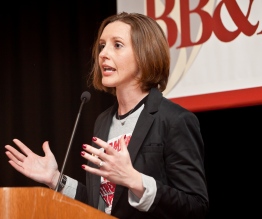
Elana Fine, Managing Director of the Dingman Center recently participated in a live chat on Wednesday February 19 with the Washington Post’s Capital Business magazine for their Business Rx column. Elana answered questions from regional entrepreneurs on improving or starting a business. This post features an excerpt from the live chat that was posted on washingtonpost.com. Follow the Dingman Center’s Facebook Page and Twitter Page for information on the next live chat and other Dingman Center news and events.

Q. What are your thoughts on getting involved in an existing franchise vs. starting my own company?

EF: It depends on your risk tolerance and the current opportunity. Franchising can be a rewarding route to start a business with a model that has been well tested. Like any start-up, it has it challenges, but it gives an entrepreneur an opportunity to operate an established brand. That being said, this is quite different than pursuing your own idea, dream and passion and seeing something grow (or fail). The latter may have higher risks because the idea and market is unproven, but more potential for upside.

Q. Have you owned a business? How did you become an expert on start-ups?

EF: I was an early employee at a start-up, technology-focused investment banking boutique. Our team was growing our own business while also advising early stage companies on raising private capital and buy side/sell side acquisitions. We worked with a variety of technology companies and often helped refine their growth strategy and business model to prepare them for venture financings or for exit. In my current role, I work closely with many student start-ups, as well as regional entrepreneurs.

Q. I know that it takes time to build a business. What is a reasonable amount of time to give a business before knowing if it has been successful? I guess the real question is: How many months of expenses should a person have when getting started until the income becomes regular?

EF: Ooh, that is always a hard question because it really depends on the type of business. If you are starting a restaurant, you may start generating cash flow sooner than if you are developing cancer drugs. I’d say two things:

  1. Depending on your idea, you want to put a plan in place to score card yourself to know if this is an idea worth pursuing or whether you should pivot or lick your wounds and admit “failure.”
  2. Always assume it will take twice as long and cost twice as much.

Q. I’m thinking of starting a tech company. Should I build it here in D.C. or move somewhere like Silicon Valley or N.Y.?

EF: STAY HERE! There is a thriving ecosystem of technology entrepreneurs and mentors — regardless of what you might otherwise hear. The community is supportive and collaborative with a deep bench of seasoned executives. The imminent decline in government spending should also free up tech talent who, after some soul searching, might find working at start-ups more rewarding than consulting firms. There is a funding issue, no question, but there is also a lot of expertise in grant funding and other non-dilutive financing.

Q. Is one age better than another for starting a business? I know that experience and age go together. I have known several people who reached their mid-50s or early 60s who decided to become consultants and cut back from their full-time jobs. I know college graduates who are used to living on a shoestring budget and could take the chance. But, I am somewhere in the middle. I am used to my current income level, but not my current job situation. I know that I could offer my services and have a better quality of life, but I am not sure if my finances would agree.

EF: Entrepreneurs are like marathon runners (in many ways) — they come in every age, shape and size. Young entrepreneurs are fresh with fewer financial burdens — and have the energy it takes to get ideas up and running. But they are inexperienced in hiring and managing teams, developing customer and channel partnerships, and often impatient with the ups and downs and highs and lows of starting companies. Identify your skill set as an entrepreneur and look for co-founders that might have complementary skills. There is no question your bank account will take a hit, but sounds like being your own boss might be worth the tradeoff.

Q. What is the Cupid’s Cup competition I saw a mentioned on the Dingman Web site?

EF: Cupid’s Cup is a national business competition, sponsored by Kevin Plank, founder and chief executive of Under Armour, for students who are currently running businesses. Finalists will compete for $50,000, and access to Kevin Plank’s network, on April 5th here at the University of Maryland.

Q. As you know, Europe is in the midst of economic crisis. What is the best business that could survive this economic turbulence? Even big companies have already collapsed.

EF: The businesses that are most agile and proactive are more likely to survive. There is no magic formula — but if you are starting a business and expanding internationally, you need to think carefully about which markets to approach first. Those that are more unstable might be lower priority. Other emerging economies with vibrant start-up cultures, such as Brazil, might be a viable option.
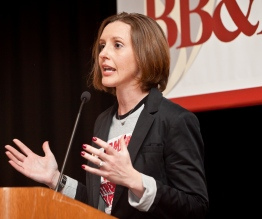
cupidscup-033012-185_hr1Elana Fine was appointed Managing Director of the Dingman Center in July 2012, after joining the team in 2010 as Director of Venture Investments. As Managing Director, Elana’s primary focus is leading the Dingman Center in support of its mission and strategic plan. Key responsibilities include oversight of our student venture incubator, Dingman Center Angels investor network, business competitions, and technology commercialization efforts.
Tagged , , , , , ,

Worth Reading 2/22/2013

It’s been a while since our last Worth Reading feature, but it’s been an exciting time for the Dingman Center for Entrepreneurship!  Yesterday, 12 student startups from around the nation competed at the Cupid’s Cup Semi-Finals held at Under Armour headquarters. We’ll be announcing the results soon so stay tuned to find out which 5 teams will be competing at the Cupid’s Cup Finals on April 5, 2013!

In the meantime, here’s some suggested reading to get you in the mood:

You can find entrepreneurial lessons and metaphors anywhere you look, but this list from Young Entrepreneur of what leaders can learn from the current crisis in the Capitol seems fitting for those of us who live and work in the DC Metro area.

Speaking of the Capitol, here’s an interesting article from Bloomberg about how little Silicon Valley actually know about how the government works, which was written in reaction to their previous article about how little members of congress actually understand the internet.  Seems to me it’s up to our entrepreneurs to make up this gap!

Which brings us to the DC startup scene, which as you know is growing fast!  In the past 2 weeks, 1776, a new DC incubator, was featured a few times, here one feature from BizTech Magazine, and here’s a video feature posted by an ABC affiliate in Sacramento!

Finally, for those of you who missed DC Social Media Week this past week, Carl Pierre of In The Capital gives a great synopsis of a Startup Grind DC speaker event featuring Eugene Stoltzfus, founder of Rosetta Stone, who talked about the challenges he faced when starting up Rosetta Stone, and the insights he learned while building the business.

Tagged , , , ,

Pitch Dingman Competition Results!

Earlier today, five student startups pitched to a panel of judges for the first Pitch Dingman Competition of 2013. The competition was fierce and each entrepreneur put up equally compelling arguments for their ventures. In the end the judges and audience both chose Wheel Shields as their winning student startup, with UPride receiving 2nd place honors. Wheel Shields was awarded $2,250 and a Cupid’s Cup prize package allowing the company to participate in the Cupid’s Cup Business & Innovation Showcase on April 5. UPride took home $500 to propel their business. Congratulations to both startups, the Dingman Center expects great things from you in the future!

PitchDingman-15Feb13-151

We’d also like to recognize Parallel Tracks, Electric Squeeze and Adaptive Motion Technologies for giving great pitches, we wish them the best in their ventures, and given their performance, we’re sure they’re well on their way!

About Wheel Shields

Student Entrepreneur: Chase Kaczmarek

Shield Boards, LCC produces my patented invention Wheel Shields. Wheel Shields are a skateboarding accessory that solve “wheel bite” (a dangerous safety problem), keep riders dry and allow riders to stand over their wheels. “Wheel bite” occurs during hard turns when wheels come in contact with the deck, stopping the board and throwing riders to the pavement. Wheel Shields completely eliminate “wheel bite” and work universally with any skateboard. Wheel Shields have gone viral: our Facebook page has over 25,000 likes, we’re endorsed by a Guinness world record-holding skater, and we are in an upcoming edition of Heelside Magazine.

About Pitch Dingman Competition

Twice a semester, students can compete for $2,750 in start-up funding at the Pitch Dingman Competition. Everyone is welcome to attend Pitch Dingman Competitions as an audience member and there is no need to register. The next Pitch Dingman Competition is scheduled for Friday May 10, 2013 Interested in competing? Start with an informal Pitch Dingman Session

Tagged , , , , , ,

Semi-Finalists for the 2013 Cupid’s Cup Announced!

Founded in 2006, Cupid’s Cup is the flagship entrepreneurship event at the University of Maryland. Many student entrepreneurs from the University of Maryland have competed on the main stage for the chance to win the cup and recognition for their ventures. This year, the organizers of Cupid’s Cup, Kevin Plank, founder and CEO of Under Armour, and the Dingman Center for Entrepreneurship, decided to raise the stakes and make the Cupid’s Cup a national competition, seeking the best student-run business in the United States!

After a long and difficult deliberation, we are proud to announce the semi-finalists for Cupid’s Cup 2013.  These teams will be attending the Cupid’s Cup Semi-Final Round at Under Armour HQ in Baltimore, MD next Thursday, February 21, where the top 5 teams will be chosen to pitch at the Final Round on Friday, April 5 at the University of Maryland.

Find out who made the cut in the official press release: http://www.rhsmith.umd.edu/news/releases/2013/021413.aspx

Cupid’s Cup is where you’ll find the coolest innovations from the UMD campus and  the mid-Atlantic region all under one roof. Pick the brains of entrepreneurs from all kinds of businesses. Take a break from the dining halls and your usual lunch spots and visit the food trucks. Get to the competition early to score one of our limited-edition t-shirts. And definitely stay to watch our competitors duke it out in front of Under Armour Founder Kevin Plank. Find out more at http://www.cupidscup.com

Tagged , , , , ,

Smith MBA Wins 8th Annual China Business Plan Competition!

This slideshow requires JavaScript.

In January, 18 MBA students from the University of Maryland headed across the pacific to Beijing to compete in the 8th Annual China Business Plan Competition. This annual event, co-hosted by the Robert H. Smith School of Business and the Guanghua School of Management at Peking University, brought together entrepreneurial students from the United States, China and Israel, to see who can deliver the best pitch for their innovative business idea that leverages Chinese resources.  The Smith teams made a strong showing, with three teams making it to the final round of competition, and one Smith team taking the grand prize! We caught up with Yuan He, apart-time MBA student and sole team member of the winning team, Honeymoon Honey, to get his thoughts on the competition and the trip:

Q. Tell us a little about yourself.

My name is Yuan (pronounced “one”). I am currently pursuing both an MBA and an MS in Finance at the Smith School. At Smith, I serve on the boards for Net Impact and Finance Association as well as participate in the Global Equity Fund as a managing member.  I also hold a Master of Science degree in Electrical Engineering from the University of Tennessee, Knoxville.

Outside of school, I run my own company called HY Financial, LLC, as an independent registered investment advisor helping individuals reaching their financial goals. I also hold a position at the Defense Information Systems Agency, working in acquisition and system engineering.

Q. What was the business idea that you pitched and how did you come up with the idea?

The company that I pitched at the competition is called Honeymoon Honey. Basically, the honeybee population has plummeted since the 1950’s and it has become more and more challenging for farmers to pollinate their crops. In some countries, farmers have even resorted to pollinating their crops by hand. At Honeymoon Honey, we rent honeybee hives to these farmers to help them increase crop production while reducing the amount of manual labor needed. We then take the honey produced by the rented beehives and make them into high quality cosmetic products.

I got the idea from my friend Andy, who was also the very first friend I made in the U.S. some 20 years ago. His wife’s family had long been making honey based products as a hobby and would occasionally sell their products at the local farmer’s market. Andy saw the business potential in honey products and came to me in 2011 with the idea that eventually became Honeymoon Honey.  We have been working on the business ever since.

Q. How was your experience at the China Business Plan Competition?

It was an awesome experience! The advice and feedback from Prof. Bob Baum, John LaPides, and Elana Fine of the Dingman Center were invaluable, and the experience of learning how to put together a pitch was very rewarding. Both Bob and John would always be able to identify new areas for improvements at end of each advising session. I went in to every session wondering “what can they possibly say now?” The difference between my initial pitch and what I presented at the finals were definitely night and day.

Of course, it all pays off in the end when you’re standing before the judges and full audience at the final round. I am sure would not have been able to win the competition without everyone’s support, and I am thankful to the Dingman Center for that memorable moment.

Q. How was the rest of the trip?  Would you recommend it to other MBAs?

My trip was a little different than rest of the group since I used to live in Beijing, but I would highly recommend the trip and the competition to all other MBA students. There are a lot of opportunities in China, especially in this modern era, and I encourage other students to visit China and learn about what these opportunities can mean for them. Taking classes inside the walls of Van Munching Hall may be exciting enough, but it’s what you do outside those walls that will make your MBA a memorable experience.

Q. What are the next steps for Honeymoon Honey?

The future is very exciting for Honeymoon Honey. We are actually currently in negotiations with a few national retailers in the U.S. who are interested in working with us. In addition, I had several meetings with local VC firms in China after the competition that opened new doors for the business as well. Don’t be surprised if you see Honeymoon Honey in China in a few years.

Q. Any general advice to aspiring entrepreneurs?

You’ve got to love your business and believe in it before you can make others believe in it as well. When you really believe in your idea, it makes more thoughtful about your business, hungrier for advice, and more passionate in your pitches.

Since 2006, more than $200,000 has been awarded to promising entrepreneurs in  the China Business Plan  Competition co-hosted by the Smith School’s Dingman Center for Entrepreneurship and Peking University’s Guanghua School of Management. The CBPC is held as part of a week-long global studies trip and satisfies 3 credits of the Smith Experience MBA curriculum. The competition and trip is open to all UMD students at any degree level. For more information please visit our website at: http://www.rhsmith.umd.edu/dingman/students/CBPC/

Tagged , , , , , , , , ,

Meet the Feb. 15 Pitch Dingman Competition Finalists!

The first Pitch Dingman Competition of 2013 will take place at 11 a.m. Friday, Feb. 15 at Tyser Auditorium in Van Munching Hall.  Five UMD-based student startups will pitch for the chance to win $2,500 in startup funding. In addition, audience members will also have the opportunity to vote for their favorite entrepreneur of the day to award them with additional prizes!

Here’s a little preview of our finalists:

3841_356297531135361_89754252_nParallel Tracks
EnTERPreneur Academy Member
Team: Daniel Noskin, Vinnie Vendemia, Scott Block, and Jeff Hilnbrand

Parallel Tracks is a social networking web site and mobile application that gives users the ability to broadcast and listen to music with others in real time, creating a more social and enjoyable listening experience. Using a twitter like interface, users can “track” more than just their friends. They can also follow their favorite celebrities, athletes, and musicians to discover new music in a unique way. Detailed analytics help users strategize their music brand so that they can target specific audiences and advertise accordingly. Now everyone has a music voice. Play it louder!

Logo_20Adaptive Motion Technologies
EnTERPreneur Academy Member, Dingman Jumpstart
Team: Yoni Kozlowski, Emmanuel Klein, and Jonathan Howarth

Adaptive Motion Technologies LLC is a medical device development company that intends to design, patent, and market prosthetic devices related to the fit and comfort of the human/prosthetic interface. A group of engineers are currently developing three devices designed with the participation of prosthetists, physicians, surgeons, and patents.  The principal technique for maintaining a secure fitting of a prosthetic device with a patient is through the use of a socket. A properly fitted socket distributes the forces on the prosthetic device around the patents limb while holding the socket aligned and in place. This is primarily accomplished through the use of custom made shells which are formed based on molds of the patient’s limb. This process is both limited in function and expensive in practice costing about a billion dollars per year in the United States alone. Adaptive Motion Technologies LLC has developed technology which would allow a socket to conform to the unique and variable shape of a patient’s limb every time they don their socket. This would allow sockets to be used comfortably over longer periods of time and without the need for custom components reducing the overall cost. Adaptive Motion Technologies LLC intends to license this technology to a larger company. In this way the company will mature quickly from product development.

61153_190721601053181_1102597725_nUPride
EnTERPreneur Academy Member
Team: Suyash Mehta and Dan Martinez

UPride is an innovative apparel company that strives to bring universities across the nation pride gear. The target audience for the company has no boundaries; it can apply to all ages depending on the nature of the merchandise. Currently, the majority of our merchandise is Maryland Flag themed. We constantly are designing new designs to keep our target audience up to date with the current fashion trends. We have started talking to many large companies about supplying them with our merchandise. In the near future, we plan on branching out and becoming a distributor as well as a retailer.

601249_413571745384601_408988131_nThe Electric Squeeze
Team: Julian Ragland, Fuad Balashov, and Eugene Skinner

The Electric Squeeze is a business dedicated to bringing a culture of music into College Park while helping to create opportunities for local, partner, DJ’s.  The business was originally formed as a blog to share the music that its founders listed to with their friends. As it grew, the opportunity to host events at local venues and establish a physical presence presented itself. Since the fall of 2012 the Electric Squeeze has organized seven events in three venues, both in DC and College Park. We plan to continue our growth and would value the Dingman Center’s assistance.

9695_471694029535714_1794550549_nWheel Shields
Team: Chase Kaczmarek

Shield Boards, LCC produces my patented invention Wheel Shields. Wheel Shields are a skateboarding accessory that solve “wheel bite” (a dangerous safety problem), keep riders dry and allow riders to stand over their wheels. “Wheel bite” occurs during hard turns when wheels come in contact with the deck, stopping the board and throwing riders to the pavement. Wheel Shields completely eliminate “wheel bite” and work universally with any skateboard. Wheel Shields have gone viral: our Facebook page has over 25,000 likes, we’re endorsed by a Guinness world record-holding skater, and we are in an upcoming edition of Heelside Magazine.

Interested in being a part of the action? Your first step would be to attend a Pitch Dingman informal advising session to talk to one of our expert Entrepreneurs-in-Residence who will help point you in the right direction.  Pitch Dingman informal advising sessions take place every Friday during the school year from 11am to 1pm at the Dingman Center for Entrepreneurship.

Tagged , , , , , ,

Business Rx Entrepreneur Q&A with Elana Fine – Part 6

Elana Fine, Managing Director of the Dingman Center recently participated in a live chat on Wednesday January 23, 2013 with the Washington Post’s Capital Business magazine for their Business Rx column. This post features the answers to some of the questions posed by regional entrepreneurs on improving or starting a business. Follow the Dingman Center’s Facebook Page and Twitter Page for information on the next live chat and other Dingman Center news and events.

Q. I’ve seen a trend for healthy eating, but there doesn’t seem to be any major chain known for its fast food being completely good for you. Do you think a chain of drive-through healthy fast food restaurants would prosper in today’s market?

Elana Fine : This has proven to be a very tough market to crack.  It turns out there is actually only a small part of our population that demands healthy fast food options.  In fact, we are actually seeing the opposite happen with burger chains and cupcake shops exploding.  Subway might be a good model to try to imitate. They took something standard like a sub and pitched it as a healthy choice.  Look for a product that requires limited behavior change, but is significantly healthier than a burger.

Q. I have a great idea for a small business that would allow me to do something fun while filling a void in local services. That being said, I’m a federal employee who is slowly paying down my law school debt while saving for a house and starting a family. How would you advise someone like me to deal with the insecurity of giving up a steady paycheck and benefits?

Elana Fine : This is often the hardest obstacle in getting started.  A lot of times entrepreneurs are the only ones who think their idea has legs, so it becomes hard to build support and justification for leaving a job.  You need to back your idea with data on market needs, look closely at those examples, and understand the startup costs and runway needed to fund the business.  You will probably need to max out your credit cards and sacrifice some savings, so if you don’t completely believe in the idea or your ability to execute, then hold off. Finally, you will need to sell the idea to the people who will be supporting you! Start by pitching to them the same way you would pitch your business to a customer.

Q. I think that one of the reasons that I continue to work for someone else is that I know I don’t have all of the skills needed to run a business by myself. I need a partner who could take the lead on sales while I take the lead on other aspects of the business. How can I find a like-minded partner for a new business?

Elana Fine : You are smart to understand your own skill set and where you might need help.  I’d suggest starting your search with a couple avenues.  First, find industry networking opportunities where you might find others with similar interests, yet complementary skills sets.  Second, look for resources, such as CoFoundersLab, a local startup that works with entrepreneurs to find their co-founders.  Third, you can always recruit in the way a larger corporation or late stage startup would, look for successful companies in the sector and try to hire their executives. You might find that there are a lot of people itching to do something new.

Q. I recently read that VCs base their investment decisions more on the entrepreneur than on the business. I am used to focusing on selling my business idea when I pitch. Do you have any tips on how I can better pitch myself and my team as entrepreneurs to VCs?

Elana Fine : I’d say it isn’t just the entrepreneur, but the entrepreneur’s ability to execute.  While the idea and the business are important, the real differentiator is the entrepreneur’s plan for growing the business.  VCs are looking for unique business models and monetization strategies rather than repeats of past successes.  An entrepreneur can’t walk in and say they are going to start a mobile app company that will generate revenue through downloads and ads — that has been done before and VCs want to hear something different.  It is the entrepreneur’s job to sell them on how they see and do things differently.

Q. I’d like to start a business to help people with personal finance like investing for retirement, saving for college, debt management, etc., but most businesses like this are located in office parks where people aren’t likely to see it by passing by. How do I market such a business?

Elana Fine : These kind of service businesses typically don’t require a high priced storefront location because someone looking for a personal finance company is probably not looking for one while they are taking a stroll like they would a coffee shop.  Storefronts have high fixed costs, making it hard for a services business that may have more variable revenue streams.  You would be smart to consult a marketing professional, but from a startup perspective, you should look at other companies on the market like HelloWallet, Mint.com and others that are building Web-based, scalable offerings in this market.

Q. I have a full-time job as a Web developer and often think that I could jump ship and become a freelance developer. However, I also know that when someone sends me an unsolicited email offering a service, I almost always ignore it. How can someone start offering a freelance service without having their offers ignored?

Elana Fine : There is a huge void in the local market for development talent, though I wouldn’t suggest sending unsolicited emails. Instead, you could make a name for yourself quickly by taking on some small projects for local startups (even if for equity at first).  The startup community is close-knit and likely to make referrals for you if you do a good job.  Announce yourself at a D.C. Tech Meetup, local FB community or other events and you might be on your way!

Q. I recently read that one of the biggest mistakes a startup can make is asking for too much money. How can entrepreneurs zero in on the right amount of funding to ask for? Should you ask for the amount that you need or the average amount a particular firm usually invests?

Elana Fine : It is a delicate balance to find the right amount, but it does lend to your credibility as an entrepreneur.  Different companies will have different funding requirements, so I wouldn’t go for an average.  You need to target the firms based on whether they write checks in the range you need.  If you need $10M, don’t go to a VC that focuses on $3-$5M. I’d make two recommendations. First, you need a solid financial model that credibly factors in R&D, sales and marketing and other expenses (low on salaries!). Once you figure out the best case, figure out the worst case and plan for that scenario. Think about how you can raise money in tranches, receiving the 2nd tranche after you have hit some performance milestones.  Second, make sure you are approaching VCs that invest in your sector, stage and dollar amounts. Don’t waste your time if there is not a good fit.

Q. What is your opinion on using crowdfunding platforms such as Smallknot and Kickstarter as a way to fund small businesses? Is there anything small business owners should be mindful of?

Elana Fine : I think Kickstarter and other crowdfunding platforms are a viable alternative for bringing new products to market, but I’d suggest learning the ropes before engaging.  Each platform has its own limitations and learning curve.  You could spend a lot of time on a Kickstarter campaign and never get close to reaching your goal. I’d be sure to pursue other funding alternatives in addition to crowdfunding.  You need to be thinking about your next move after you fund the initial project – what will you do next to build a business? How will you fund your next steps?

cupidscup-033012-185_hr1Elana Fine was appointed Managing Director of the Dingman Center in July 2012, after joining the team in 2010 as Director of Venture Investments. As Managing Director, Elana’s primary focus is leading the Dingman Center in support of its mission and strategic plan. Key responsibilities include oversight of our student venture incubator, Dingman Center Angels investor network, business competitions, and technology commercialization efforts.

Tagged , , , , , ,

Top Ten Reasons to Compete in Cupid’s Cup

The University of Maryland and Kevin Plank, founder and CEO of Under Armour, are looking for the nation’s best student-run businesses. For those passionate entrepreneurs who are still on the fence about applying, here are the top ten reasons why you should apply:

10. Win the prestigious Cupid’s Cup, the University of Maryland’s top entrepreneurial prize.

9. Take part in the exciting startup scene in the DC area, one of the fastest growing entrepreneur communities in the nation.

8. Receive local and national exposure.  Let the world know about your great work.

7. Visit Under Armour’s corporate HQ in Baltimore, MD for the Cupid’s Cup Training Camp and Semi-final competition.

6. Show your passion on center stage.  If you make it past the semi-finals, pitch your business on April 5 to a panel of expert judges and in front of 1,000 attendees.

5. See how you stack against the best in the nation.

4. Be among some great company of Cupid’s Cup alumni and success stories, which include tech, consumer product, media, and even event production companies.

3. Network with the “who’s who” in entrepreneurship and investing from the Mid-Atlantic region.  In addition to winning cash prizes, you might also meet your next investor.

2. Compete for $70K in cash prizes to turn your startup dreams into reality.

1. Gain access to the professional network of Kevin Plank, founder and CEO of Under Armour and Maryland’s most famous student entrepreneur!

Interested now?  On Friday, January 4 from noon to 1 p.m. the Dingman Center for Entrepreneurship will host a virtual information session that will answer any questions you may have about Cupid’s Cup. You will also get the inside scoop on the prize package and more. Register today:  http://ter.ps/ccinfo

Tagged , , , , ,

Business Rx Entrepreneur Q&A with Elana Fine – Part 5

Elana Fine, Managing Director of the Dingman Center recently participated in a live chat with the Capital Business section of the Washington Post for their Business Rx column. Elana answered questions from regional entrepreneurs on improving and starting a business. This post features some of the questions from the live chat. Follow the Dingman Center’s Facebook Page and Twitter Page for information on the next live chat and other Dingman Center news and events:

Q. How do you think small businesses should use advertising to help sales? What are new and efficient opportunities?

Elana Fine: Depending on your business, online advertising can be an inexpensive and somewhat effective tool to build brand awareness to a target group of customers. Advertising platforms are sophisticated in their ability to use customer behavior for ad placement. However, you get what you pay for — you are still focused on customers that might not be looking for the product you are selling. Small businesses might be better served by lead generation platforms that might better connect you with potential customers, even though you may have to give them a higher percentage of your revenue. If you are brick and mortar — focus on promotions that will drive foot traffic.

Q. I am looking to open a small restaurant, and I am looking to consider my revenue before I can decide what costs I can incur. How should I calculate anticipated revenue for my restaurant?

Elana Fine: This is a tough one to answer in just a few sentences as it really depends on a number of factors. Start building your model based on expected traffic, expected revenue per customer based on price points (is this fast food or sit-down, low-end or high-end?), throughput of customers per meal (are you open for breakfast, lunch or dinner? etc.) You also need to forecast how long it will take for traffic to ramp up and how much it will cost to drive traffic. Also, think through the mix of new customers and repeat ones. Is this something people will eat once a week or once a month? You also need to think through the ongoing expenses — once you build out the space, you’ll still have food expense, which can be costly. Since you can’t store most food inventory for very long, you have to figure out a sophisticated approach to forecasting demand. So … you have a lot of questions to ask yourself.

Q. I want to start a business but not sure in what industry — my passion is sweets (candy/cupcakes/chocolate), but not sure if this can be profitable enough to sustain. Any suggestions?

Elana Fine: There are certainly a lot of options out there for sweet tooth’s — so clearly there is a business model to be found. The issue will be finding a niche for yourself among the many cupcake companies. The takeaway from the proliferation of cupcake and hamburger chains has been that people are willing to pay for high-end treats. If we are going to eat “unhealthy,” we want to do it right. This is also part of an experience — so creating a unique experience for buying candy, cupcakes, chocolate or all three is part of the model just as much as the products themselves. Look at what has been successful among brands like Georgetown Cupcake, Pinkberry and Elevation Burger. Think about what they have done well and where there might be additional opportunities that their current product lines don’t address.

Q. It would seem to me that the answer is almost right in front of this writer: If you want to have a sweets shop, you really need to get into some bakery that specializes in this to get the inside experience of how this business runs (i.e., store size, ingredients order, recipe development, etc.).

Elana Fine: Yes, get smart and educate yourself. Learning from others’ successes and mistakes is better, faster and cheaper than learning from your own.

Q. How much of my savings should I put up for starting a solo PR agency serving medical, dental and other health care professionals? I can’t borrow because of an ongoing foreclosure. I have savings, but I’m not sure how much to tap.

Elana Fine: Before investing your entire nest egg, think about how you can test the market for your services. Talk to health care professionals first and understand their current demand, how much they will be willing to pay for a retainer and what kind of pilot arrangement they’d be willing to commit to. Understand your competition — are they using other providers (which would require switching costs) or are they not engaging any providers (which might mean a longer sales cycle because they don’t have a budget)? Try to forecast when you might line up some initial paying clients and when you will have enough for the business to be sustainable. If you don’t have enough runway in your savings, you may need to think about initially consulting as part of a group or on the side before you fully commit.

Q. For tech start-ups, what are your thoughts on raising seed funding via crowdfunding (i.e., Kickstarter)? Will this scare away formal forms of financing down the road (e.g., venture capital)? If so, how should entrepreneurs address that?

Elana Fine: VC firms will need to be open minded about crowdsourced funding because of its increasing popularity on sites such as Angel List. These sites also give VCs insight into deal flow and help build future pipeline of early stage deals. Entrepreneurs do need to be aware of their capitalization and careful about having too many small investors that might cause problems in later rounds. I think crowdfunding can be a helpful substitute to a friends and family round—to help fund development so you can test the market. Beyond that, I think it is important to really know your investors and what they can bring to the table in exchange for equity. Angel investing is very risky even for the most sophisticated investors, so the diligence really needs to go both ways.

cupidscup-033012-185_hr1Elana Fine was appointed Managing Director of the Dingman Center in July 2012, after joining the team in 2010 as Director of Venture Investments. As Managing Director, Elana’s primary focus is leading the Dingman Center in support of its mission and strategic plan. Key responsibilities include oversight of our student venture incubator, Dingman Center Angels investor network, business competitions, and technology

Tagged , , , , , ,

Business Rx Entrepreneur Q&A with Elana Fine – Part 4

Elana Fine, Managing Director of the Dingman Center recently participated in a live chat on Wednesday October 17with the Capital Business section of the Washington Post for their Business Rx column. Elana answered questions from regional entrepreneurs on improving and starting a business. This post features some of the questions from the live chat. Follow the Dingman Center’s Facebook Page and Twitter Page for information on the next live chat and other Dingman Center news and events.

 Q.  Elana, I am building out my software business and I want to have an advisory board. Is this a good idea? How do I compensate them?

Elana Fine:  All startups should have an advisory board that can balance out any voids in expertise you might have and to help make additional connections. Some advisory boards are given equity, but some also volunteer their time because they enjoy working with early stage companies.  More importantly, you will need to differentiate between an advisory board and a Board of Directors (BoD).  A BoD has very specific rights and accountability whereas an advisory board does just that – advises the company, but does not have the same kind of decision making power as a BoD.  Typically, board seats refer to a Board of Directors and are related to equity stakes granted via angel or VC financing terms.

Q. I am a graduate student at a local university and I want to start a business with my engineering professor. How do I get started? No lawyers please – I already have lots of loans!

Elana Fine: You don’t need lawyers…yet.  If you and your professor are interested in spinning out a company based on university IP, the first place to go is your Office of Technology Commercialization. They will help you through the process of licensing the technology from the university. I’d also suggest doing lots of market research as well as speaking to a lot of customers in different industry verticals to understand the commercial opportunities of your product. Steve Blank’s Lean Launchpad class is a great model for this. Startups based on university technologies have significantly better chances of success, so good luck!

Q. My business has experienced a lot of growth in the past year and I can no longer run daily operations alone and I’ve recently hired 4 new employees. I have experience running a business, but very little experience being a boss. Can you give me some general advice on how to manage my staff? 

Elana Fine: We see a lot of entrepreneurs start to stumble a bit while they transition from starting a business to growing a business.  At your stage you need to make sure you hire staff members that are also self-starters who will not need to be micro managed.  You need to find people who will be almost as passionate and committed as you are, or your will lose momentum.  You also need to make sure that you keep your team focused.  A lot of startups fail because they lose focus and try to do too many things at once.  I’d make sure that 80% of what your team is working on is part of your plan (which will always be evolving) and the other 20% of their time is available to be opportunistic.  Have a checklist of top three priorities and if something doesn’t fit, don’t do it.  You should also make sure you understand your team’s work style and make sure they understand yours.  For example, if you’d prefer to be in touch via email. If you plan to have daily or weekly meetings, make sure they are on the calendar and don’t get skipped.

Q. Are you aware of any new state funding or tax breaks for entrepreneurs in Maryland? I want to start a kids clothing boutique but the tax breaks and credits seem to be only for biotech companies.

Elana Fine: There are a number of new funding opportunities in Maryland through TEDCO, such as the Propel Baltimore fund and Maryland Innovation Initiative but these are all more focused broadly on technology vs. apparel and retail.  I do not know of any breaks for a retail boutique.

Q. I have a full-time job and sometimes I do some side work by helping friends with their websites. While I charge for my services, I haven’t created a formal business. I know that if I ever formally create a small business, I will have to separate my personal expenses from my business expenses. Should I begin separating personal and business expenses now while my business is still informal?

Elana Fine: I’m certainly not an accountant, but sounds like you are at the point where you should keep a separate account for those expenses. Business expenses are generally tax deductible (so I hear) so you are better off keeping them separate.  If you are charging for services it is kind of like being half pregnant – you either have a business or you don’t.

Q. Does Maryland have any areas where students can run their businesses? It would be great if I could operate at a football game or at a basketball game.

Elana Fine: Our team at the Dingman Center is working very hard to create additional opportunities for student businesses on campus. There are a few regulatory/bureaucratic hurdles we are facing, but we are working with a number of partners across campus to create student marketplaces. Stay tuned!

Q. I am currently interested in starting my own brand of ice cream. How do I get in touch with an ice cream manufacturer who will be willing to produce my ice cream?

Elana Fine: I’d suggest networking with ice cream shops to understand who supplies their product. If you create a flavor they like, they might be more likely to make an introduction! You may also want to look in the dairy cases of high end stores like Fresh Market and Whole Foods who carry a lot of upstart ice cream companies – I know a few are made locally. There could be some partnership opportunities there.

Q. My friend and I started a company. I designed the product and he was going to be the COO/CFO. Now, we are close to getting some VC money and I am afraid I am going to be Eduardo from Facebook, the co-founder who winds up with nothing. What do I do?

Elana Fine: I just gave a few answers above that indicated not needing lawyers, but in the case of protecting your equity stake and rights you do need counsel. When you are negotiating term sheets with VCs, make sure you understand the anti-dilution provisions and what will happen in future funding rounds. Most founders will get diluted along the way, but you need to make sure you understand how, why, and when that will happen. In many cases you will have a smaller stake of a larger pie if the valuation of your company continues to increase. In general, I will repeat three pieces of advice that one of our angel investors gives 1) READ THE DOCS 2) READ THE DOCS and 3) READ THE DOCS.

Q. If the fiscal cliff happens, where do you see angel funding in 2013?

Elana Fine: I think the biggest driver in angel funding in 2013 will be related to increased VC funding or exit opportunities. Angel investing has been incredibly strong these past 2 years, but investors will hold back if they don’t see their companies receiving follow-on capital to grow the business and increase its value. The same goes for exit opportunities, if strategic buyers sit on cash and don’t grow through acquisition, angel investors will be less inclined to take the risk and will allocate investment dollars in safer alternatives. I think crowd funding is only one aspect of the JOBS Act that will have an impact. The increased cap on private shareholders, reduced disclosure requirements and broad classification of “emerging growth” public companies increase the access to capital and reduce the cost of taking companies public.

Q. We are trying to sell a new product in a fast growing market with existing competitors. Any thoughts on how we can introduce our product and gain some attention without cutting our prices too low or being forced to spend a ton on marketing? 

Elana Fine: It’s hard to say without knowing more about the product or the market you are targeting.  However, the key is just that. Understand what part of this growing market you can gain the best traction. Is there a customer segment that will appreciate a feature of your product vs. another? Is it a high end product that differentiates by a high level of customer service? Or will you in fact gain more traction by being a low cost provider? In a fast growing market, a newcomer can often be more nimble in attacking the fastest growing portion of the market, but you have to do your research to find your own niche. We often suggest that companies identify their first target market and then test three different ways to attract that market whether via social media, paid advertising, earned media, promotional events, or word of mouth. See what works and then double down.

Q. Hello, my wife and I have a small non-franchise residential cleaning service in Maryland. So far, our only marketing is through word of mouth and a simple website. Where should we go from here in terms of marketing our business?

Elana Fine: There are actually a couple of new local companies like Seva Call, Urgnt.ly and Trust Pages that are focused on connecting residential service providers to customers. Word of mouth is really the best way when it comes to service providers coming in to your home so you need to think about how you can engage new customers that will make referrals. You could think about going out to real estate agents and offering to clean houses for free before going out on the market.  If you do a good job they may recommend you to whomever buys the house or they may pay you to do the next job. One free cleaning may pay dividends in the future.

Q. I have an idea for a business I’d like to start, but I’d love to have an advisor who could help me think through all the particulars. Is there a resource in the D.C. area for that?

Elana Fine: There are a lot of great resources for startups around the area, such as FoundersCorp, Maryland’s SBDC, Startup MD/DC/VA, Foster.ly, DC Tech Meetups, ProudlyMadeinDC, Rockville Economic Development Inc., etc.  However, before you start thinking about paying for an advisor you need to first find the right advisors that understand the problems your company is tackling as well as the challenges that you are facing.  When you network, specifically say “I’m looking for someone with a skill set in X that can help me with Y.” I know I’m always more likely to make connections when it’s good match.

Elana Fine was appointed Managing Director of the Dingman Center in July 2012, after joining the team in 2010 as Director of Venture Investments. As Managing Director, Elana’s primary focus is leading the Dingman Center in support of its mission and strategic plan. Key responsibilities include oversight of our student venture incubator, Dingman Center Angels investor network, business competitions, and technology commercialization efforts.

Tagged , , , , , ,